

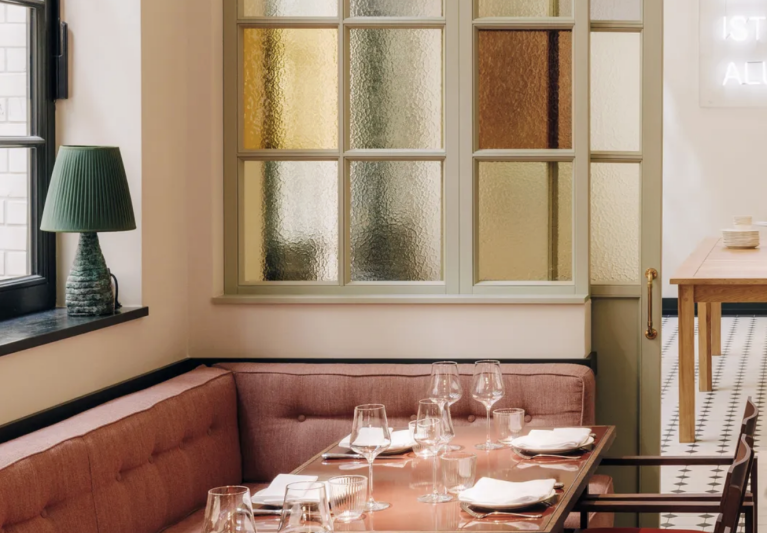
Pale Fire: The Renewed Appeal of Stained Glass
by Julie Carlson
It’s been percolating for a while now (design editors everywhere have been swearing “it’s about to happen”); i.e. a stained glass revival. We’re finally seeing it: Some of our longtime favorite designers and architects—London designer Rose Uniacke, SF interior designer Lauren Geremia, LA designer France Merrill of Reath Design, and Bay Area-based Jerome Buttrick of Buttrick Projects—are deploying stained glass in new and modern ways. Here’s a roundup of favorite spaces:
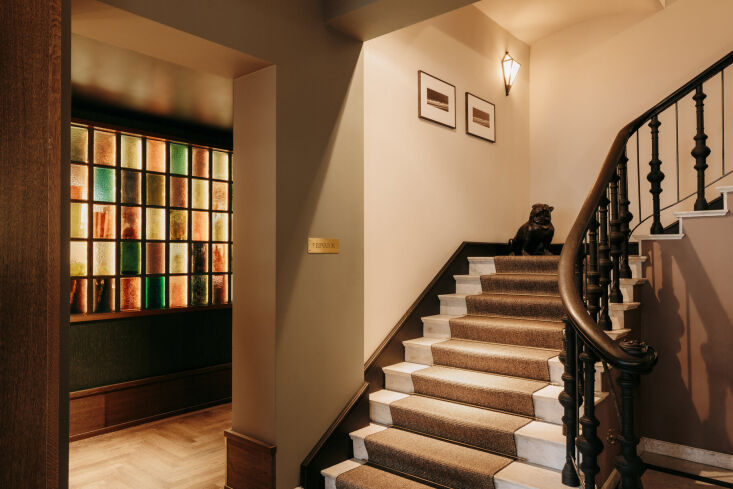 Above: The grand entry at the newly revamped Hotel Château Royal Berlin in Berlin, with architecture by David Chipperfield and interiors by Irina Kromayer.
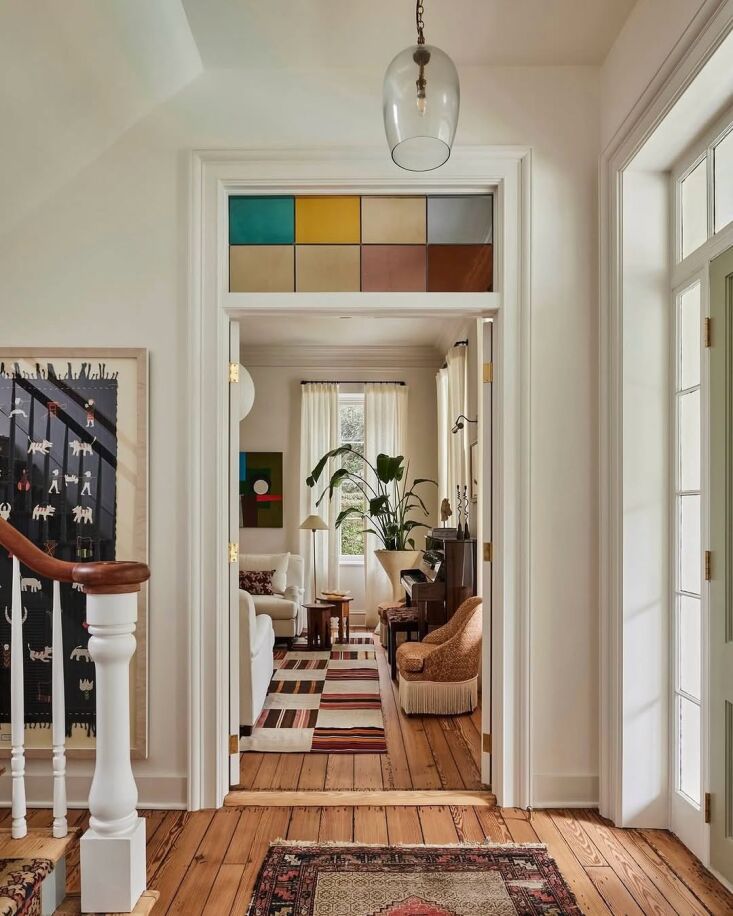 Above: A stained glass transom window by Charlestowne Stained Glass Company, in a house designed by Basic Projects in Charlestown, South Carolina.
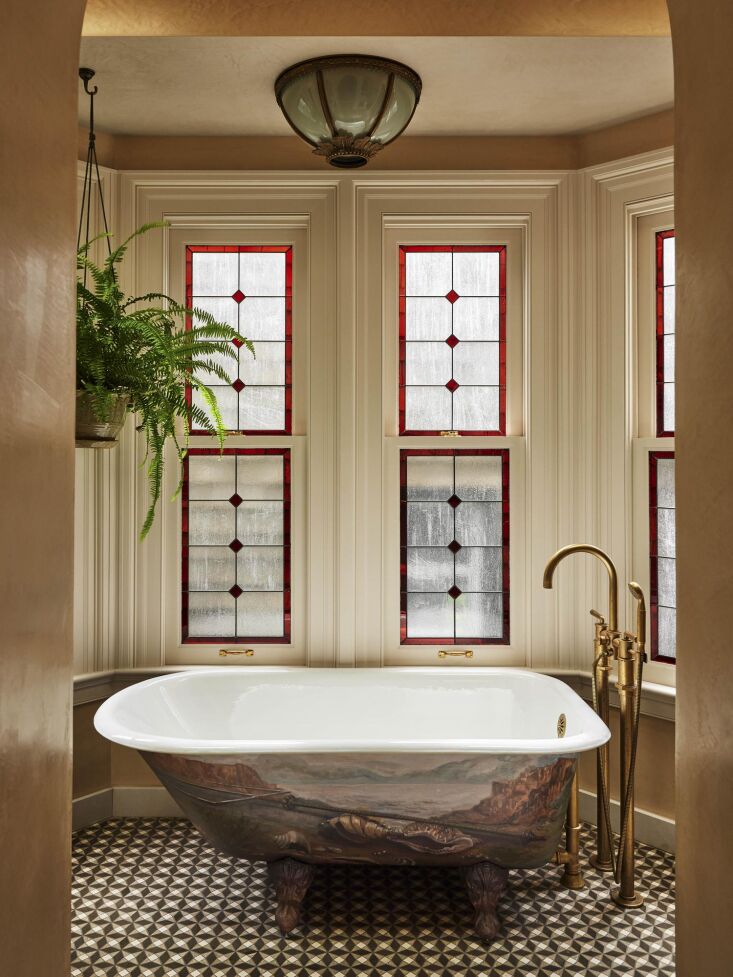 Above: A stained glass privacy window in a bath by San Francisco designer Lauren Geremia.
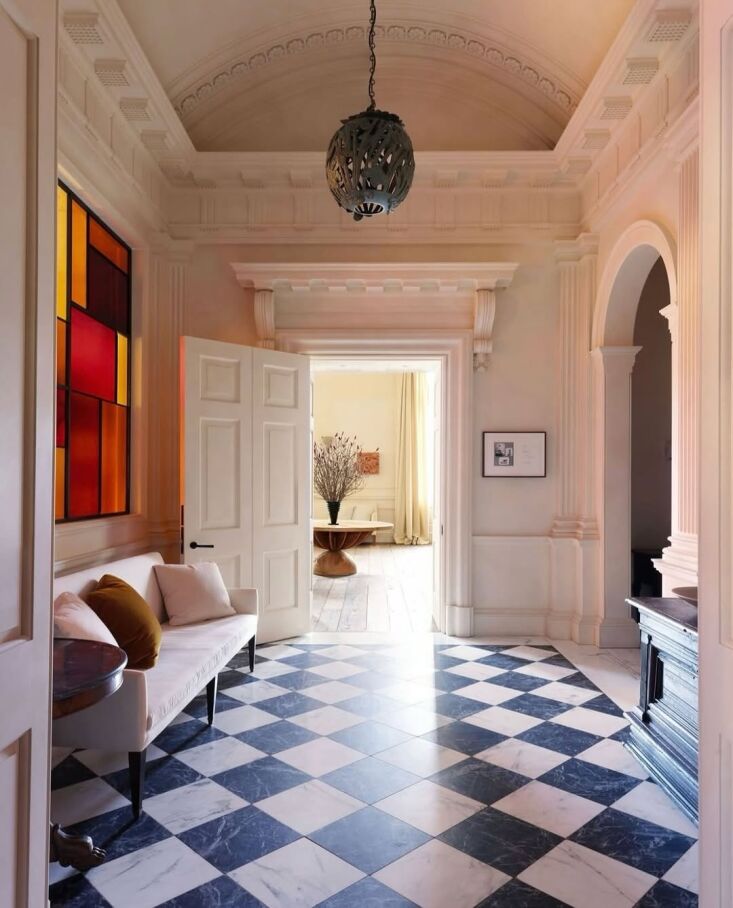 Above: The hallway at the newly revamped San Vincente West Village, with interiors by Rose Uniacke, features a bespoke stained-glass window. “I worked with a San Francisco glazier on this and I’m thrilled with the result,” Uniacke told Christies. “I wanted to create something modern and exciting while also making a nod to a past tradition.” Photo Simon Upton via Rose Uniacke.
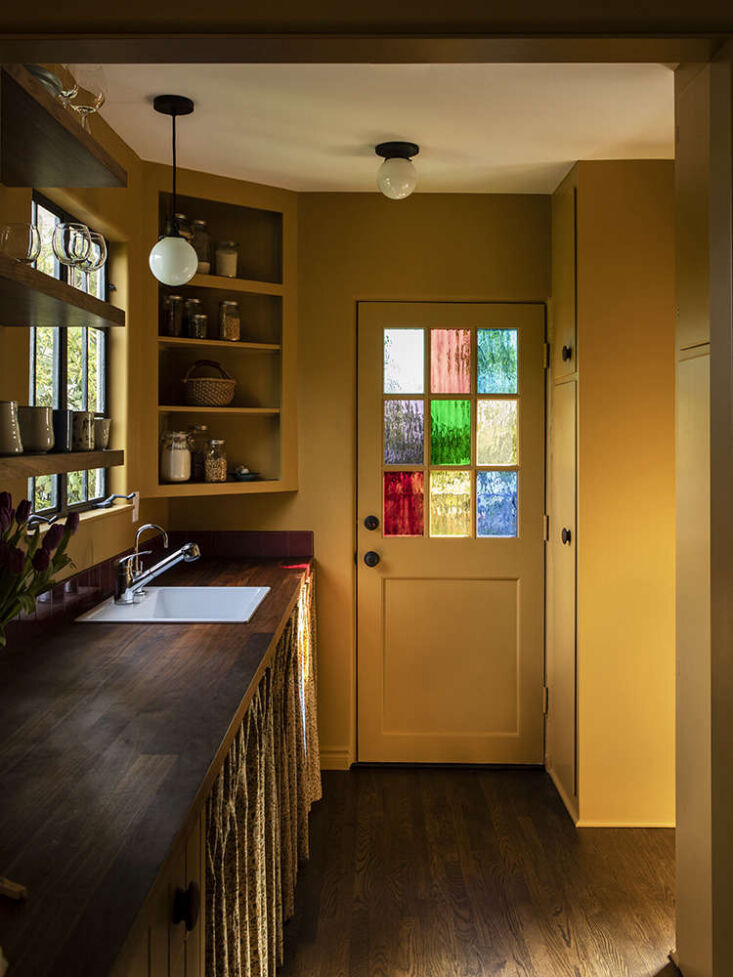 Above: A stained glass kitchen back door in an LA project by Frances Merrill of Reath Design.
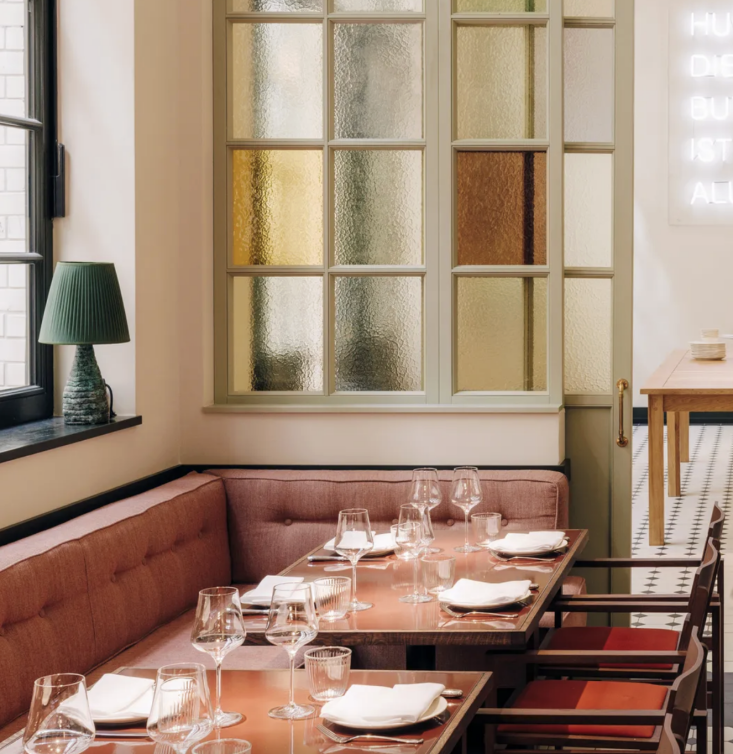 Above: The dining room at the Hotel Château Royal Berlin features sliding stained glass doors.
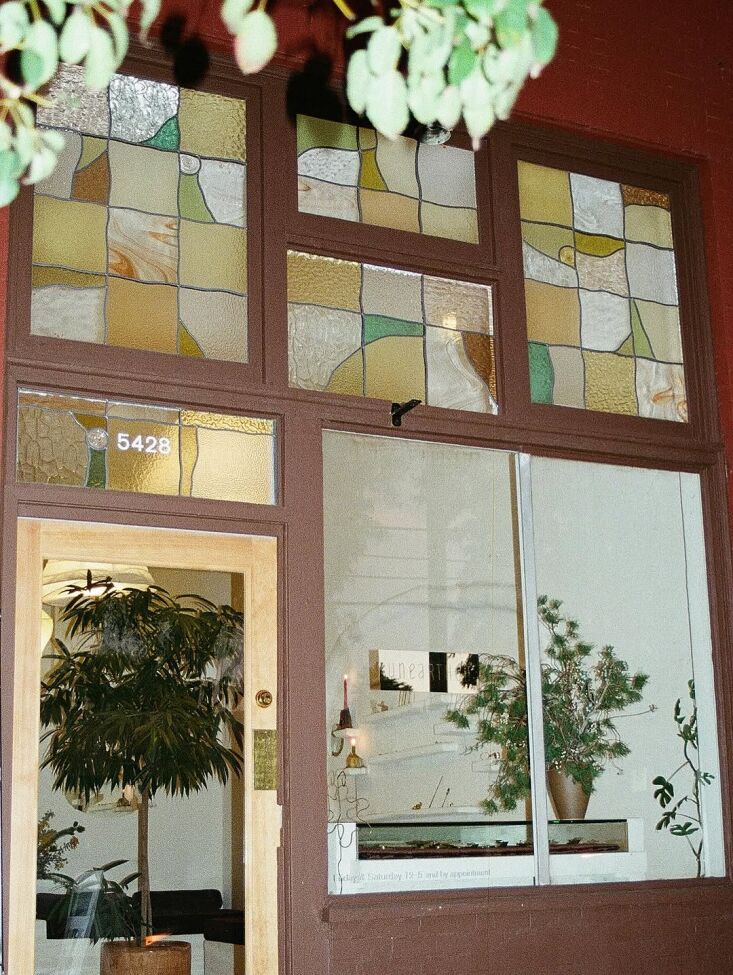 Above: An abstract stained glass window by Molly’s Magick Glass for LA jewelry studio Unearthen.
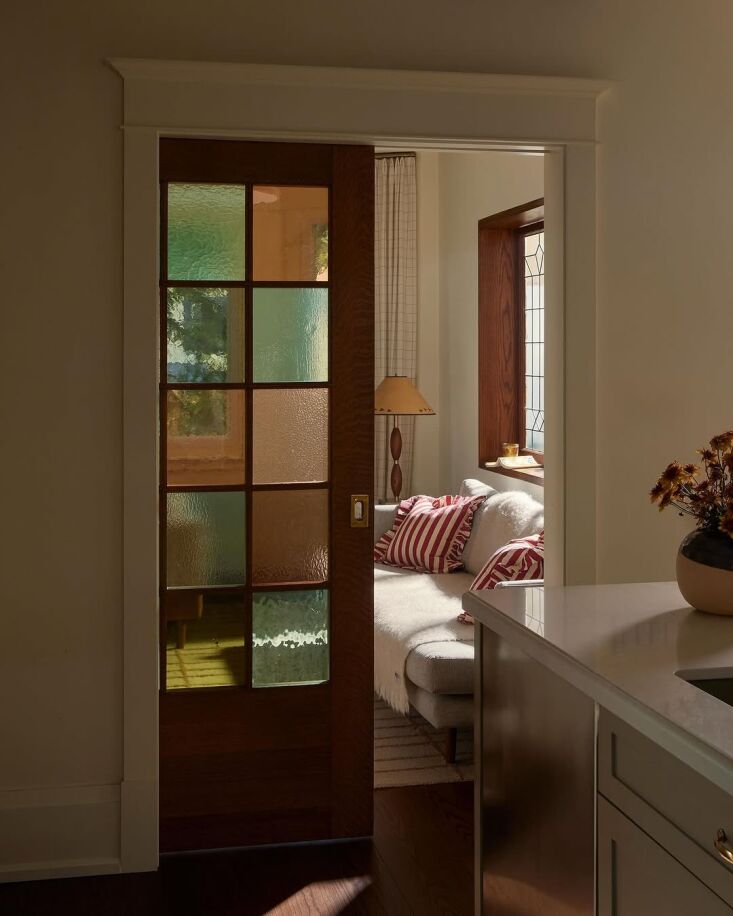 Above: A stained glass pocket door in a project by Toronto-based Studio Cajole, working with Cabin Glass.
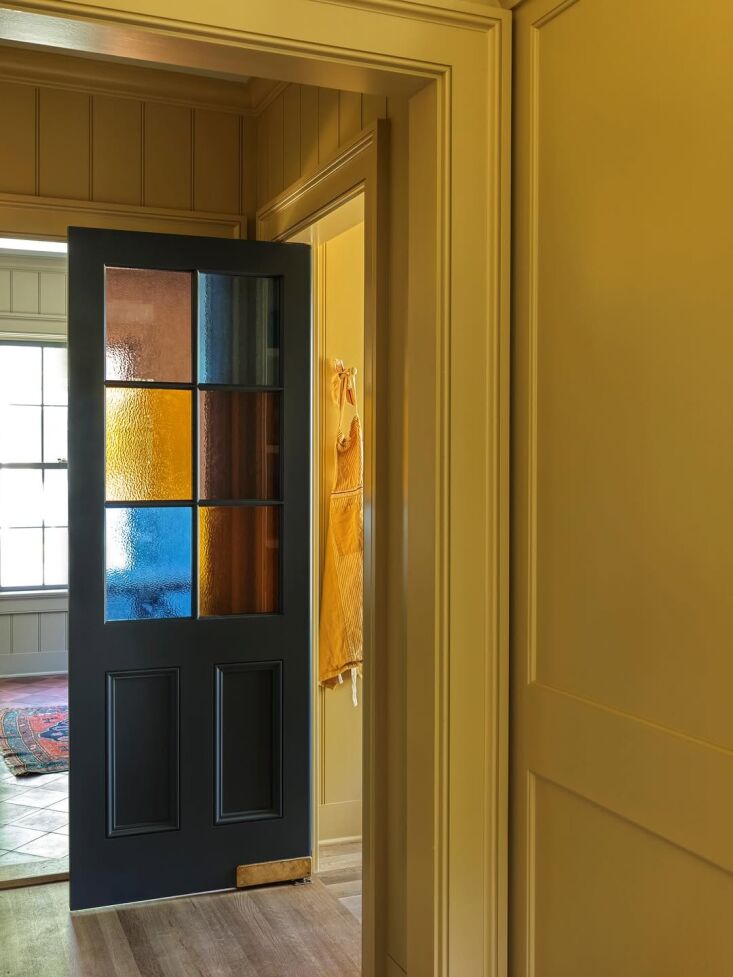 Above: In a kitchen by Sharon, Connecticut-based firm Hendricks Churchill, the designers inserted opaque stained glass into the swinging pantry door: “that way the homeowner doesn’t have to worry about keeping the space tidy when guests arrive,” Heide Hendricks says.
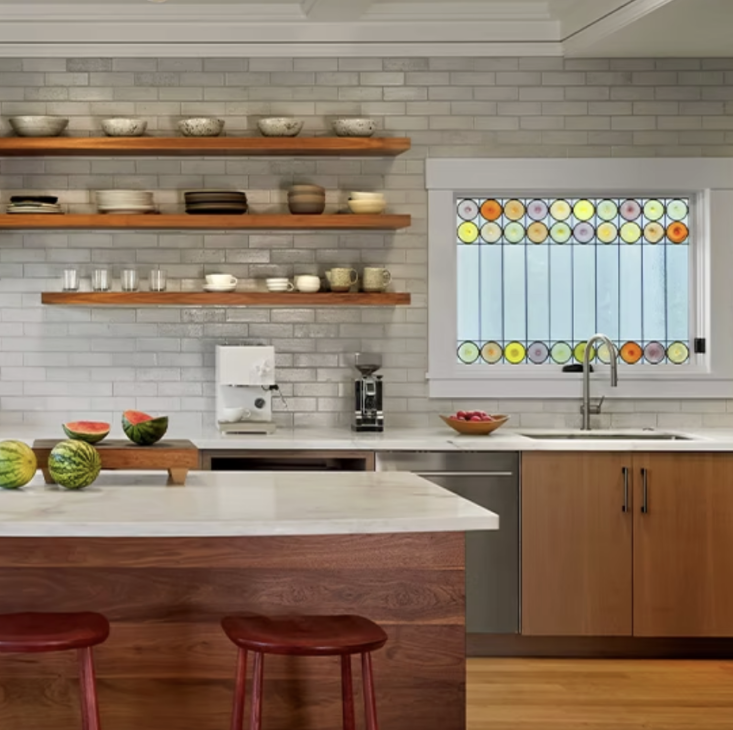 Above: In an Oakland kitchen, Jerome Buttrick of Buttrick Architects worked with Theodore Ellison Designs to restore and create new stained glass leaded-glass windows.
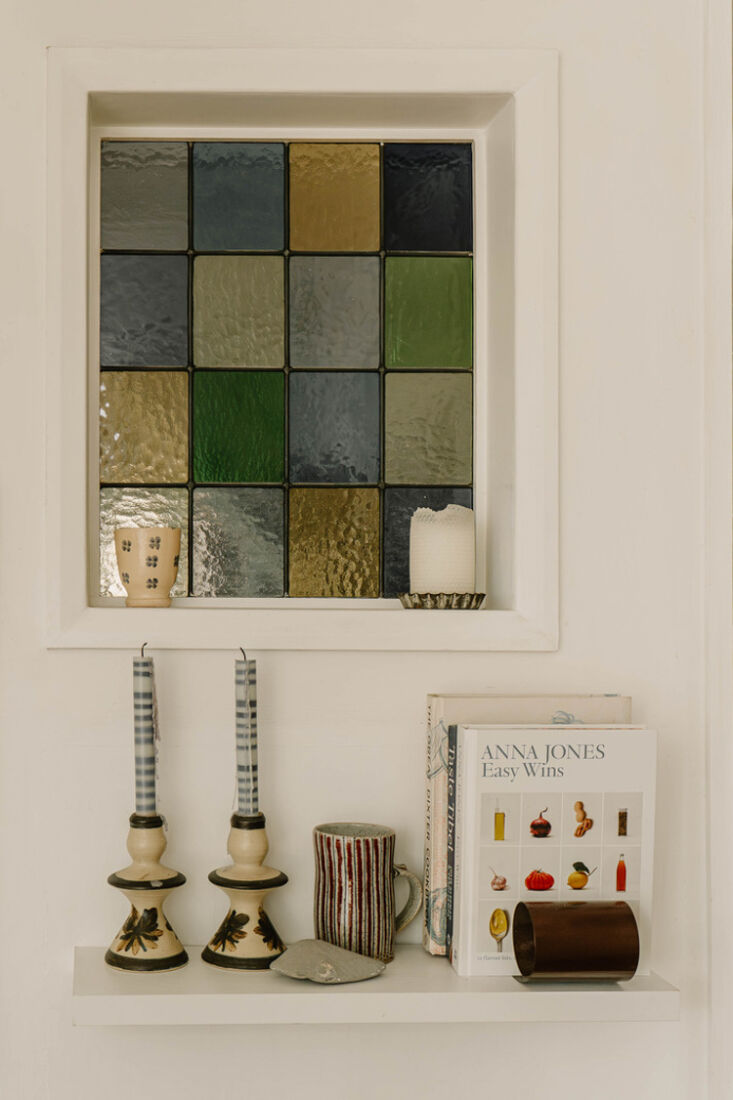 Above: A stained glass kitchen window detail in a Norwood village house listed with UK-real estate agency Inigo.
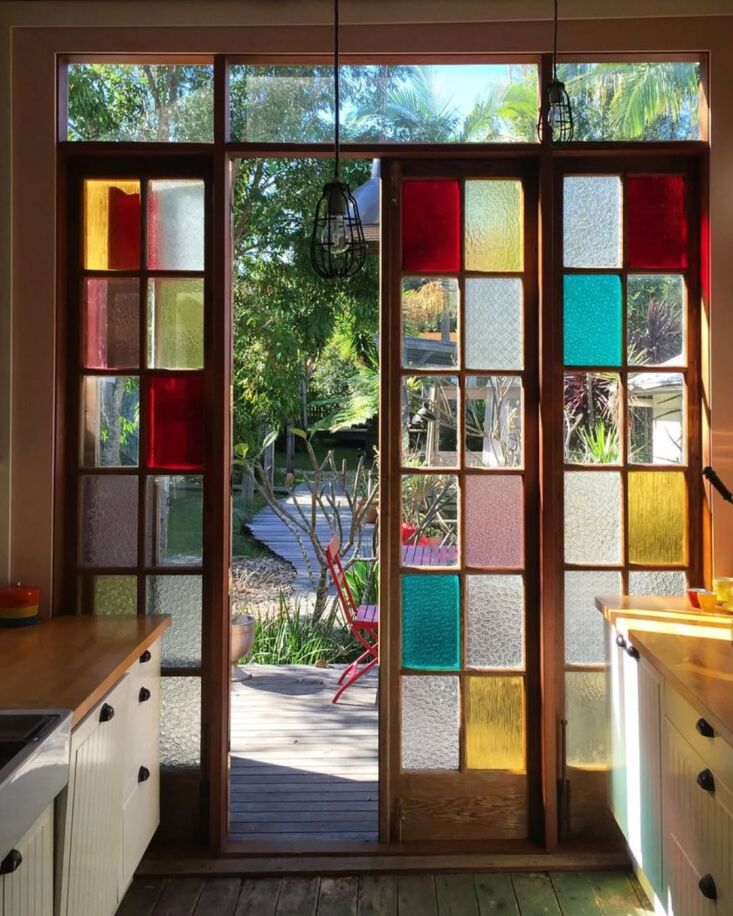 Above: Stained glass doors open onto a garden area; photo via Maison Flaneur.
For more trend alerts, see:
Remodelista Reconnaissance: A Ghostly Cloth Pendant Light
by Fan Winston
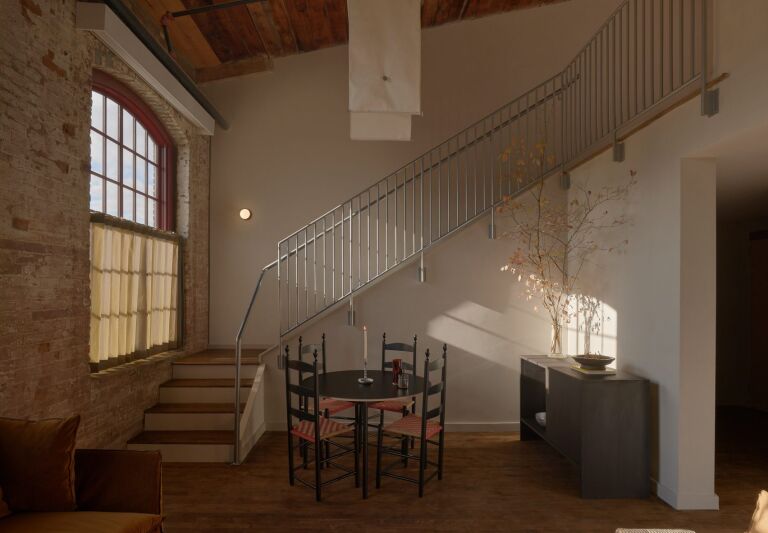
Were you as taken with the cloth pendant lights hanging in Pocketbook Hudson as we were? (See our recent write-up on Upstate New York’s newest hotel here.) Monastic-like and minimalist, the pendants appear to be just panels of lightweight fabric draped over metal rods, creating a soft filtered glow when the light is turned on.
What is its provenance? And where can we find it?
Read on.
The Sighting
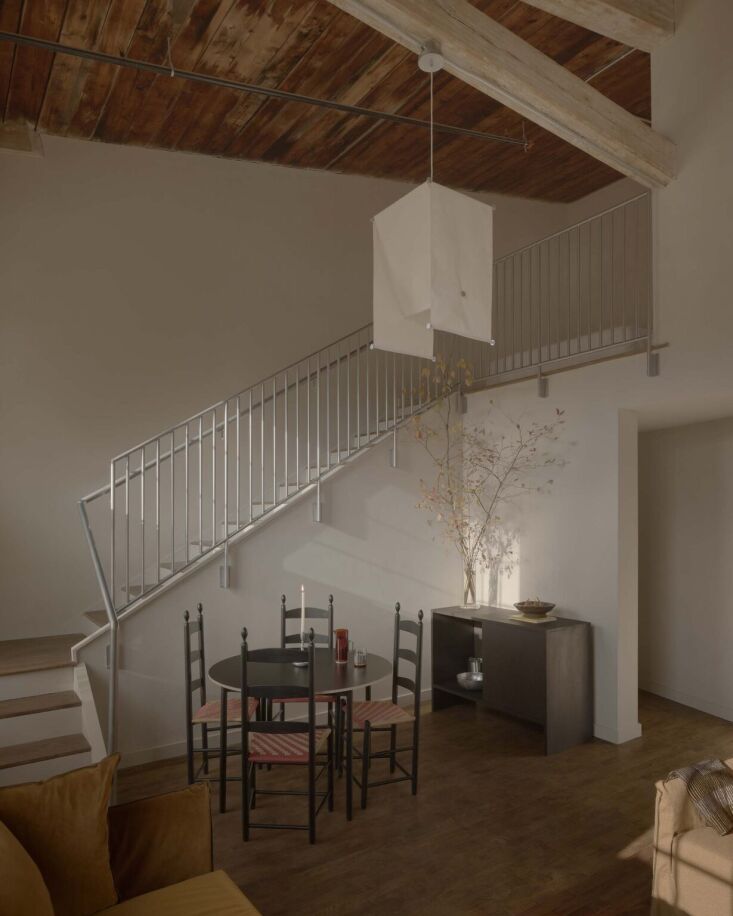 Above: The light, despite its delicate look, makes an impact even in this Pocketbook loft with a double-height ceiling. Photograph by Sean Richardson.
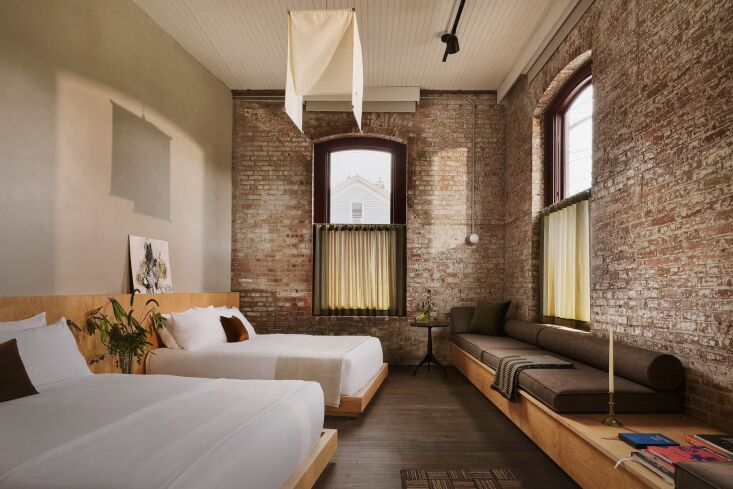 Above: The interiors at Pocketbook are eclectic—a mashup of minimalism, Shaker influences, and industrial design—and the light fits perfectly into this mix. Photograph by Adrian Gaut.
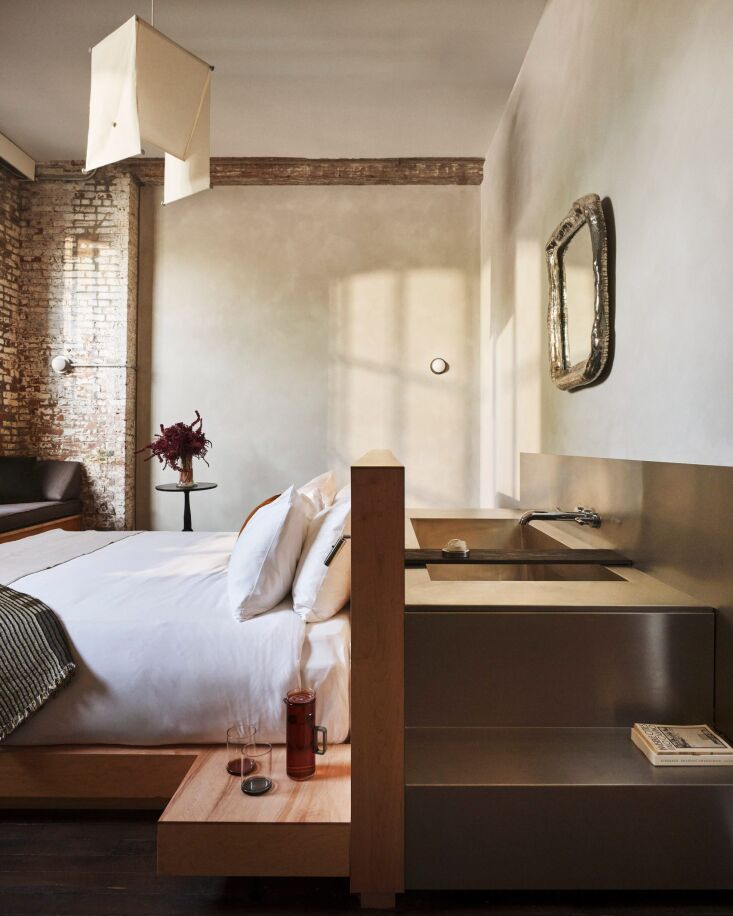 Above: The fabric light is a soft counterpoint to the metal, wood, and brick that dominate the hotel’s interior design. Photograph by Adrian Gaut.
The Source
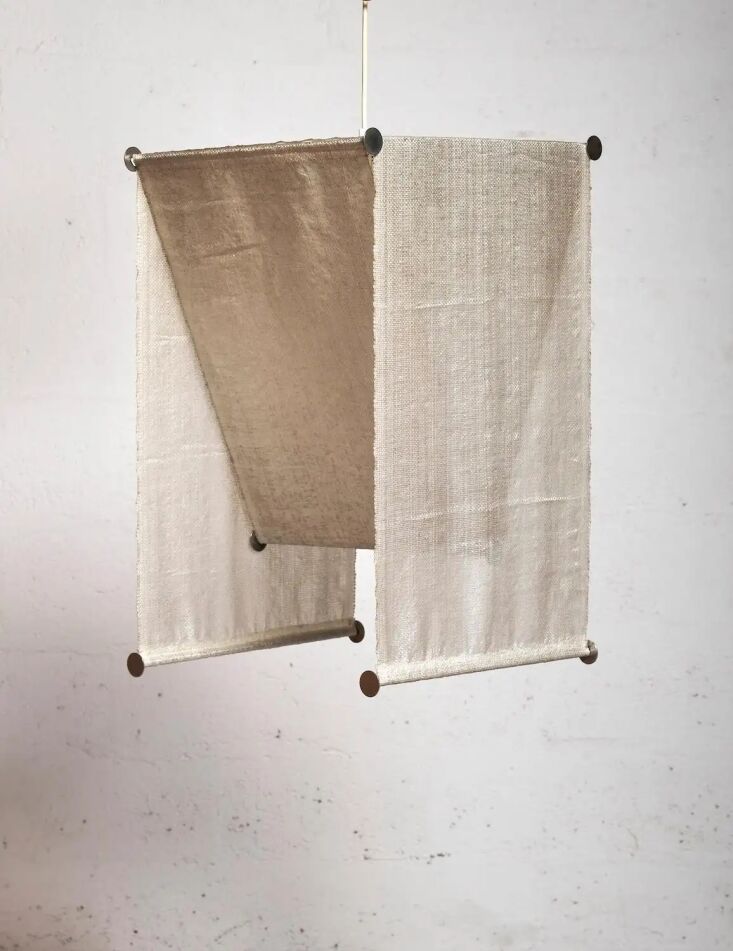
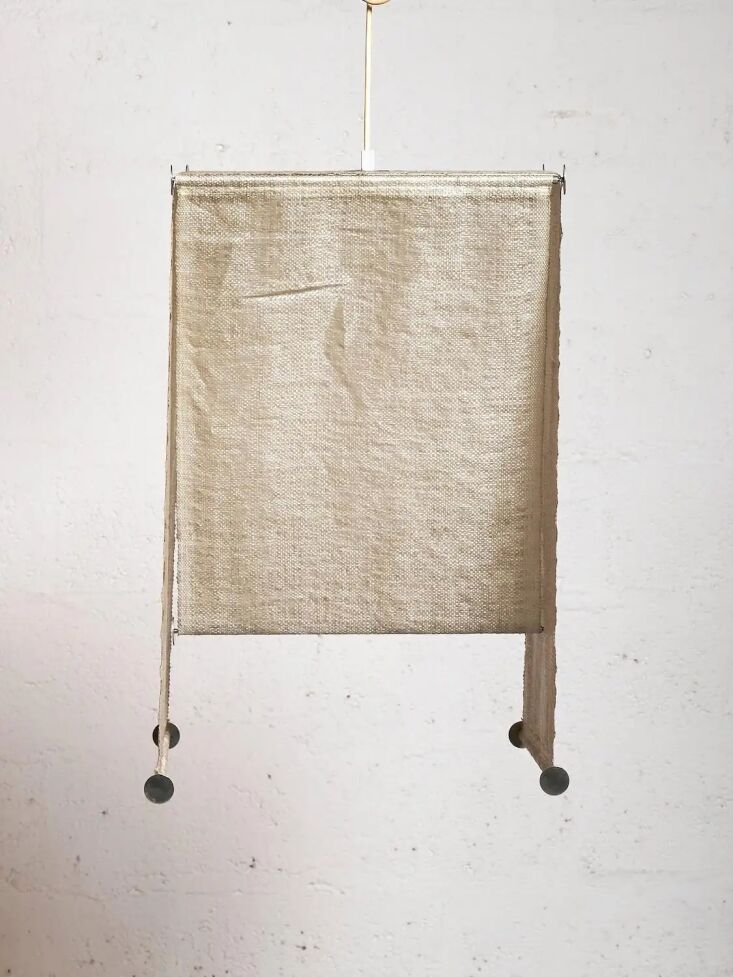
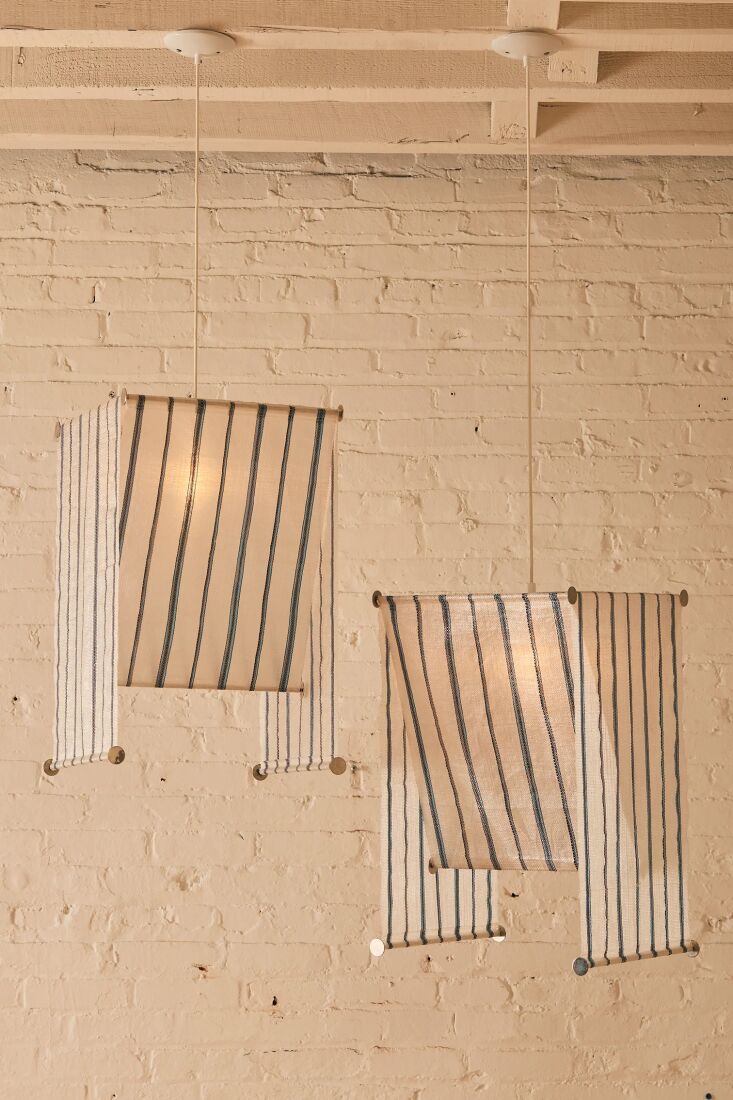 Above: We spotted vintage Teli lights at some of our favorite stores, including Somerset House, which sold this unique striped version. From the site: “Teli was born to exploit the quality of soft filtering light of Raflon, a new polyethylene fiber which was manufactured by a subsidiary of Kartell and used for packaging. Fabricated in white lacquered metal with a chromed metal structure and polyethylene fabric lampshade.” This model (now sold) was $3,400.
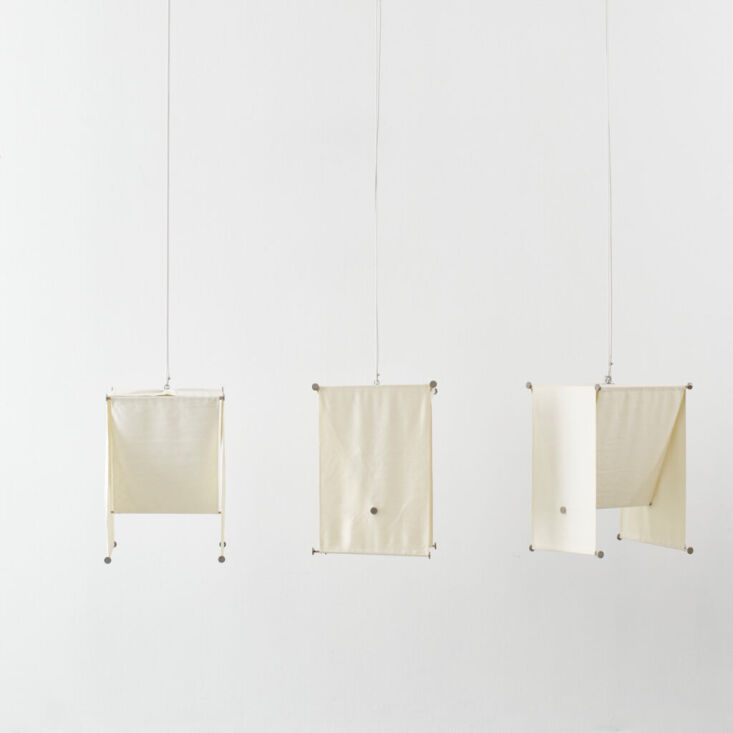 Above: Béton Brut is selling a vintage Teli for £5,500. We also found the light on Etsy, where one merchant is selling it for $4,839.
See also:
For daily dispatches and more favorite finds, head to Remodelista.com. For bonus content—like our weekly Quick Takes column—consider joining us as a paid subscriber.
Remodelista participates in affiliate marketing programs, which means we may get paid commissions on products purchased through our links to retailer sites.
