

Remodelista Reconnaissance: Sculptural Table Lamps Made From Scrap Paper
by Margot Guralnick
An otherworldly table lamp keeps catching our attention. Curved and plant-like, it’s made from a material reminiscent of plaster. After spotting the design in chic settings in France over the last two years, we had to find out more.
The Sightings
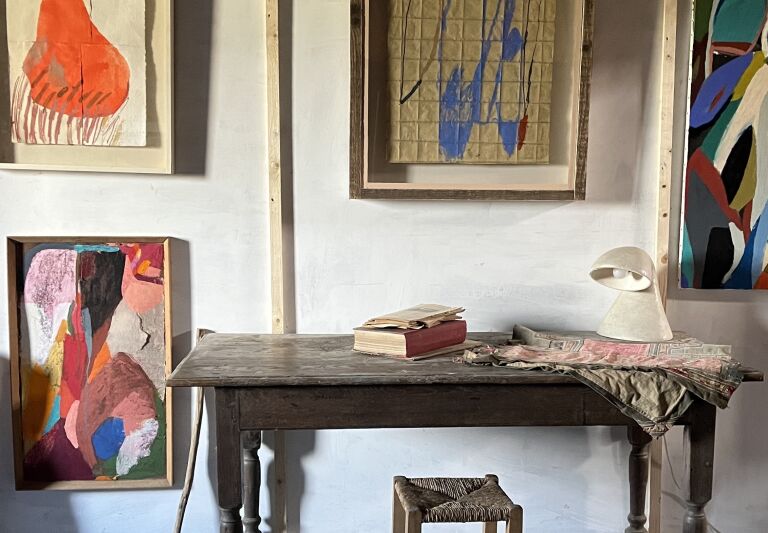
 Above: The lamp first appeared in the Merci department store’s showcase apartment: see Lessons in Mixing and Matching: Merci Reinvents an 18th Century a Family Home in the 5ème. Photograph courtesy of Merci.
 Above: The light cropped up again in artist Heather Chontos’s 17th century Barn Studio in Southwest France. She told us she bought it in Morocco from a French artisan named Henri Dejeant. Photograph by Heather Chontos.
 Above: Another Henri Dejeant lamp stands bedside in Heather Chontos’s Stone Farmhouse. Photograph by Heather Chontos.
The Source
 Above: Henri Dejeant started making his lamps more than a decade ago while running a hotel in a Berber village in southern Morocco with his cousin. Inspired by Moroccan craftsmanship and upcycling practices, he began experimenting with scrap paper and developed his own moldable version of papier maché; it was the material that led him to try his hand at lighting design.
Dejeant has since moved back to the south of France, where he grew up; his workshop, Henri Atelier, is in the small town of Béziers. He’s been building things since he was a boy—for his 11th birthday, he received a workbench that he still uses.
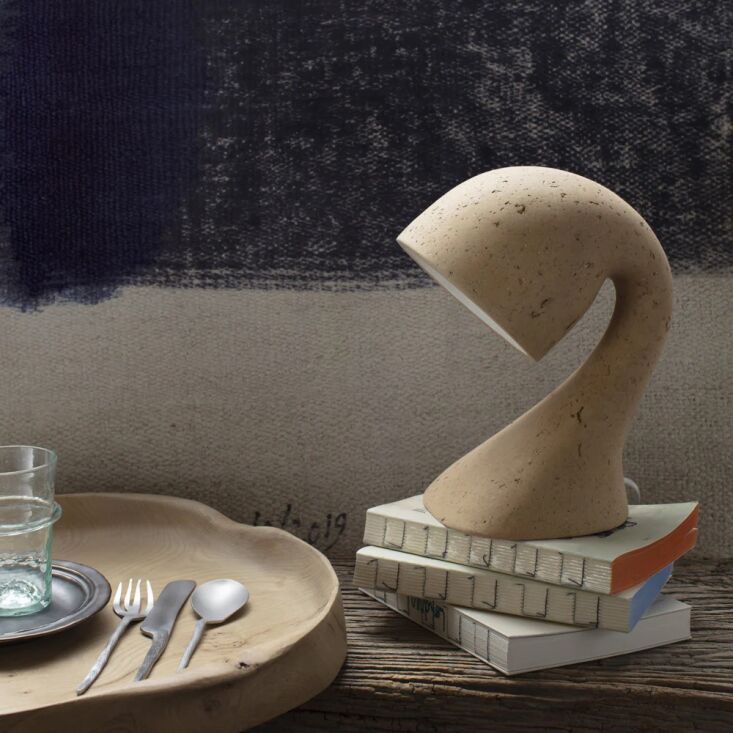 Above: Dejeant makes his paper creations out of a proprietary mix of binders, which include plaster of paris and flour, and finishes them with a combination of waxes. “My goal,” he says, “is to maintain an ecological approach from creation to delivery.” His creations are now available via Merci Paris.
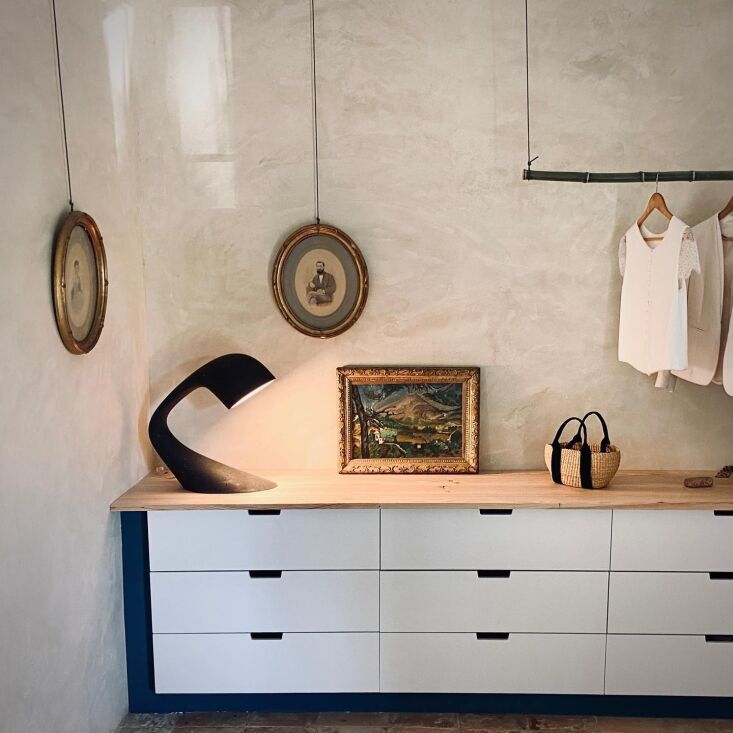 Above: The Invider Medium, €468, is shown here in Dejeant’s own home. He sells his designs on his web shop and through a number of stores in France.
More of our design sleuths:
- Remodelista Reconnaissance: Traditional Blankets, Rugged Enough for the Cabin
- Remodelista Reconnaissance: The Paint Colors in an Ever-Changing French Kitchen
- Remodelista Reconnaissance: The Ideal Coffee Cups, Sans Handle
N.B.: This story originally ran on November 3, 2023 and has been updated with new links and pricing.
The Pine House 1970: A Modern Danish Summerhouse in Liseleje
by Alexa Hotz
In the idyllic coastal setting of Liseleje, Denmark, sits The Pine House, the summerhouse of Kasia Sznajder and Fred Aartun. Kasia, a brand strategist formerly with Reform (her recent work includes production for Copenhagen’s daysofdesign), and Fred, Head of Creative at Frama, were primed to design a space of their own. Later this year, they are launching aarticles, an online gallery store featuring curated objects and rare finds. They bought the 1970s-built summerhouse in 2021 and have been evolving the interiors ever since. The renovation is unhurried and modest, with design decisions unfolding piece by piece. Steeped in Danish design, Kasia and Fred honor the traditions of modern Scandinavian summerhouses, citing Alvar Aalto and Bertel Udsen among their inspirations. Here’s a detailed look at The Pine House today—available to rent through @thepinehouse1970.
Photography courtesy of Fred Aartun.
 Above: The house is designed with honest, natural materials from various woods and linen to rice paper and sisal. The lamp is the Noguchi Akari J1 Ceiling Lamp. The stool at front is the AML Stool in Dark Pine from Frama. The blue throw is a Brushed Gotland Wool Blanket from Klippan.
 Above: The floors are finished in sisal carpeting. For the first few years, Kasia and Fred had covered the existing linoleum with jute rugs until they were able to redo the floors. The silver platter is by artist Yeodong Yun for aarticles.
 Above: Kasia moves tabletop elements around in the living room. Much of the pine furniture came with the house; Kasia and Fred sanded and re-oiled it themselves. The white vase is by Kasia—her own pieces, too, will be available at aarticles.
 Above: A trio of side tables echo the three windows above. At center is the Frama T-Lamp in Steel. The blinds throughout were sourced from Color & Co.
 Above: The interior walls are all original pine cladding. The floor lamp is the FLOS Toio Lamp in Black. The side table is actually a bench, the Bench 01 in Dark Brown Birch from Frama.
 Above: A wide view of the living room reveals the wood burning stove original to the house.
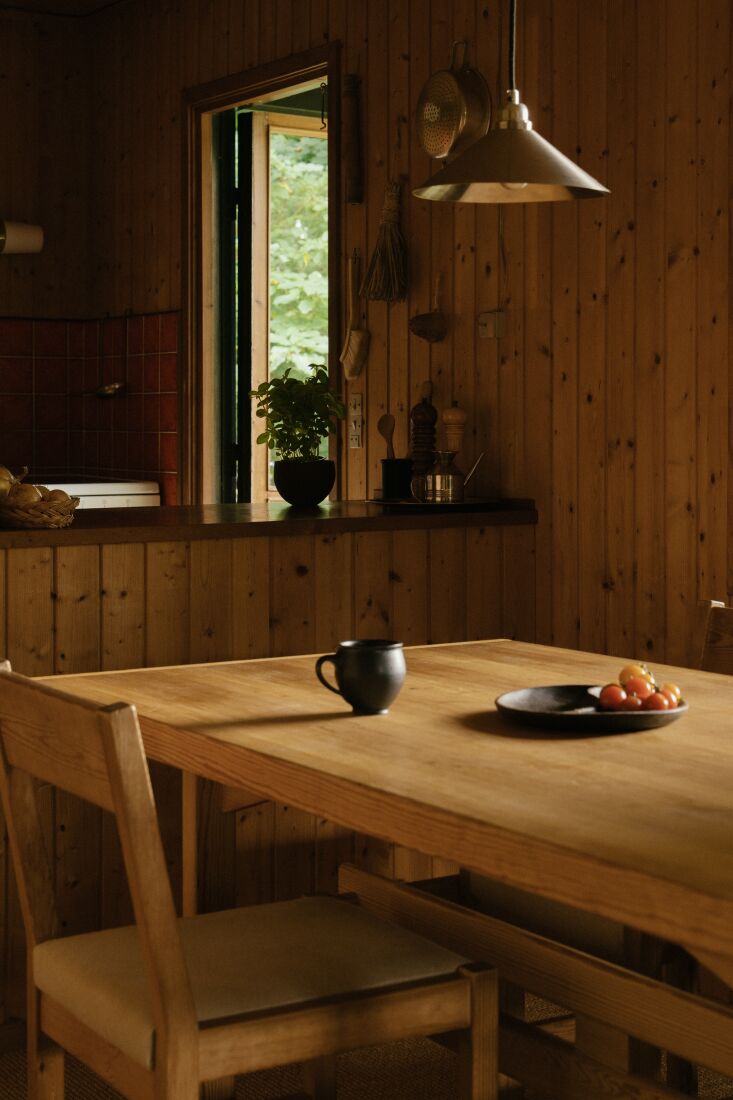 Above: Hanging above the dining table is the Frama Cone Shade.
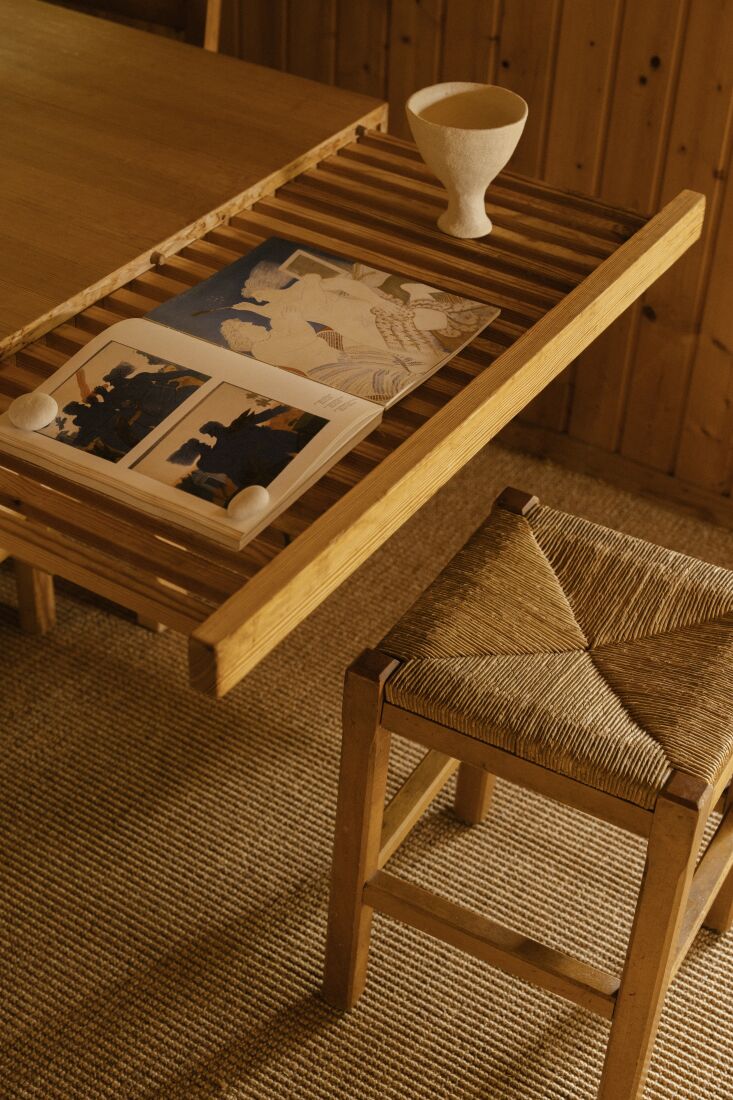 Above: The vintage dining table extends with a a slatted top at either end.
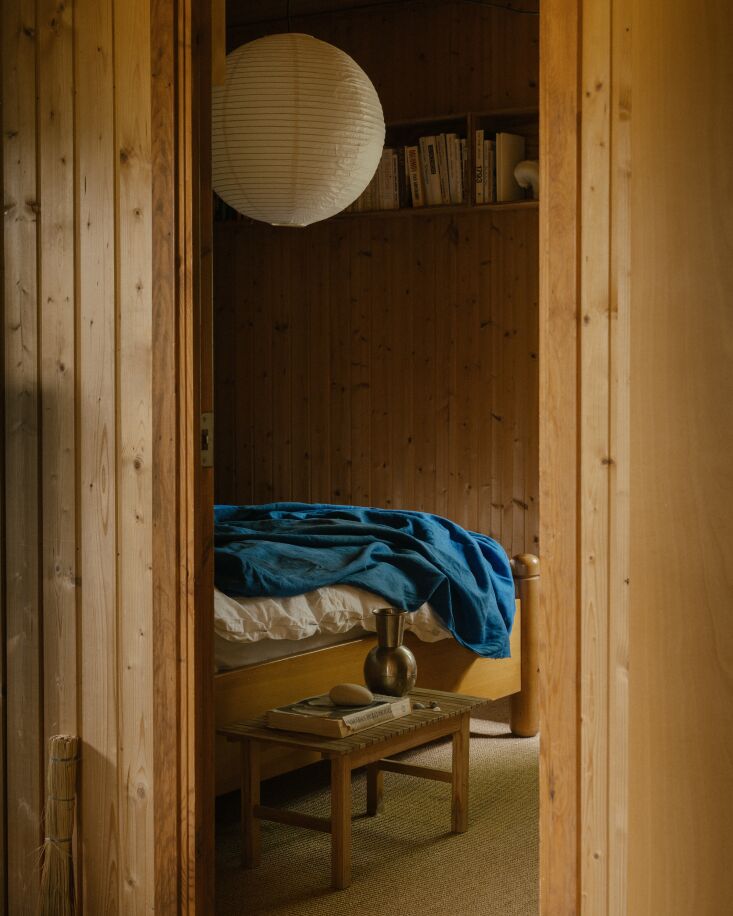 Above: An original pocket door opens into the main bedroom, complete with wall-mounted bookshelves and a Noguchi Akari Lantern.
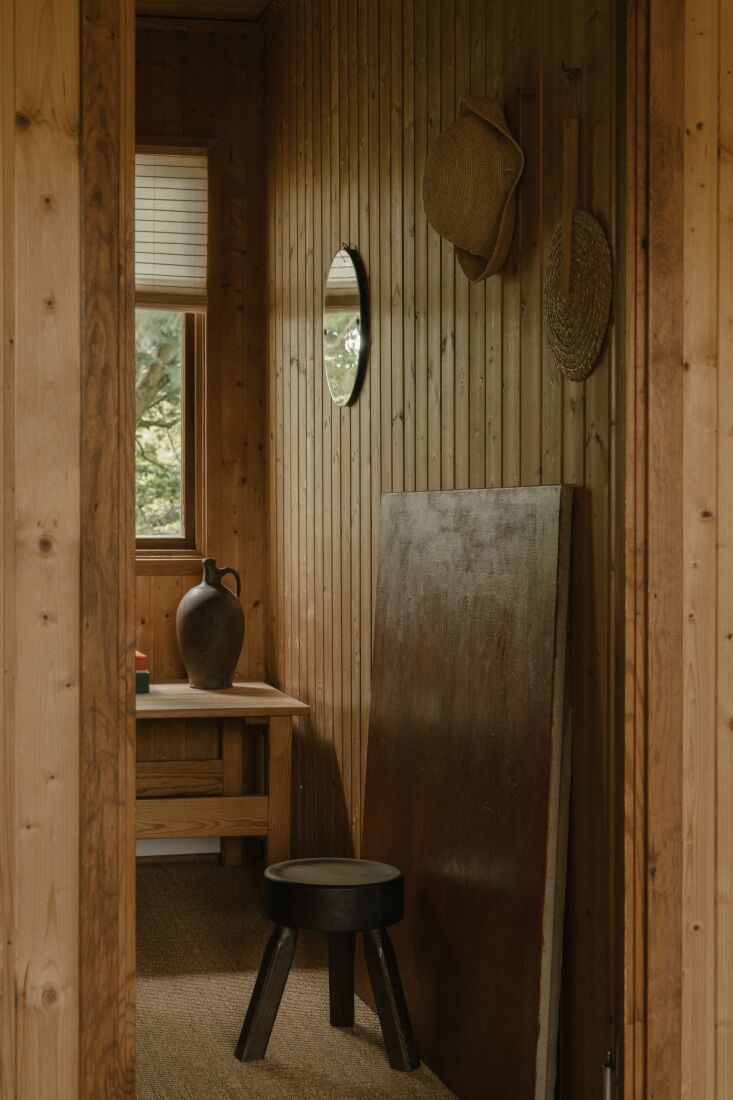 Above: A summer hat and woven fan hang on the wall alongside a round vintage mirror.
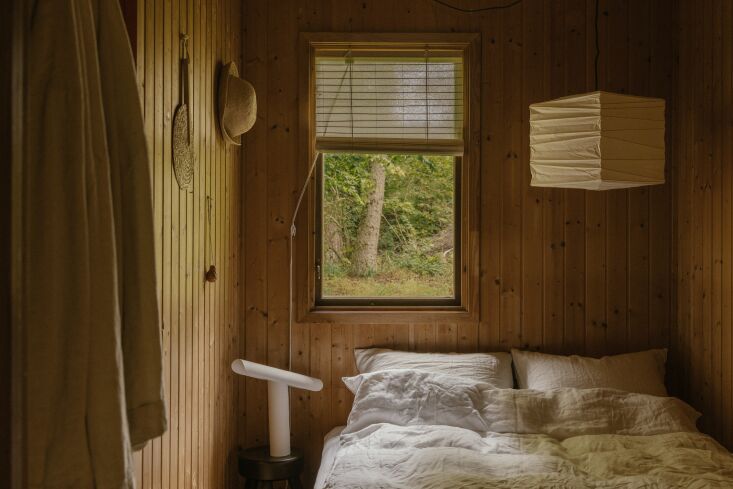 Above: The second, smaller bedroom is designed with a Noguchi Akari 33X and a Frama T-Lamp in White.
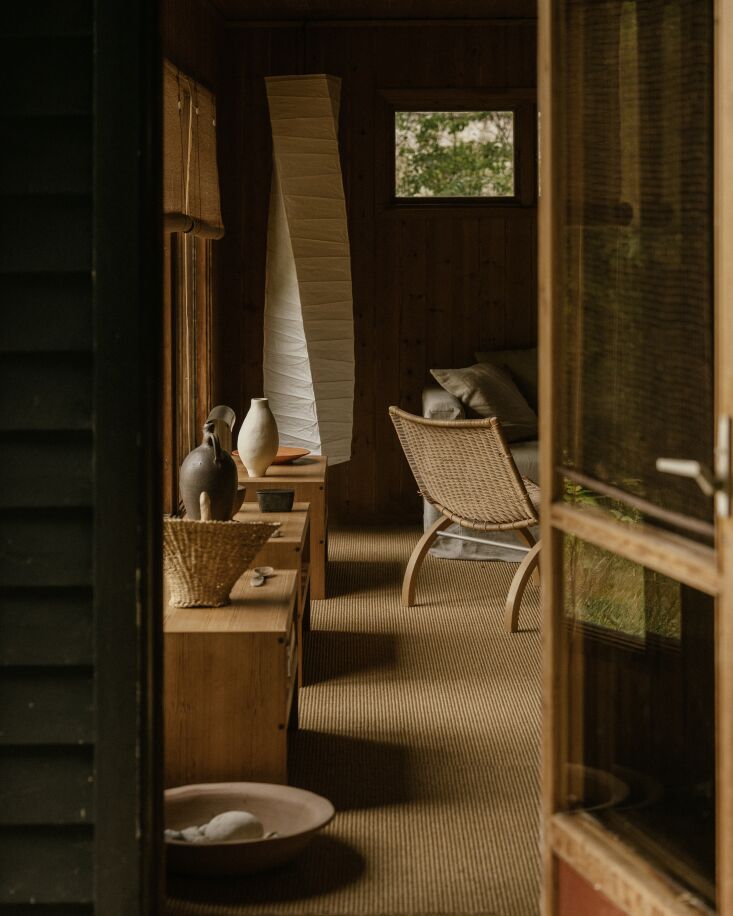 Above: A look down the length of the living room from the exterior.
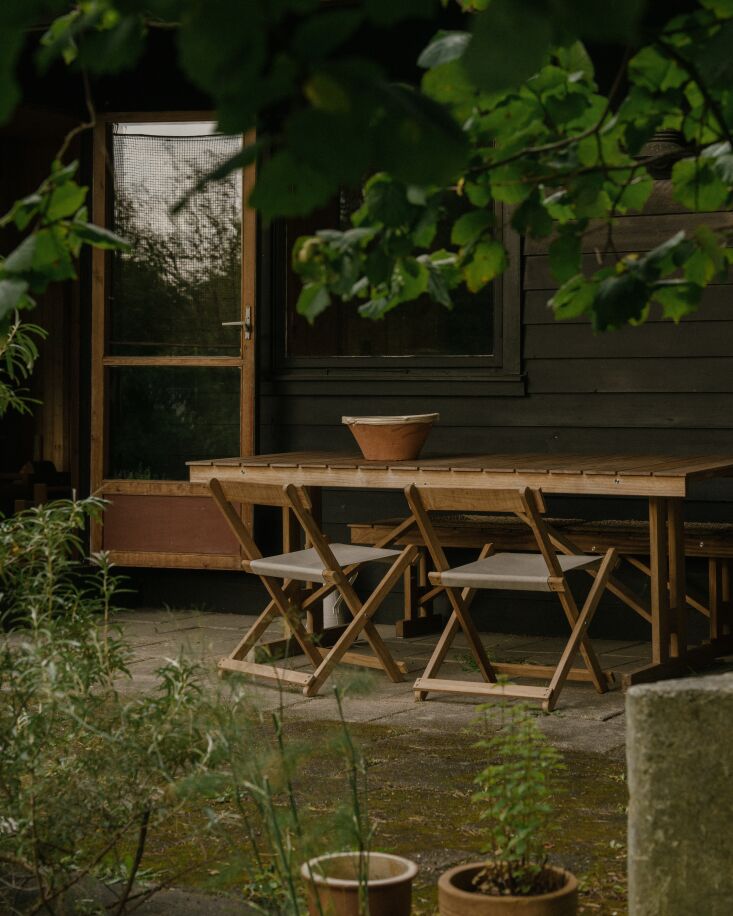 Above: The teak outdoor dining table and chairs are the Børge Mogensen Dining Set for Carl Hansen & Søn. The terrace previously had a surrounding fence which Kasia and Fred removed and replaced with flower beds.
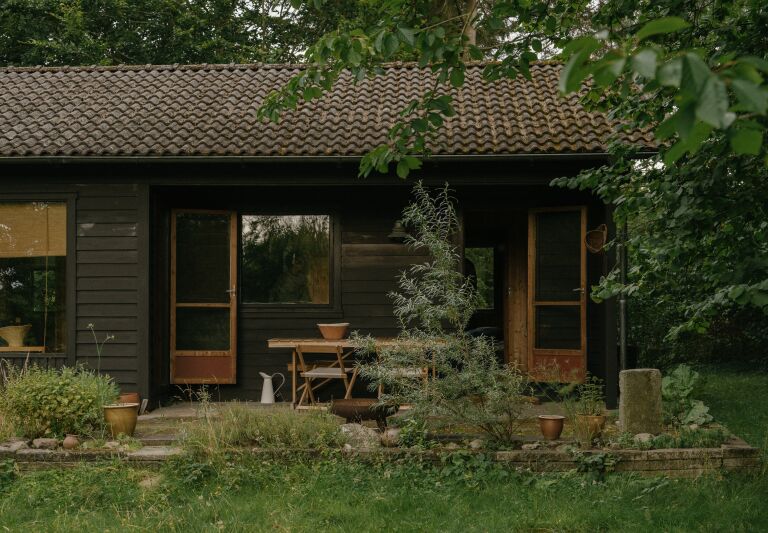
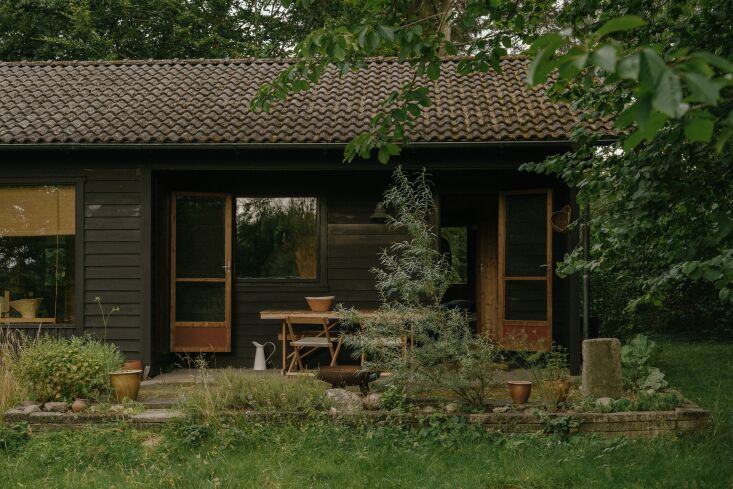 Above: The hallmark of Danish summerhouses is a low visual impact. Here, dark-stained pine recedes into the forest. The house was built by the family they bought the house from. “It’s modeled after a simple Swedish style known as annabergs hus,” Kasia explains. “I’ve seen photos of the finished house from 1970 and the first thing you notice is that there were no trees on the property back then. Today, tall trees surround the grounds completely, and that’s one of the things that makes it so special to us.”
For more Danish summerhouses, see our posts:
- In Harmoni: A Low-Impact Summerhouse in Rural Vollerup, Denmark
- Simplicity Reigns: An Architect’s Pared-Down Summer Home in Denmark
- A Modular Danish Summer House—with a Six-Month Lead Time
- Woodland Wonder: A House of Douglas Fir in a Forest in Denmark
N.B.: This story originally appeared on August 8, 2025 and has been updated.
For daily dispatches and more favorite finds, head to Remodelista.com. For bonus content—like our weekly Quick Takes column—consider joining us as a paid subscriber.
Remodelista participates in affiliate marketing programs, which means we may get paid commissions on products purchased through our links to retailer sites.
