

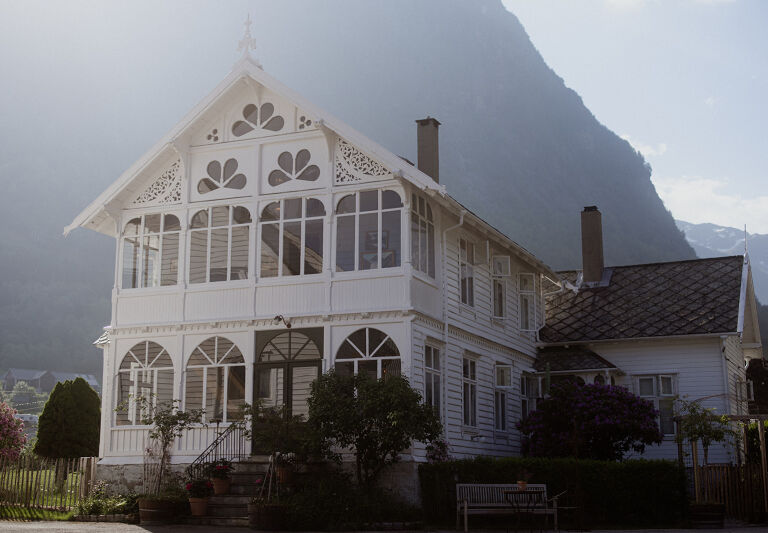
Norwegian Wood: Restoring Hotel Sundal, an 1889 Timber Hotel in Western Norway
by Alexa Hotz
In 2018, Caroline Steine and Harald Andreassen left the city to take on an unlikely project: restoring Hotel Sundal, an 1889 timber hotel that had sat empty for years in western Norway’s Hardanger region. Originally built by Erik Gausvik and Anna Eikenes, early pioneers of glacier tourism, the hotel once welcomed European aristocracy, emperors, and mountaineers setting across the nearby Folgefonna glacier. It remained in the founding family for three generations before Caroline and Harald took it over and began its careful restoration.
Rather than reinventing it, the couple restored the hotel with a light hand, preserving its uneven floors, shared baths, and much of its original character while bringing new life to the kitchen through ingredients sourced from neighboring farms, the fjord, and the surrounding landscape. Today, the historic 11-room hotel reflects the couple’s considered approach: preserving what was there while making room for a new chapter.
Photographs courtesy of Hotel Sundal.
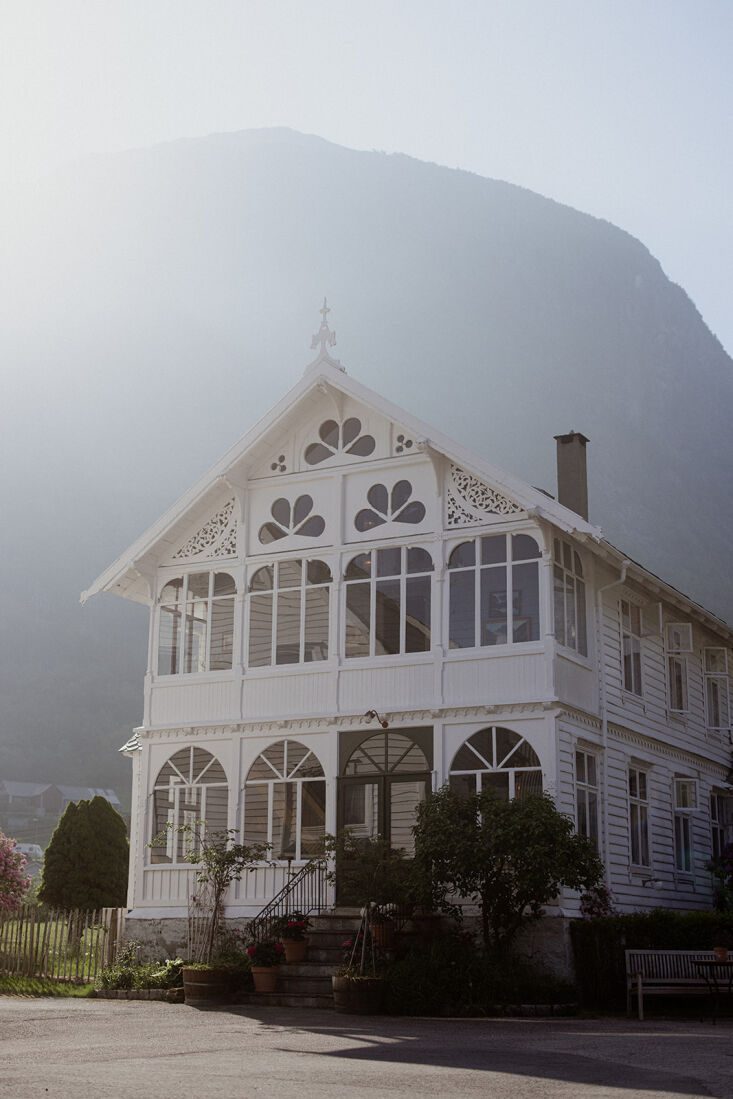 Above: Hotel Sundal was built in 1889 in the village of Sundal, at the foot of the Folgefonna glacier on Norway’s Hardangerfjord.
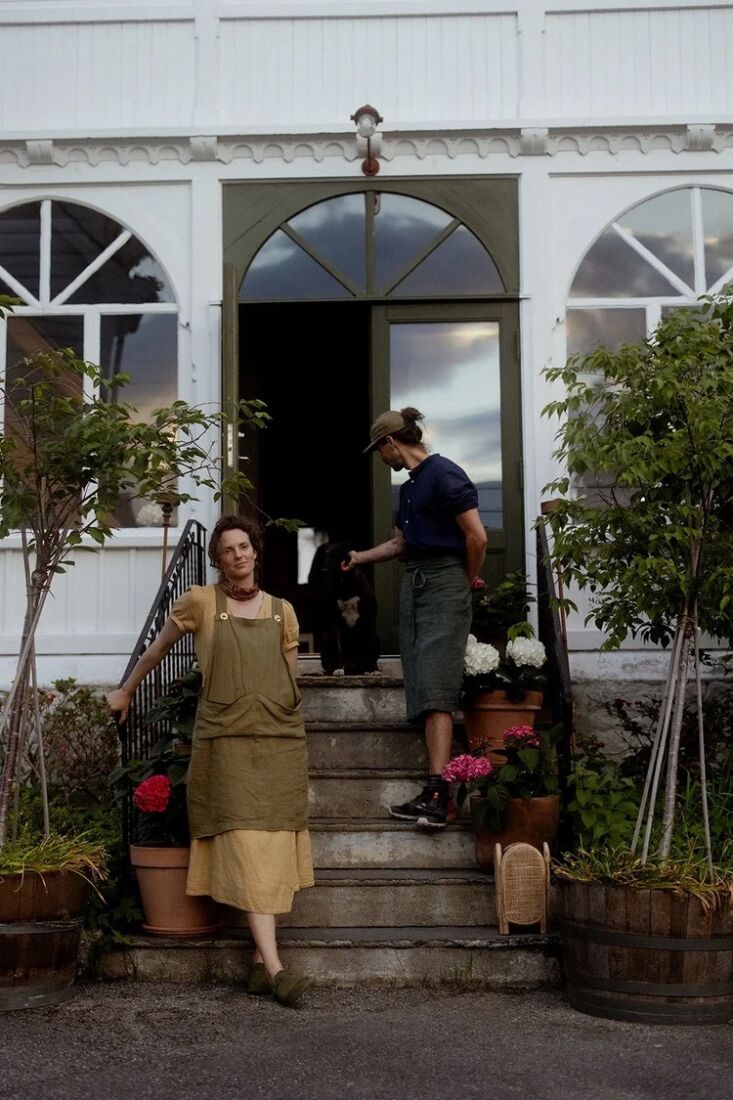 Above: Caroline and Harald purchased the long-vacant hotel in 2018 after leaving city life to restore it piece by piece.
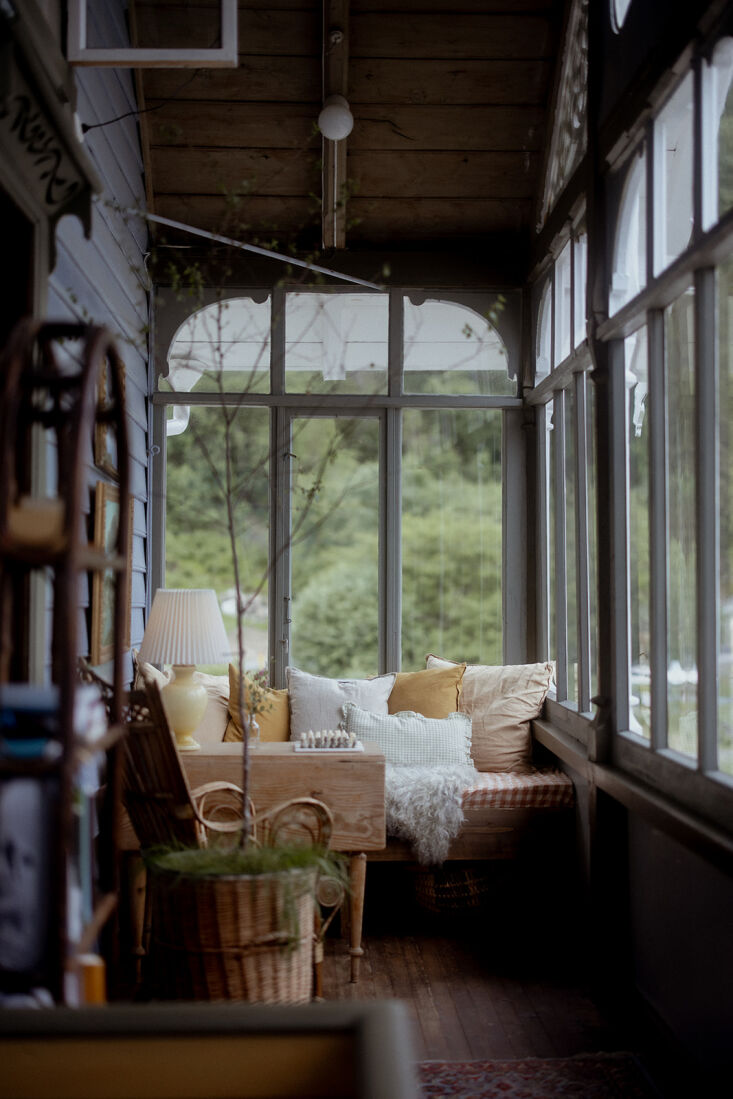 Above: The original sunroom is outfitted with new upholstery, throws, and vintage furniture.
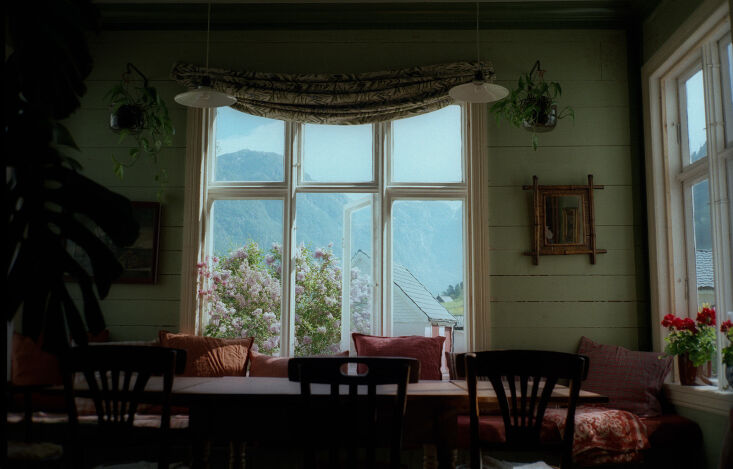 Above: The hotel’s dining area with a mix of farmhouse chairs, two pendants, and handmade curtains drawn to reveal a cloud of blooms out the window.
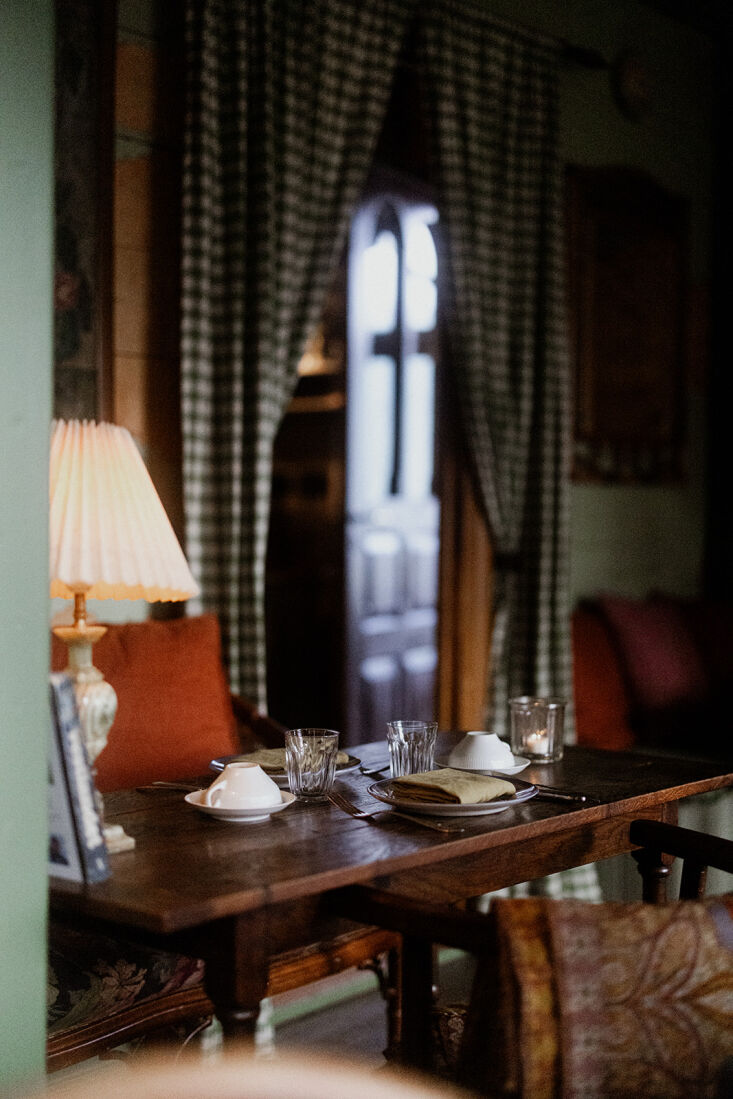 Above: A dining corner with eclectic furnishings and a gingham curtained doorway.
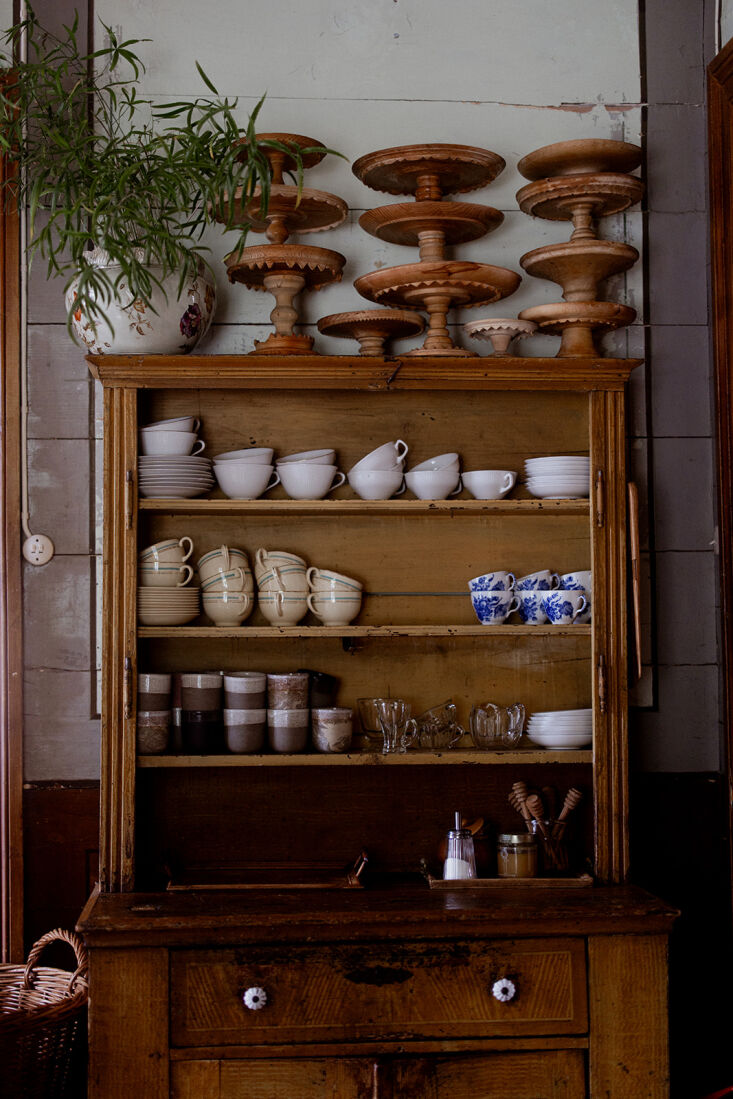 Above: A collection of dinnerware and wooden cake stands on an antique hutch.
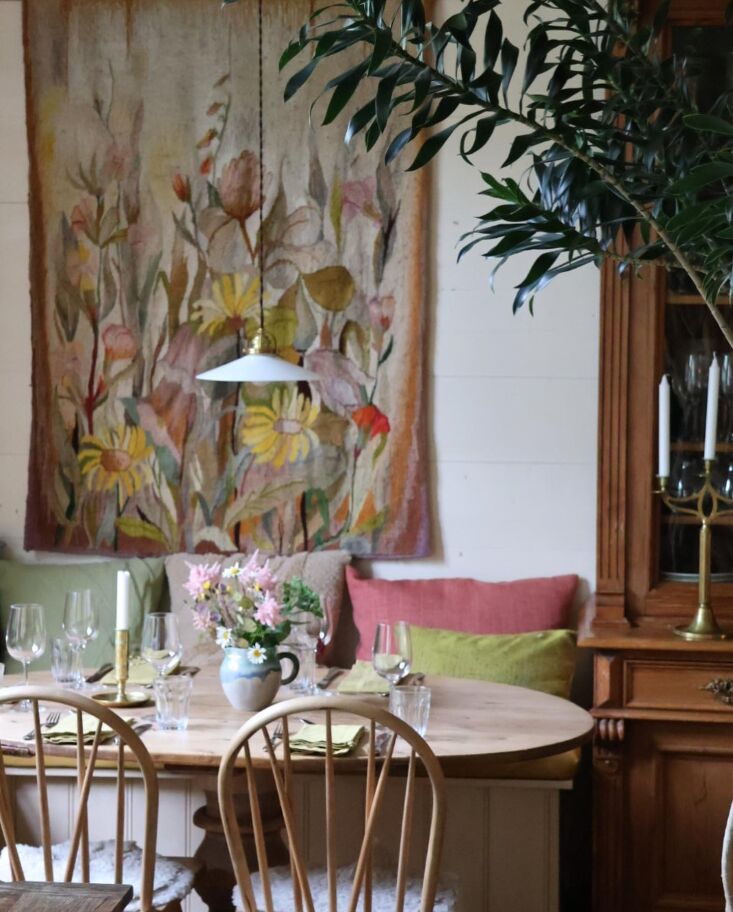 Above: A milk glass pendant hangs above another dining table.
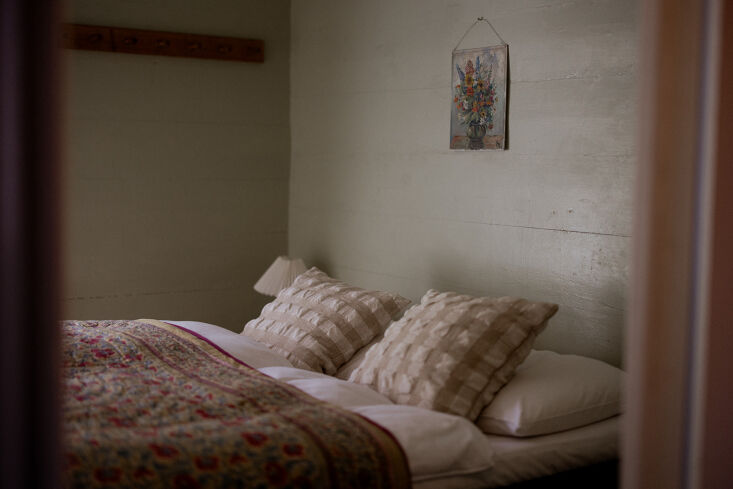 Above: A timber-walled guest room painted in pale sage green.
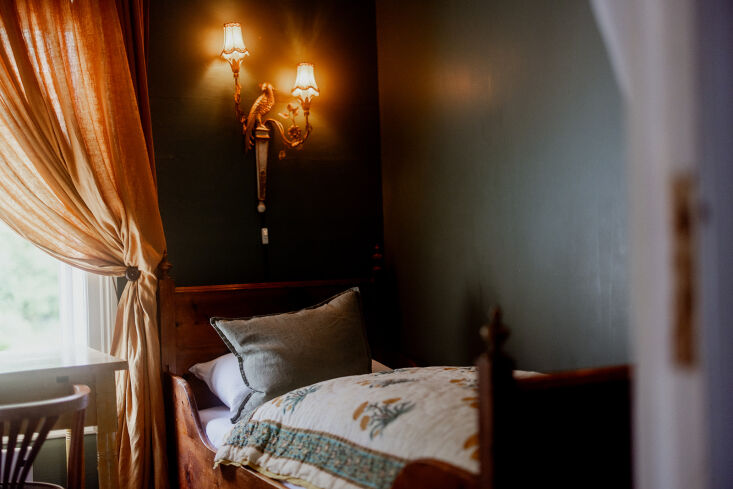 Above: A guest room outfitted with single beds and characterful antique lighting.
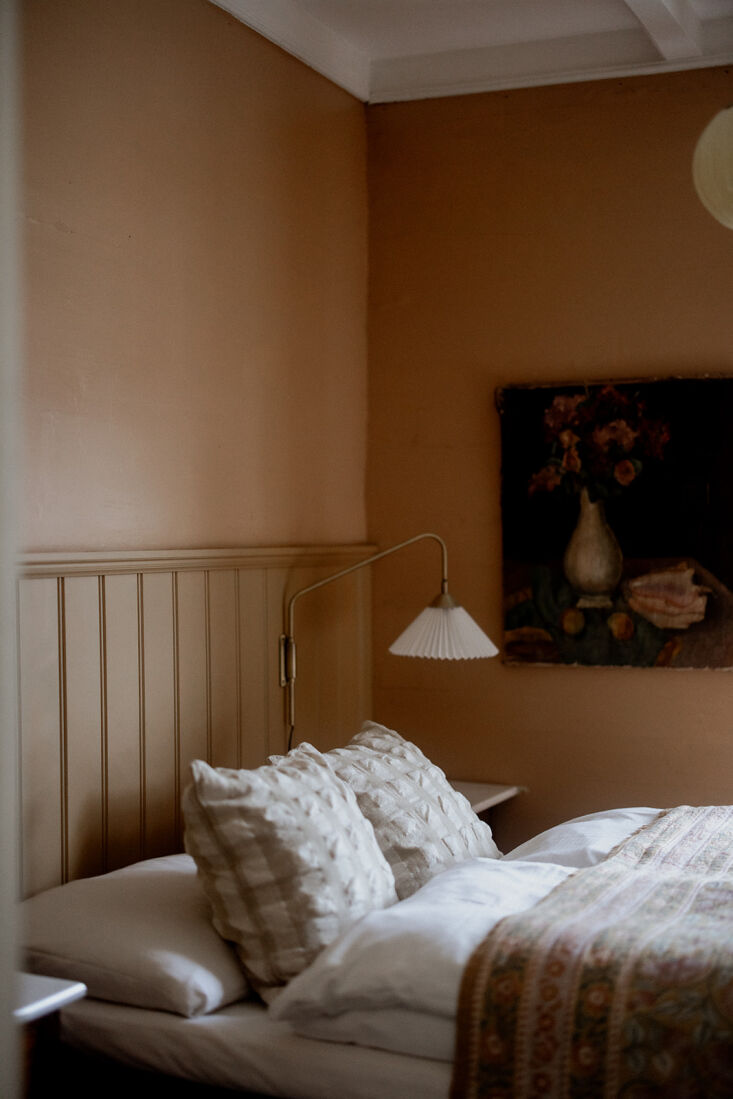 Above: Another guest room designed with sand-colored walls.
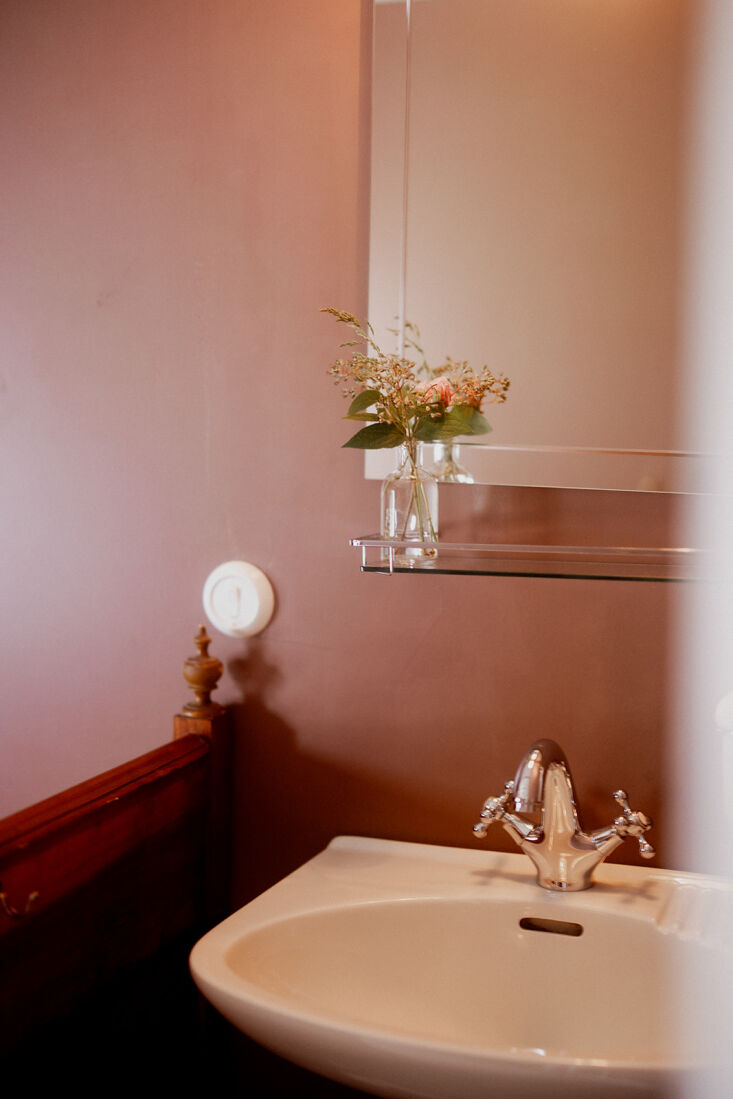 Above: In keeping with the building’s history, bathrooms remain shared—a rarity that feels entirely fitting here.
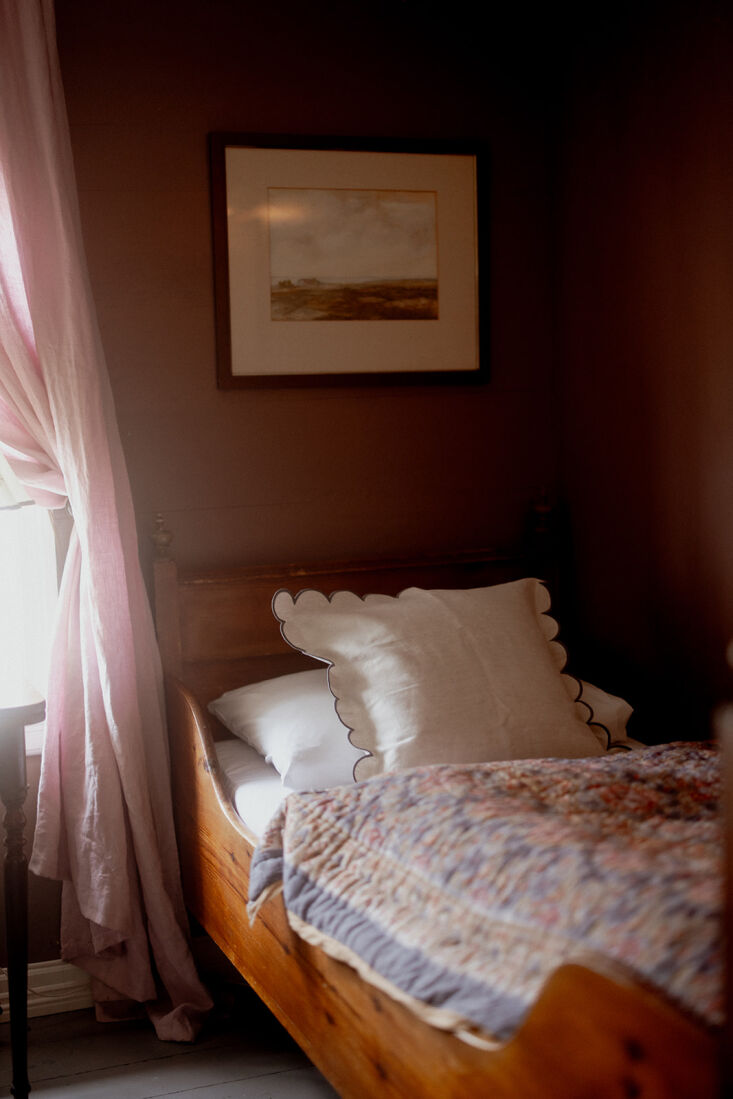 Above: A single bed with pink linen curtains and a scallop-edge throw pillow.
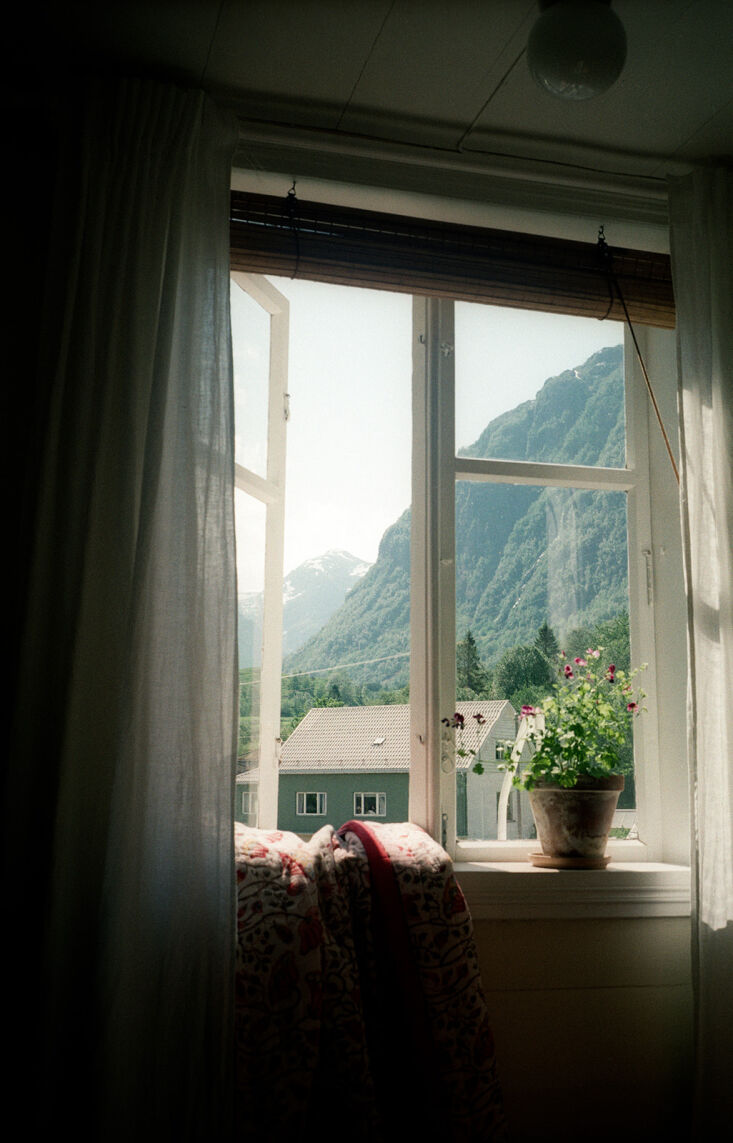 Above: One of the hotel’s ten guest rooms, furnished with natural-material mattresses and views toward the surrounding mountains.
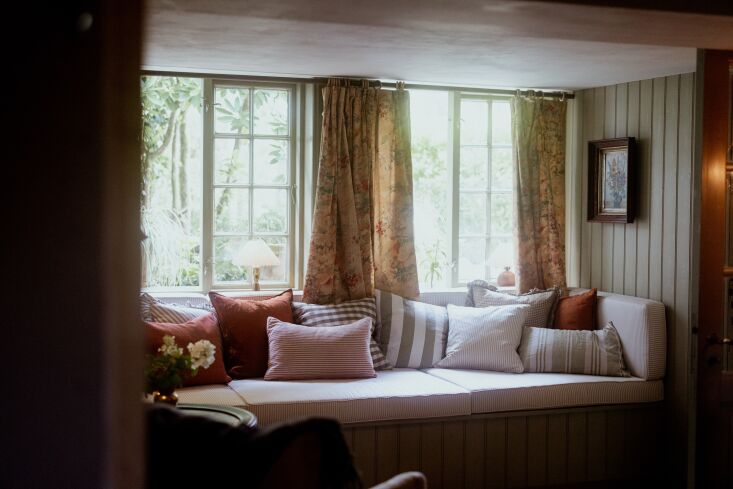 Above: A lower suite is designed with a wall-to-wall reading nook.
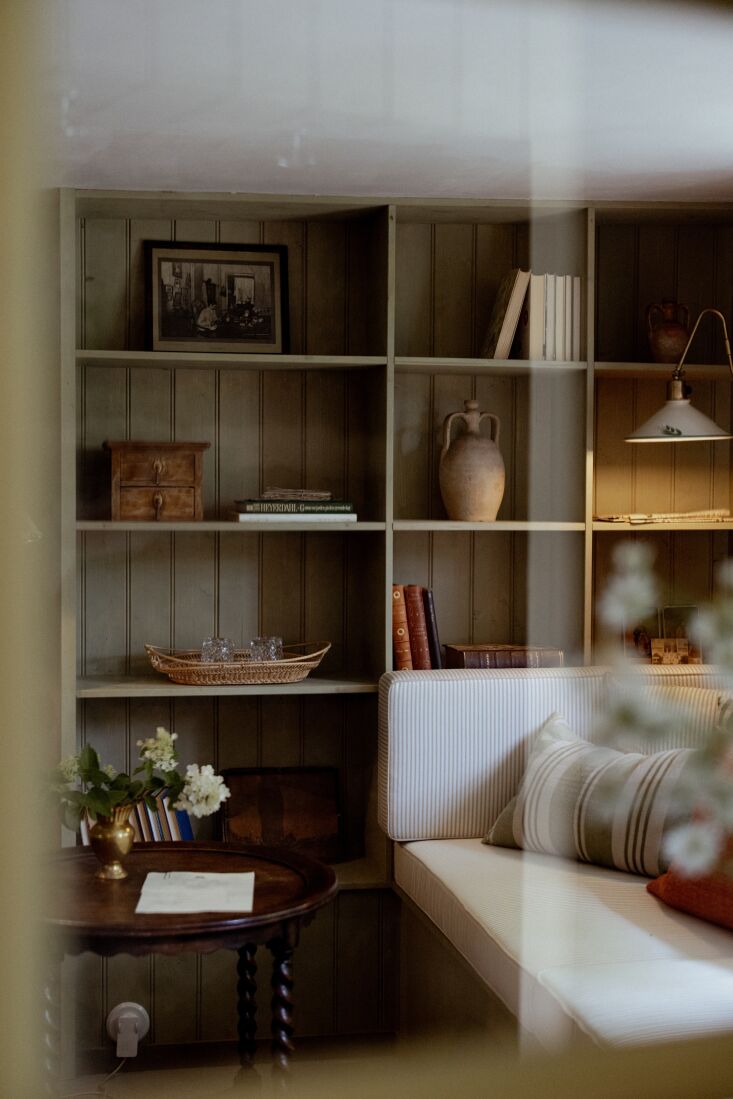 Above: Historic photographs and antique decor.
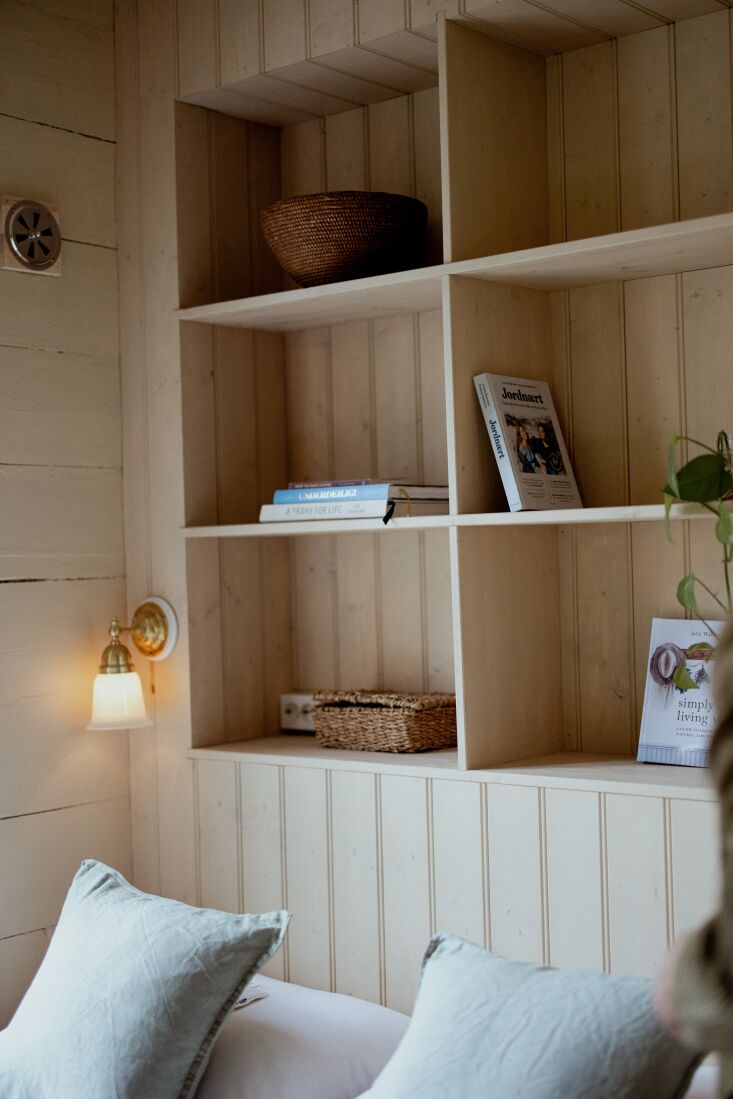 Above: Built-in shelving in the lower guest suite.
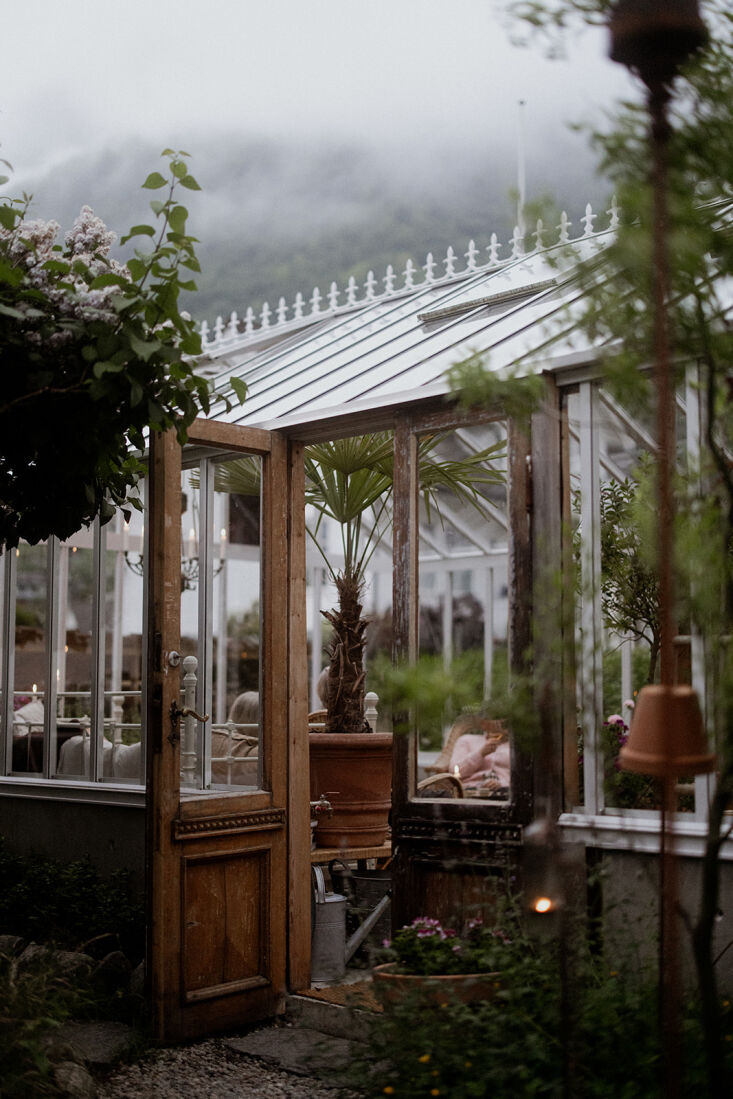 Above: A greenhouse sits within the hotel’s slightly wild garden, where herbs, vegetables, and flowers make their way into the kitchen.
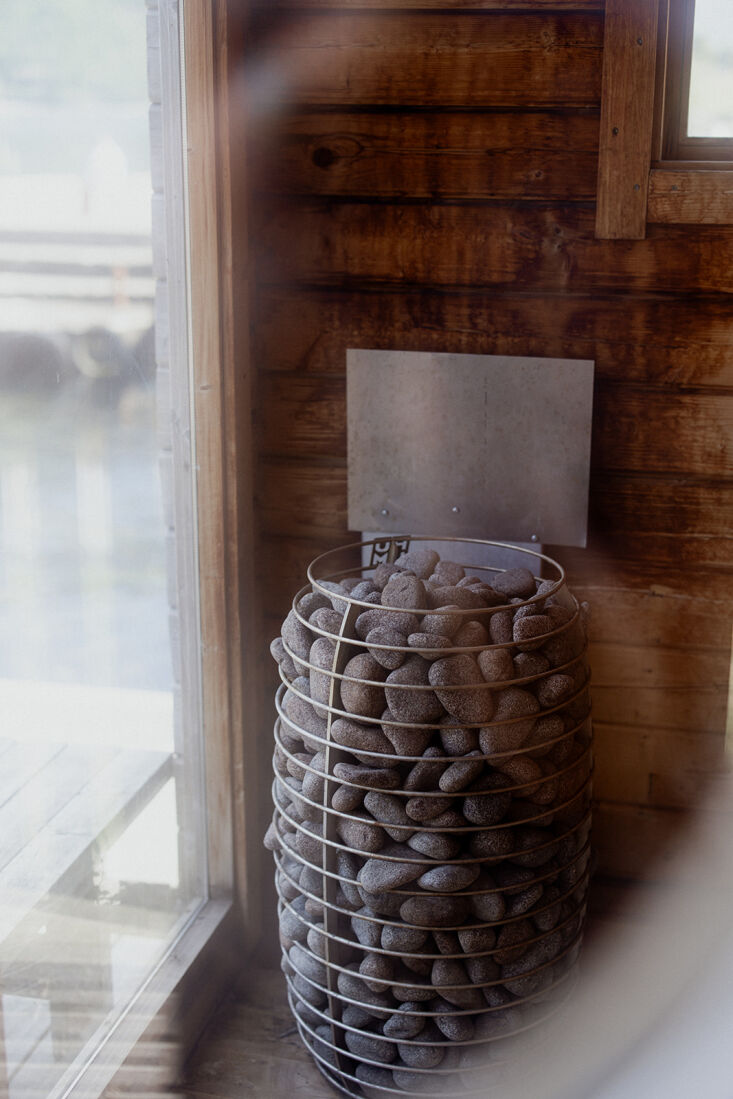 Above: Just beyond the hotel, a wood-fired sauna overlooks the fjord, with the glacier only a short distance away.
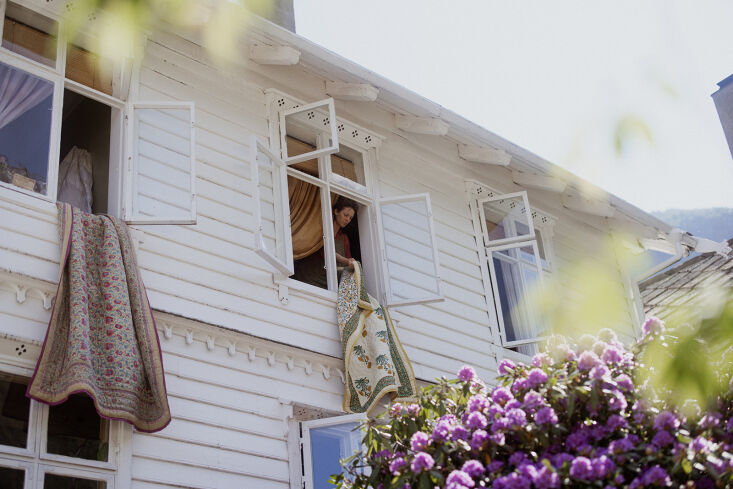 Above: Airing out linens in the warmer months.
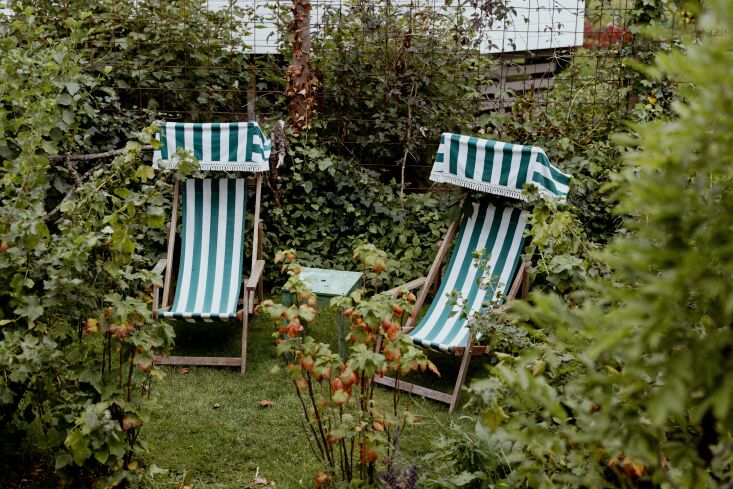 Above: A pair of lounge chairs in the hotel garden.
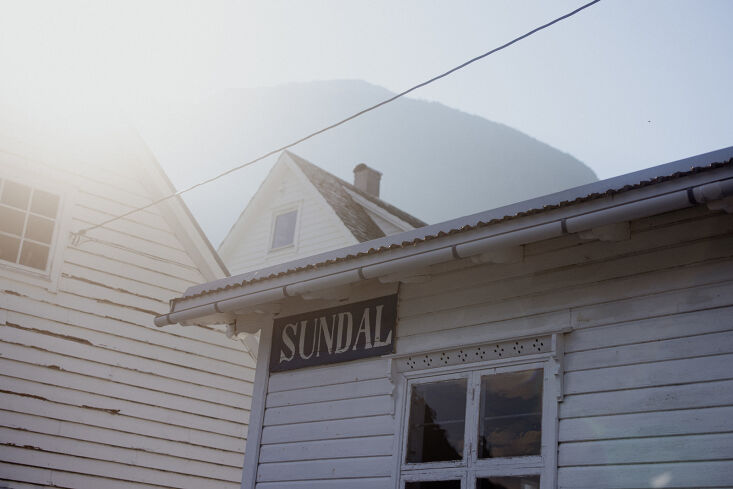 Above: The hotel’s signage.
 Abvoe: Harald rides to gather ingredients from nearby farms, the fjord, and local fishermen.
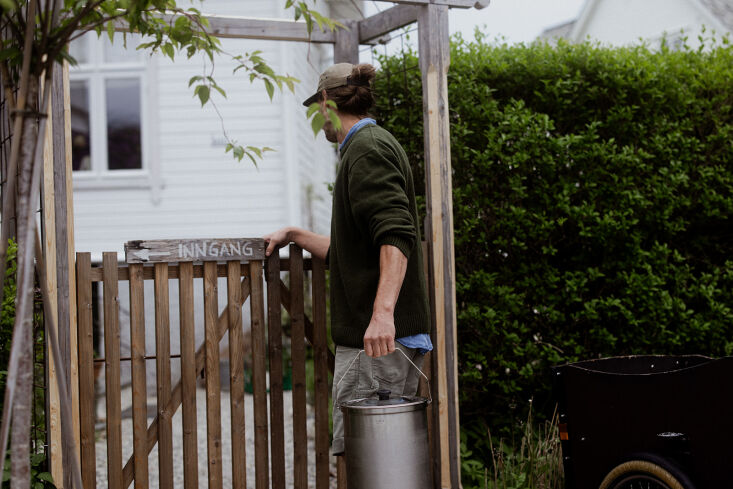 Above: Returning with fresh dairy.
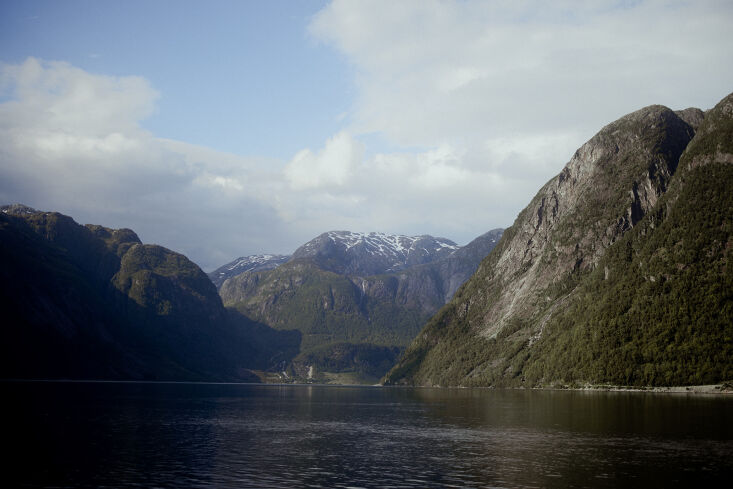 Above: The original hotel helped establish glacier tourism in Hardanger, offering guided crossings of Folgefonna more than a century ago; today, hiking trails begin just beyond the front door.
For more hotels and inspiring interiors in Norway, see our posts:
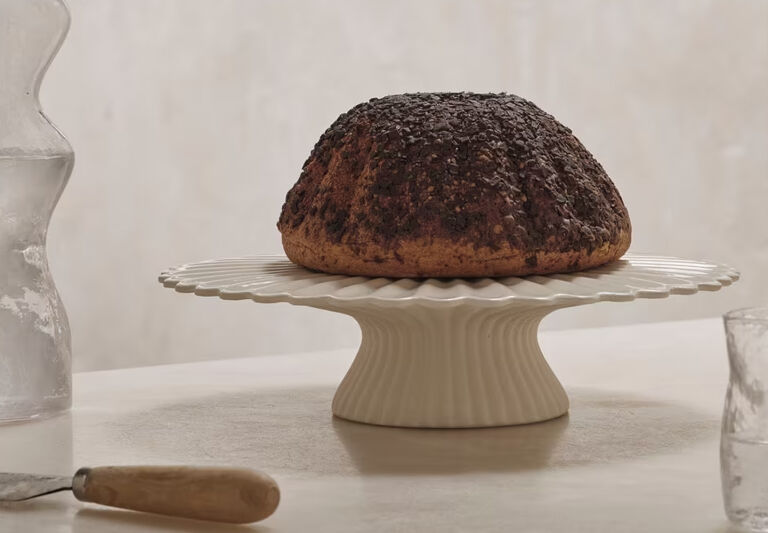
10 Easy Pieces: Versatile Cake Stands
by Alexa Hotz
Few household objects seem quite so optimistic as a cake stand. Most days it’s home to fruit or pastries, lending a little height to the kitchen counter. Then, once or twice a year, it fulfills its intended purpose—and reminds you why every home should have one. After all, every cake deserves a pedestal.
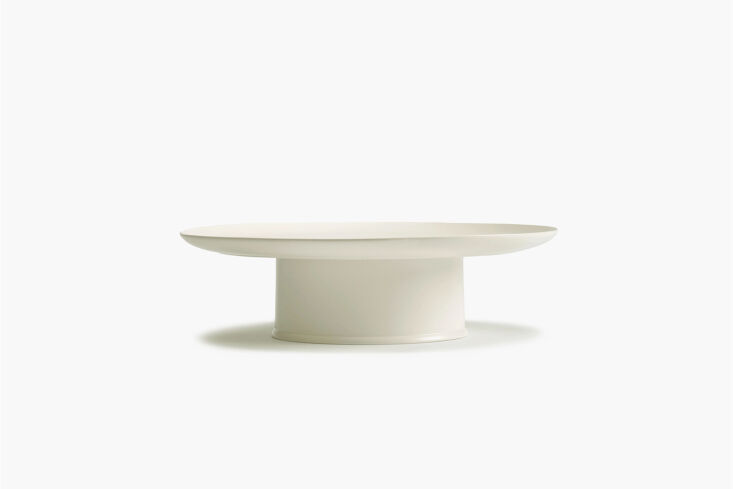 Above: From Belgian fashion designer Ann Demeulemeester for Serax, the Ra Cake Stand Off White features a slender plate with slightly upturned sides on a wide base; $202 at Serax. You can also find it in Green at Rouse Home.
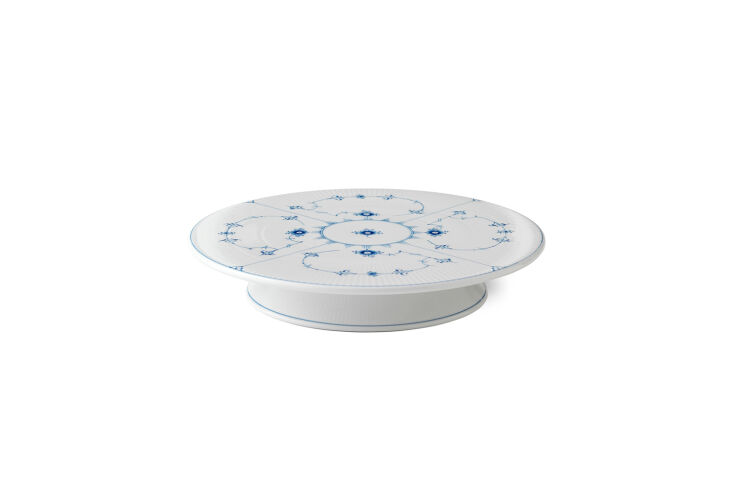 Above: A Scandi classic, the Royal Copenhagen Blue Fluted Plain Dish on Stand is the 1700s style on a porcelain.
 Above: Kelly Wearstler’s Dune Cake Stand, designed for Serax, features an irregular shape in solid ash; $224 at Serax.
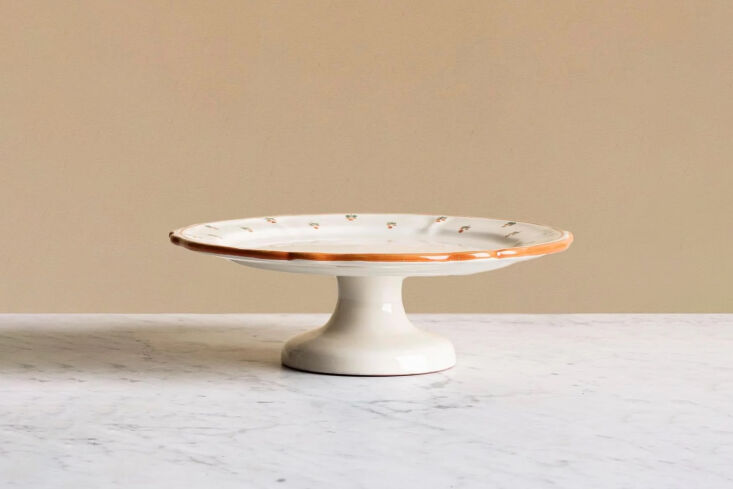 Above: By Nicola Fasano in Puglia, Italy, the Cake Plate Fiore features hand-painted flowers on porcelain; €102 at Tambur.
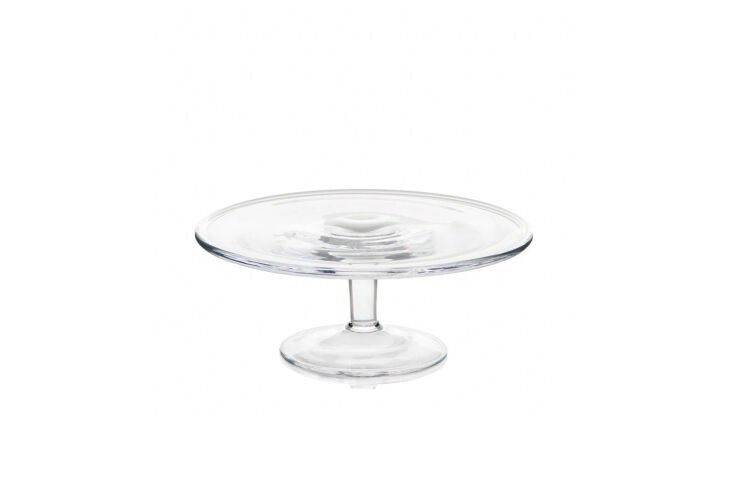 Above: The Klara Small Glass Cake Stand is made of hearty Polish glass and so simple its timeless; $128 at Hudson Grace.
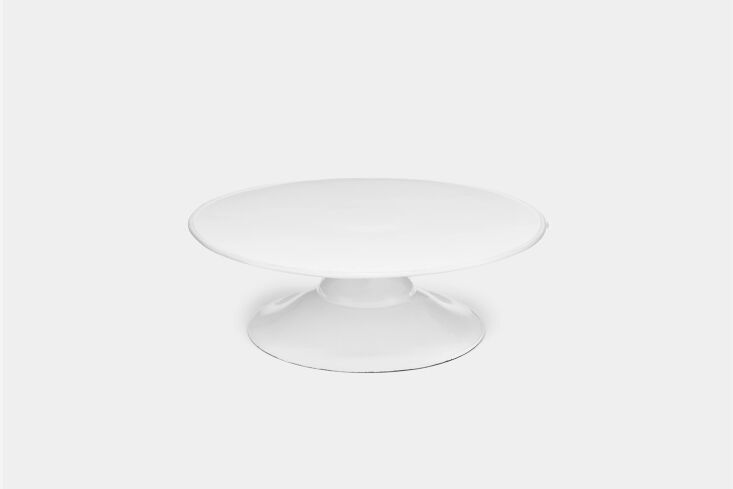 Above: From French mainstay, Astier de Villatte, the Sobre Hand-Glazed Ceramic Cake Stand is made from the brand’s signature black terracotta clay with a wash of milky-white glaze; $325 at Abask.
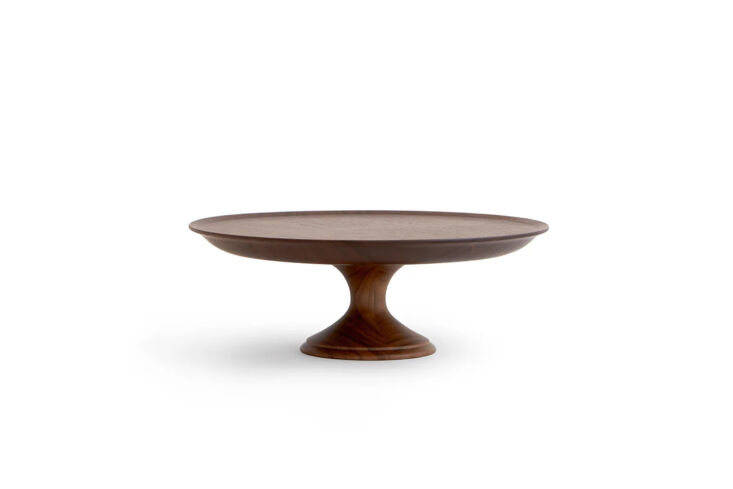 Above: Designed by Japanese master Oji Masanori for Takahashi, the Kougei Cake Stand is handmade in Hokkaido, Japan of solid walnut with a smooth texture and beveled edge.
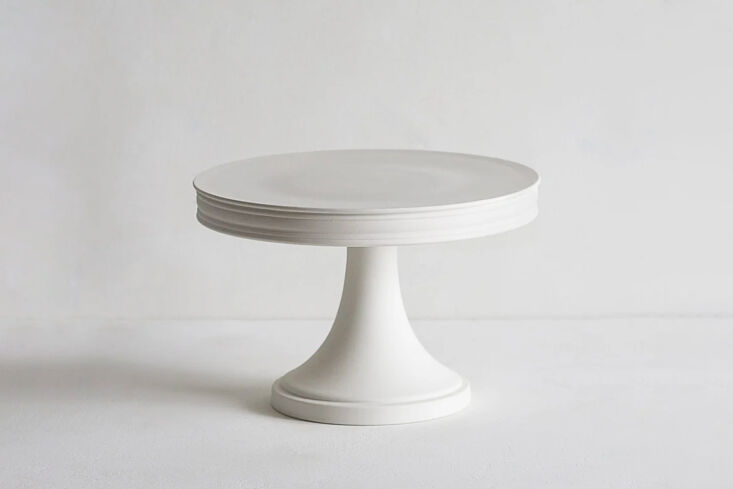 Above: From English ceramic house John Julian, the Large Cake Stand is hand-thrown in Wiltshire with a glazed top and unglazed base; £575 at John Julian.
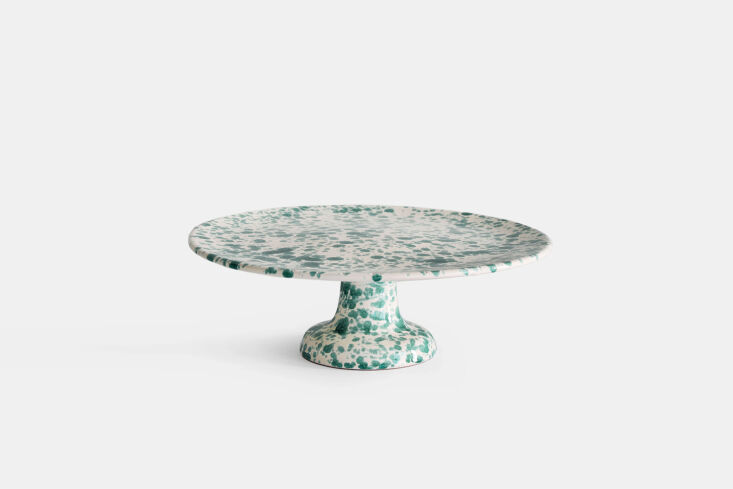 Above: At Artilleriet in Sweden, the Pugliese splatterware Spruzzi Vivente Cake Stand comes in green or brown; 1,380 SEK.
 Above: The Ferm Living Fountain Cake Stand takes a classically fanciful scalloped profile. Made of stoneware with a glazed top and unglazed underneath; $129 at Ferm Living.
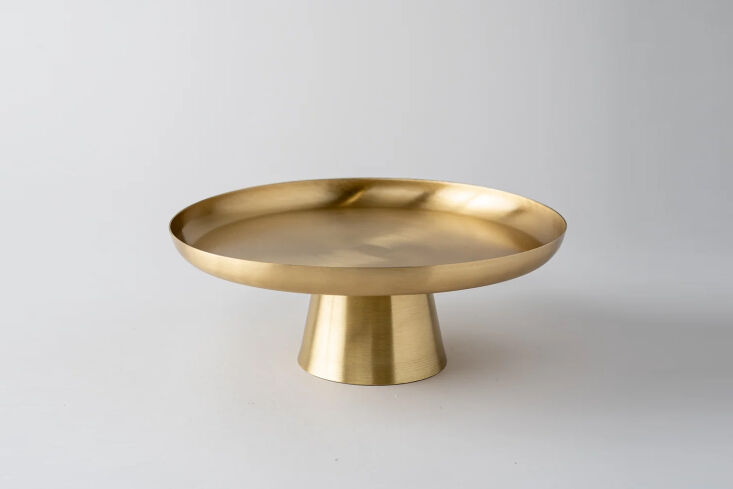 Above: A Brass Cake Stand made in India with a matte finish; $49 at June Home.
For more of our favorite dinnerware picks, see our posts:
For daily dispatches and more favorite finds, head to Remodelista.com. For bonus content—like our weekly Quick Takes column—consider joining us as a paid subscriber.
Remodelista participates in affiliate marketing programs, which means we may get paid commissions on products purchased through our links to retailer sites.
