

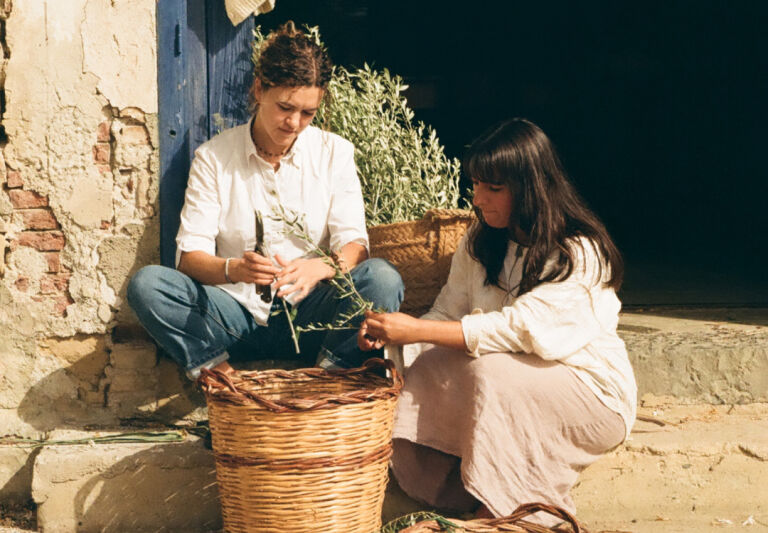
Against Cultural Flattening: Creative Retreats as the New Way to Travel
by Alexa Hotz
This past March, The Wall Street Journal‘s “Craft Retreats Are the New Burnout Cure” caught our attention. It’s something we’ve noticed among friends, too: traveling to Sicily to finally take up basketry from a favorite weaver, making cheese and yogurt in the Basque mountains, and so forth. This style of travel is not for the passive vacationer. Not for the beachcomber, and not necessarily for the whole family. These curated retreats are for the fidgety, for those drawn to hands-on learning—the artist residency for the non- or nascent artist.
“I’ve known what it feels like to lack inspiration and feel stagnant,” writes Alice Katter, founder of Out of Office Network, which hosts creative retreats at an agriturismo in Italy. “It’s a response to a cultural flattening,” she continues. “As everything becomes algorithmic, online, optimized, and the same…”
The following immersive, hands-on travel experiences are among the most appealing we’ve uncovered yet.
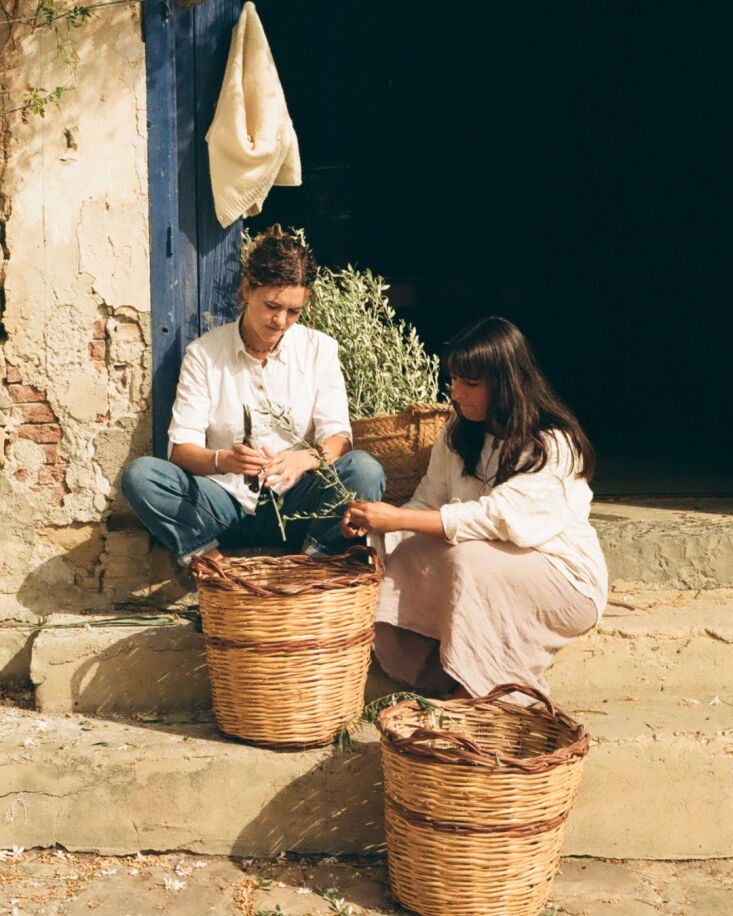 Above: Anna Tasca Lanza in Sicily, Italy,
Years ago, Anna Tasca Lanza in Sicily hosted a weaving workshop with Studio AMOS, and the school has been on our radar ever since. While its retreats typically center on food—past hosts have included David Tanis, Julia Sherman, and Rachel Roddy—it occasionally ventures into craft, as with the weaving workshop and an upcoming sketching and Drawing retreat with Samantha Dion Baker. Photograph from Anna Tasca Lanza by Chiara Leto and Erika Pino for The Preserve Journal.
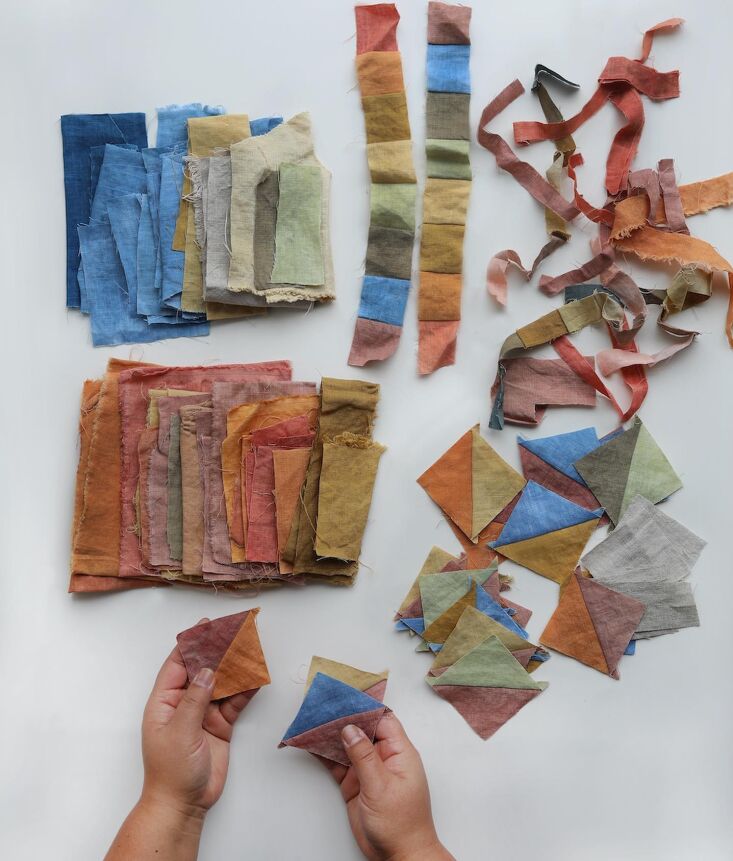 Above: Quilting at an Ace Camp Travel retreat.
Ace Camp Travel hosts creative retreats around the world: block printing in Jaipur, India; painting in Andalusia, Spain; basket weaving in the Stockholm Archipelago, Sweden; embroidery in Chiang Mai, Thailand; and many more. The premise is simple: travel centered on hands-on learning, lectures, and demonstrations led by local experts and practitioners.
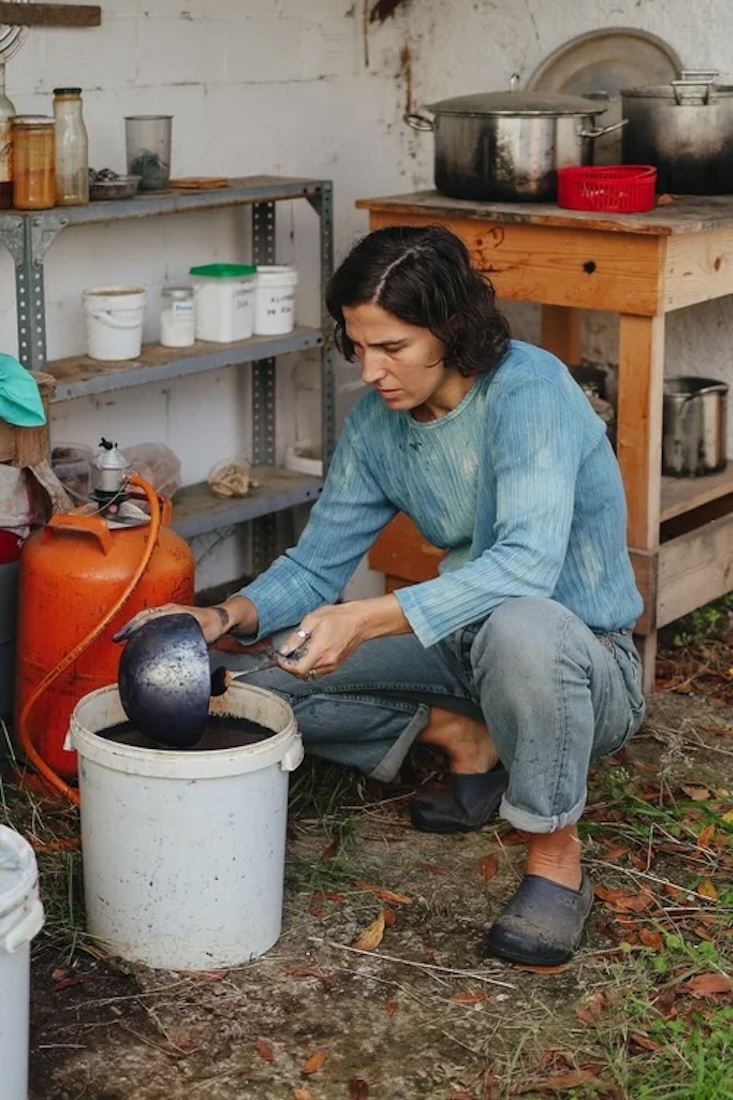 Above: Out of Office Network creative retreat at Le Cergue, Italy.
Out of Office Network began as a digital platform supporting creative expression, founded by Alice Katter, who later developed a creative residency program at Le Cerque, an agriturismo outside of Rome. Unlike artist residencies, where established artists focus on and present a single project, Out of Office’s offerings might look more like a three-day botanical dye intensive with a textile designer. Katter also coordinates artist-led workshops in Barcelona, including silversmithing with Anna Ruiz Planella, indigo dyeing with Carlota Simó, and furniture restoration with Audrey Pogu.
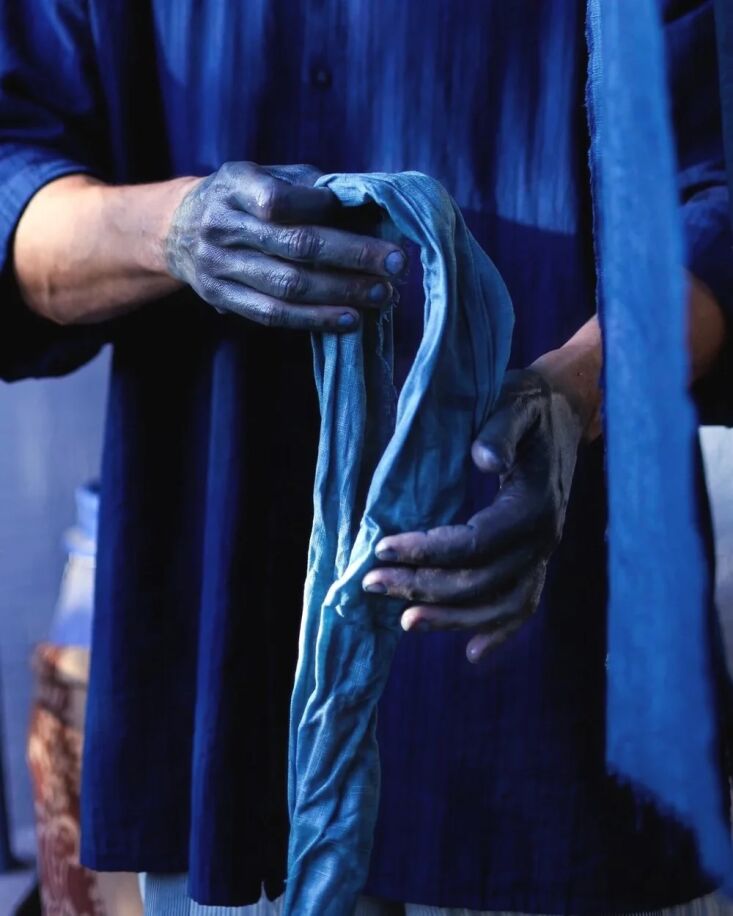 Above: DescoverArtists at the natural dye retreat.
DescoverArtists is a global community of creatives that offers intimate, shared-home retreats for practicing artists, integrating workshops focused on skill development and exchange. They also host a Natural Dye Retreat on Chios, Greece, with George Petsikopoulos, created for just six selected participants (application required) and equally open to beginners, artists, and designers alike.
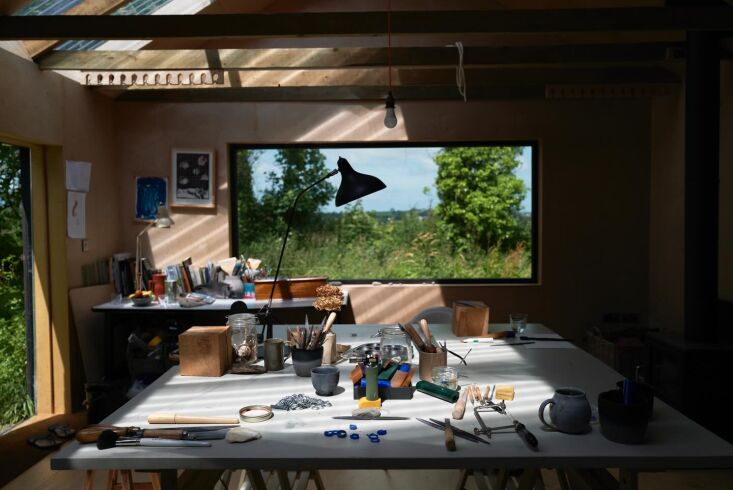 Above: Inside the Praktyka Creative Retreat in North Devon.
Praktyka is a creative retreat on the North Devon coast founded by Ania Wawrzkowicz and Henry Trew in collaboration with Niall Maxwell of Rural Office Architects (see our post on A Low-Impact Family Home in Surrey and Norfolk Remodel with Tithe and Piggery). Guests stay in architectural cabins while taking part in art workshops. Unlike many retreats, Praktyka welcomes group stays that include children. It also hosts curated programs that bring together participants from around the world, such as Coastal Walking and Printmaking, and a Mother’s Retreat featuring clay and jewelry making.
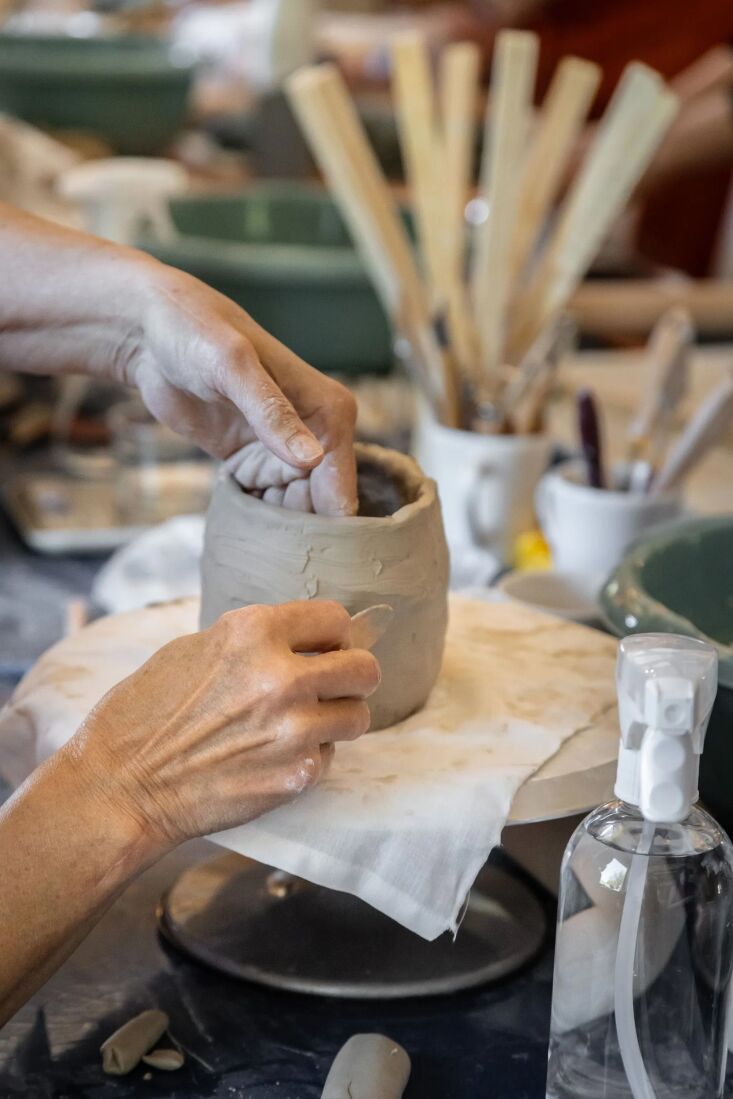 Above: Madame Voyage French Retreats in southern France.
Madame Voyage creates what it calls “slow travel French retreats.” Founded by two women from France, the company hosts week-long retreats in Provence, Toulouse, and along the Riviera. The retreats span both culinary and creative, with workshops in ceramics, floral design, watercolor, and more.
For more on residencies see our posts:
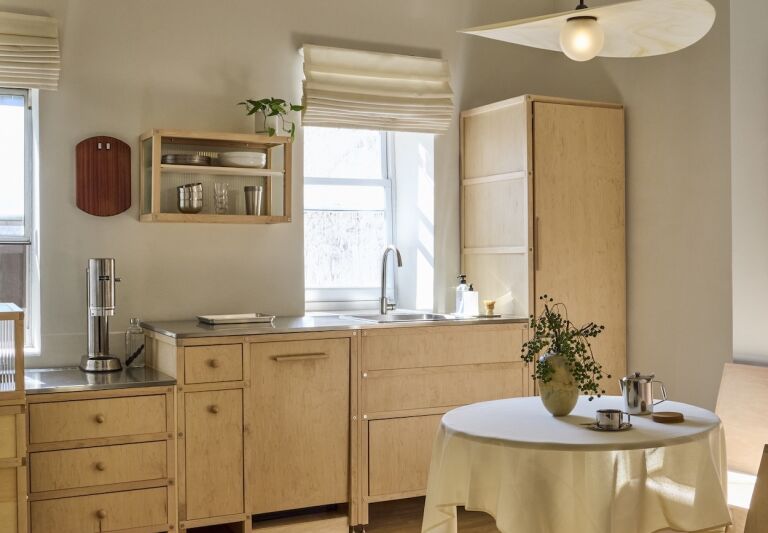
Kitchen(s) of the Week: Freestanding Cabinetry by Loose Parts in Upstate NY
by Margot Guralnick
Jennifer June creates kitchens that are purpose-built, great-looking, and made to last. And those are but a few of the reasons to admire what she does. June is both an interior designer and a cabinetmaker, a useful if uncommon combination. She’s also a teacher at Parsons School of Design, her alma mater—she co-leads the MFA Interior Design program’s Circular Interiors Studio, which focuses on extending the life cycle and reusability of objects.
In upstate New York, where June lives, she runs Loose Parts, her furniture company, which recently introduced the Workshop Kitchen, an adaptable, modular system of freestanding, solid-wood cabinets. “Working in interiors, you see the amount of waste that is generated in home renovations,” she says. “Kitchens in particular are problematic, primarily because the site-built systems and materials commonly used—MDF, laminates, heavily glued composites—are hard to disassemble without destroying them. I wanted to rethink the kitchen as a series of discrete furniture pieces that can move between homes and be repaired over time.”
Photography by Black & Steil, unless noted, all courtesy of Loose Parts (@loose_parts).
Jennifer June’s Own Workshop Kitchen
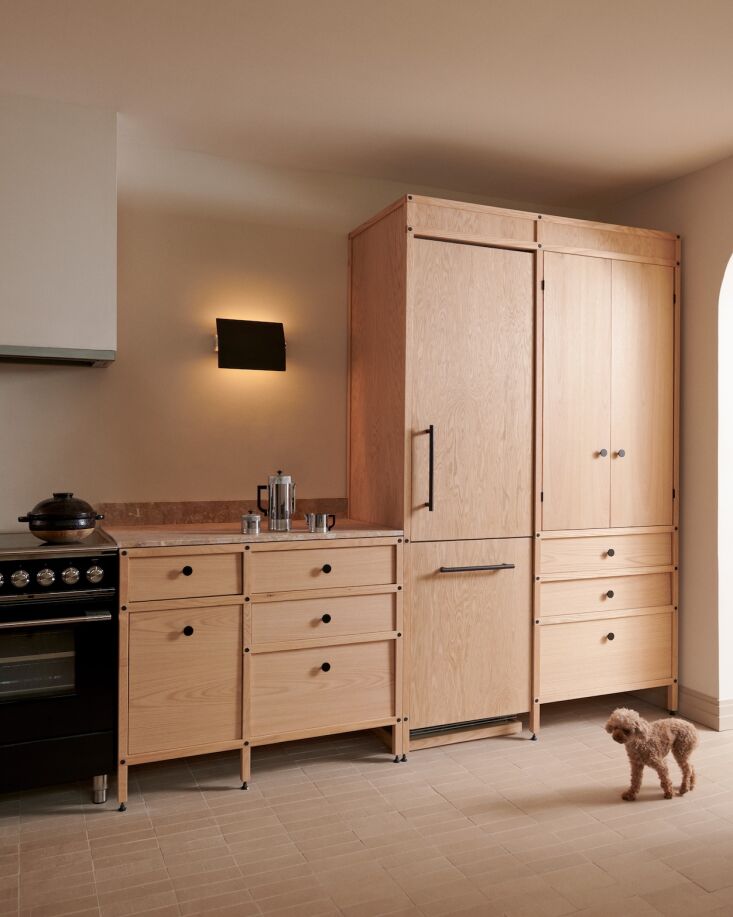 Above: June and her husband, Tim, a data scientist, live with their teacup poodle, Pebbles, in a hamlet just outside of Hudson, New York. The couple both have carpentry skills and approached the remodel of their 1850 house as a testing ground for clean building practices, including installing geothermal heating and lime plaster walls.
Their kitchen sits in place of the original and has cabinets of red oak. June selected their Fisher & Paykel 30-inch Induction Range partly because it has adjustable knobs instead of digital settings—and recommends it and their Fisher & Paykel panel-ready 24-inch Series 9 Integrated Refrigerator Freezer. The wall lamp is a reissue of Charlotte Perriand’s Applique à Volet Pivotant purchased secondhand from Somerset House, one of her go-to sources for vintage modern design.
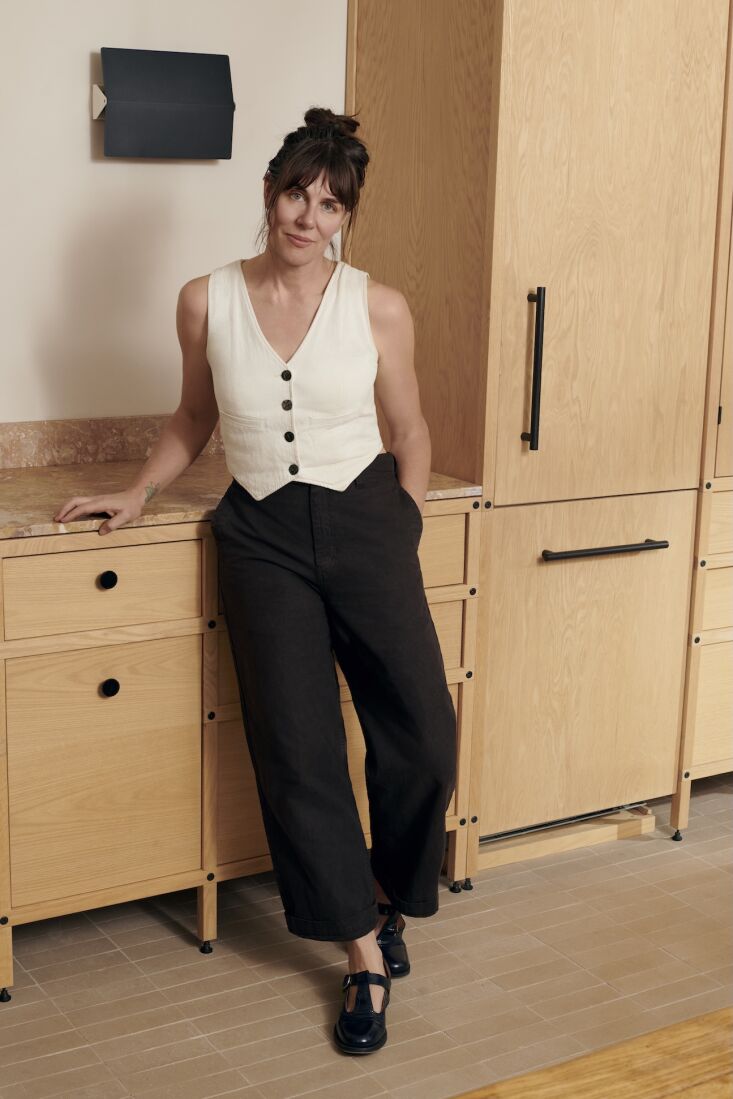 Above: “I didn’t come to cabinetmaking through a traditional woodworking path,” says June, explaining that she studied printmaking at the Oregon College of Art and Craft. “My first experience working with wood came through carving print blocks; eventually, I became more interested in the carved object itself than the print it produced.”
Out of school, she had her own wallpaper line, which led to an interest in interiors—and her Parsons masters degrees in interior and lighting design. It was during the pandemic, while she and Tim were holed up in his family cabin in Oregon. that she devoted herself to fully learning carpentry: her late father-in-law was a builder and she had access to his workshop and all of his tools—plus a group of family friends who were longtime loggers to answer all of her questions. She now has her own fully kitted-out studio in Catskill, New York.
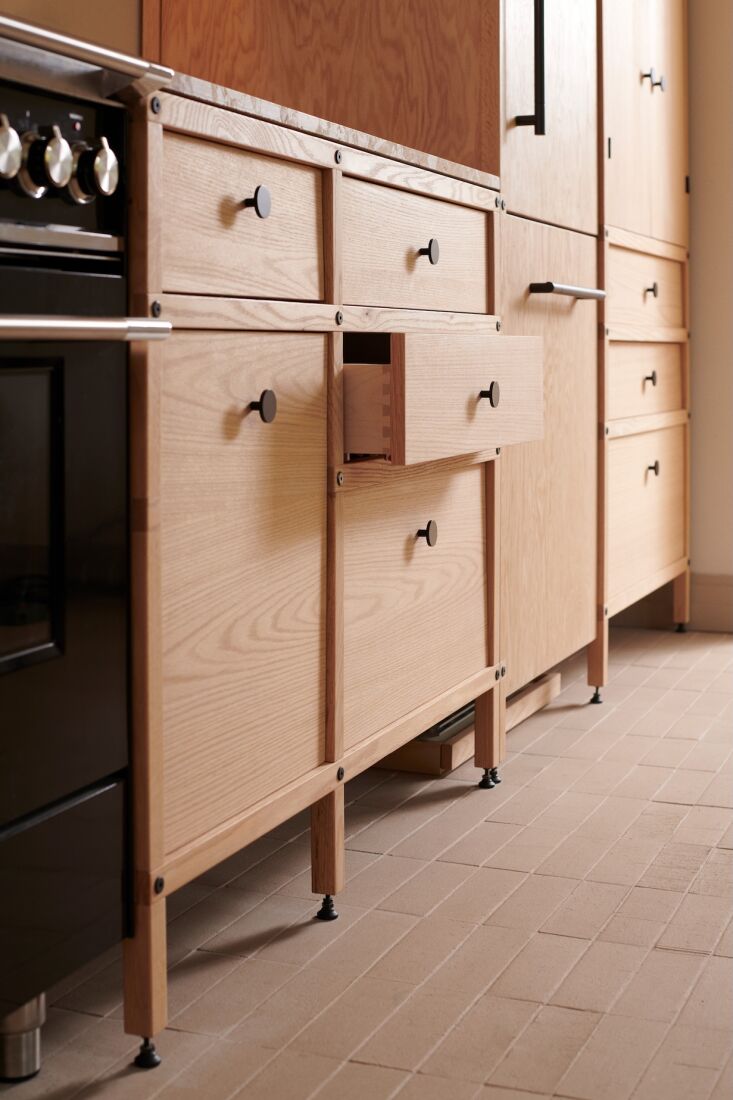 Above: June’s cabinets are entirely solid wood, including the drawer boxes, and have dovetailed joinery. She made the marble counter from a stone yard remnant. The floor is tiled with Clé’s unglazed Foundry Flats: Standard Issue bricks in Sand. The floor and cabinets are sealed with Osmo’s raw, matte finish of linseed oil and hard wax.
June uses hardwoods from “responsibly managed American forests, primarily in the Northeast and Appalachian corridor” and works with a family-owned mill in operation for four generations. “Wood wears in, not out,” she says.
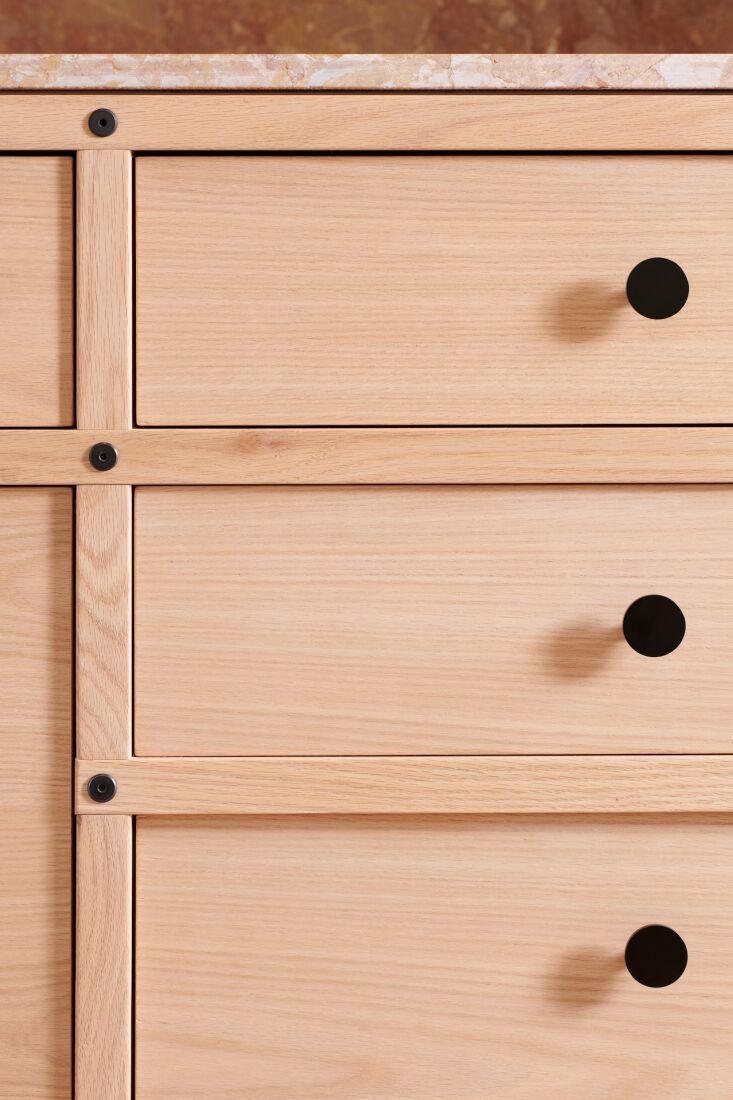 Above: The black oxide drawer pulls are June’s signature hardware, which she has made to her specs. Her cabinets are designed to come apart easily—and she intentionally makes their construction visible: “when you can’t see how something is made, which is the case with most of what we’re surrounded by, it distances you from the fact that a person built it. When the design is apparent, users have agency to do things like fix and transform it.”
Hello Human Office Kitchen
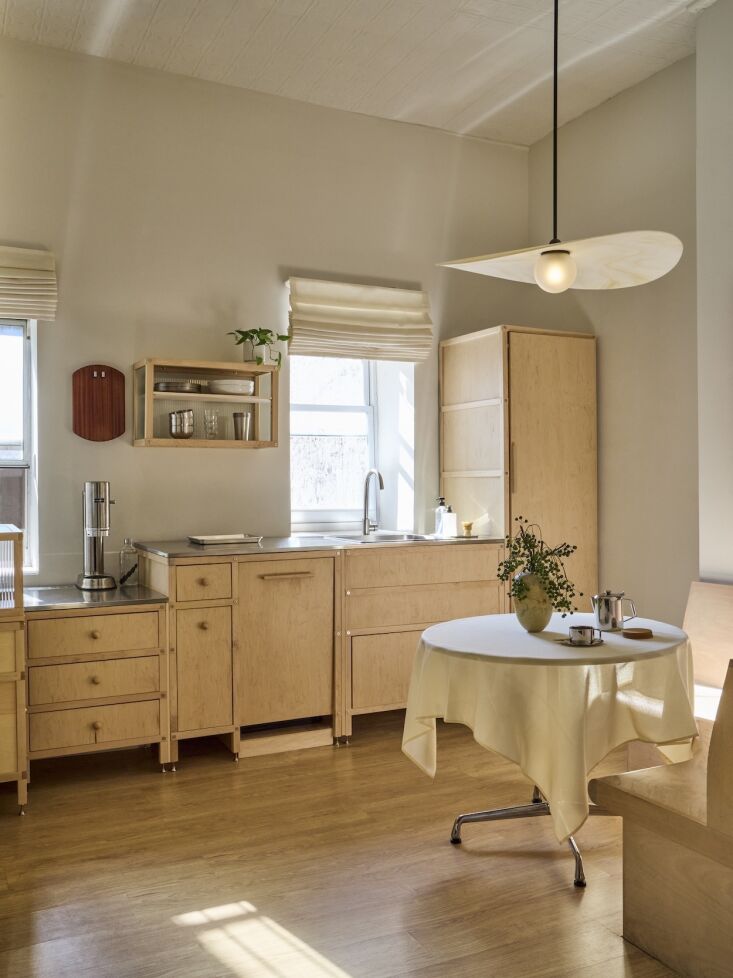 Above: For Hello Human, an NYC public relations firm that represents indie creative businesses, including June’s own, she upgraded the office’s existing Ikea kitchen with modular maple cabinets and a stainless steel counter. Photograph by Jonathan Hökklo.
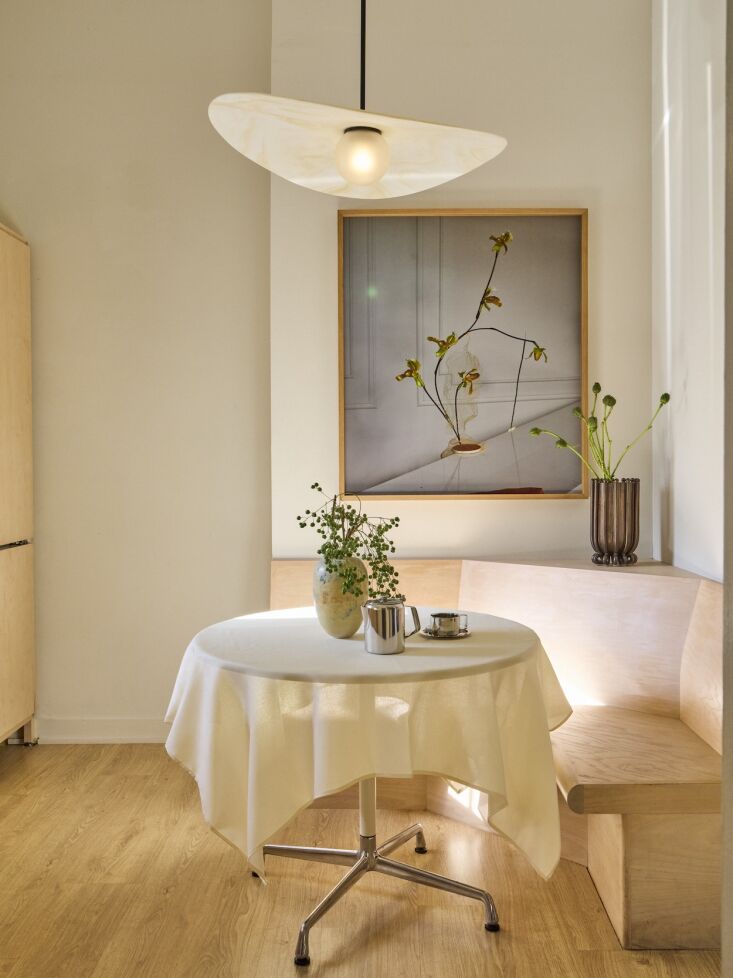 Above: The kitchen came with its banquette, which is accessorized with work by Hello Human clients, including the Dominik Tarabanski photograph and Myrna Pendant by Ladies and Gentleman Studio. Photograph by Jonathan Hökklo.
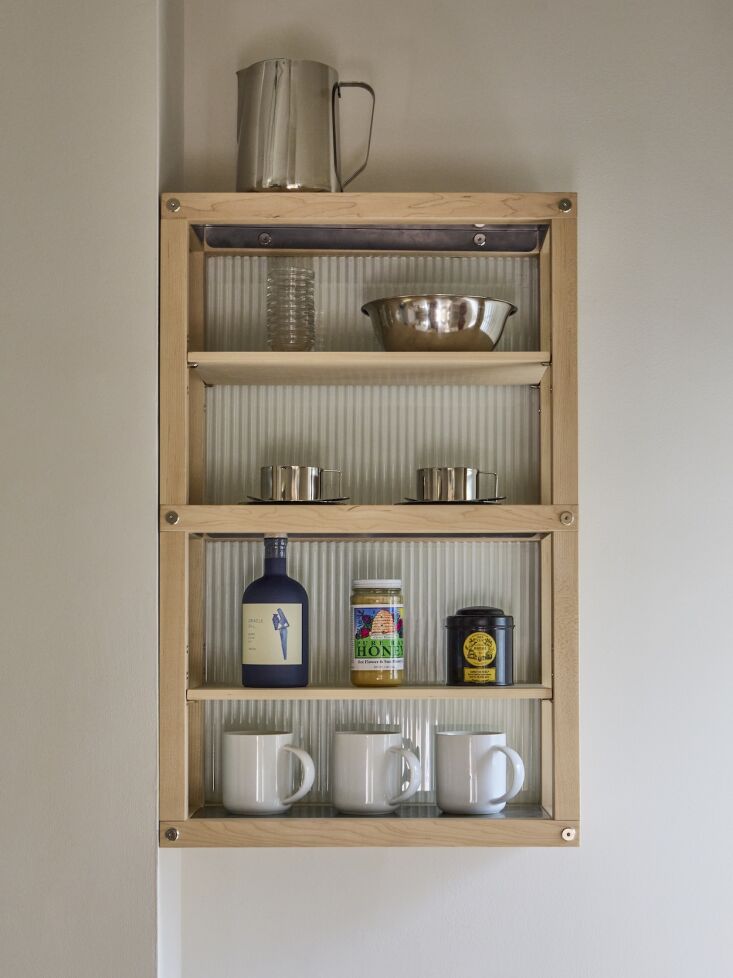 Above: The hanging shelves are maple with nickel hardware and fluted glass. Photograph by Jonathan Hökklo.
Loose Parts Showroom
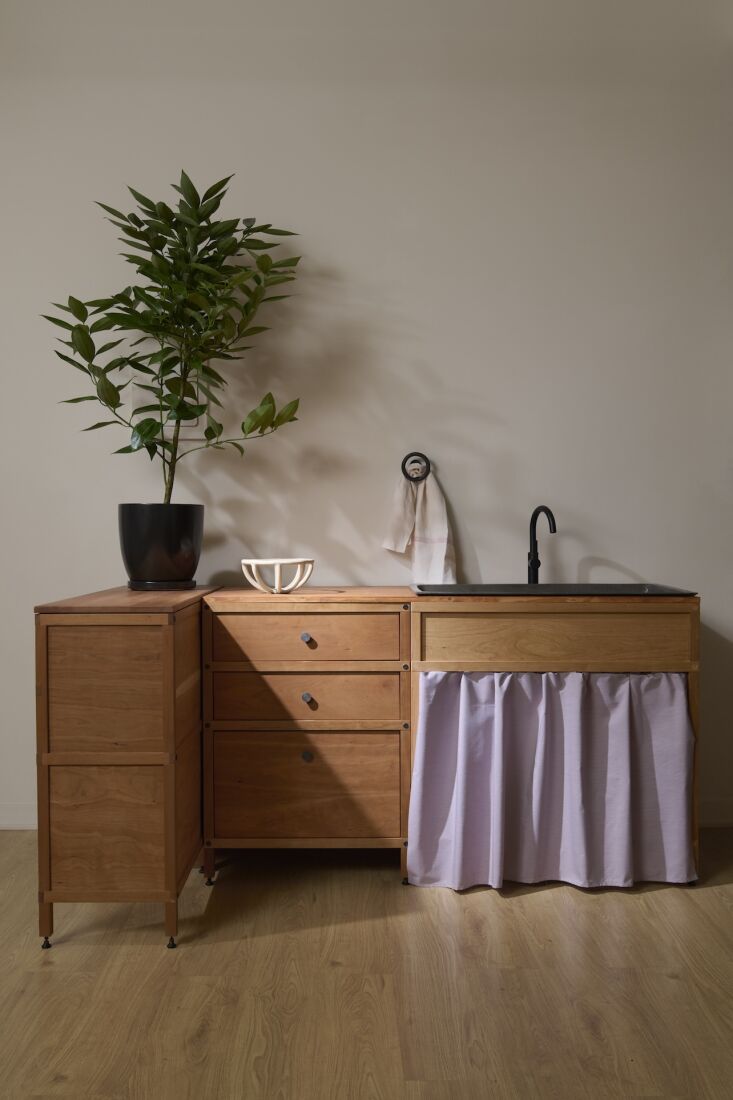 Above: The Loose Parts main workshop in Catskill, New York, has a small, by appointment showroom where clients can see the designs and materials in person. Her kitchens cost about $1,800 a linear square foot: small kitchens start at $14,000, medium at $24,000, and large at $40,000. All are solid wood built as furniture and price depend on materials choices and drawer count.
Shown here, a compact, L-shaped kitchen with an old cast-iron sink atop a cherry frame and black oxide hardware. The faucet is by Kraus. The Prong Fruit Bowl and Uni Wall Hook are by Brooklyn ceramic artist Virgina Sin. June found the grosgrain skirting fabric at NYC’s B & J Fabrics. Photograph by Jennifer June.
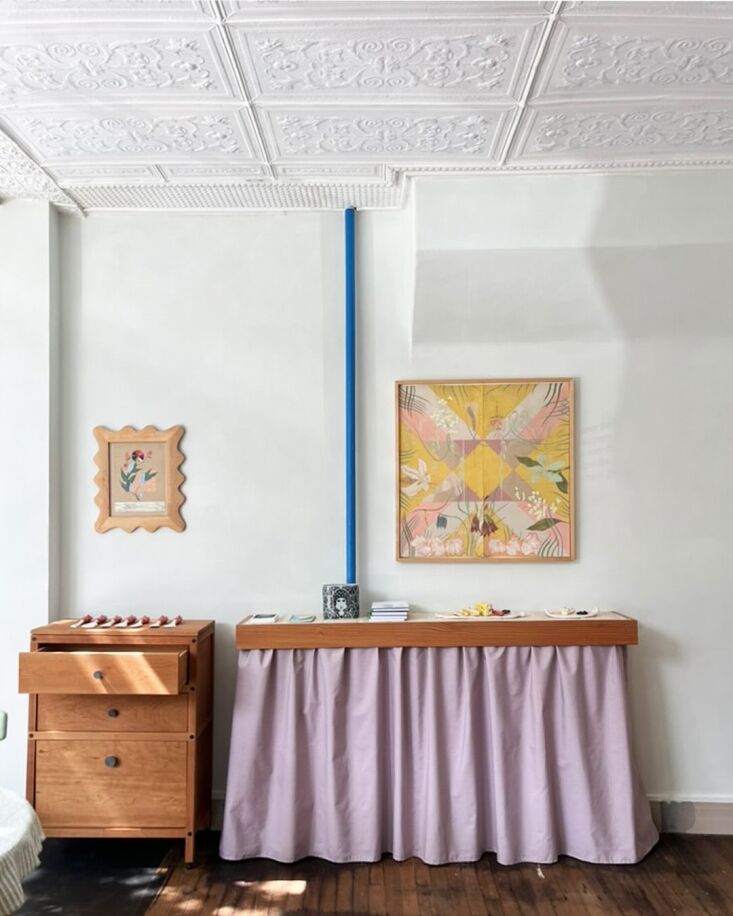 Above: A tiled and skirted fir shelf covers a radiator in the studio—the wood frame keeps the fabric from the heat. The paintings are by Gemma Bailey and the ceramic pieces are by Lauren Cohen. Photograph by Jennifer June.
Details
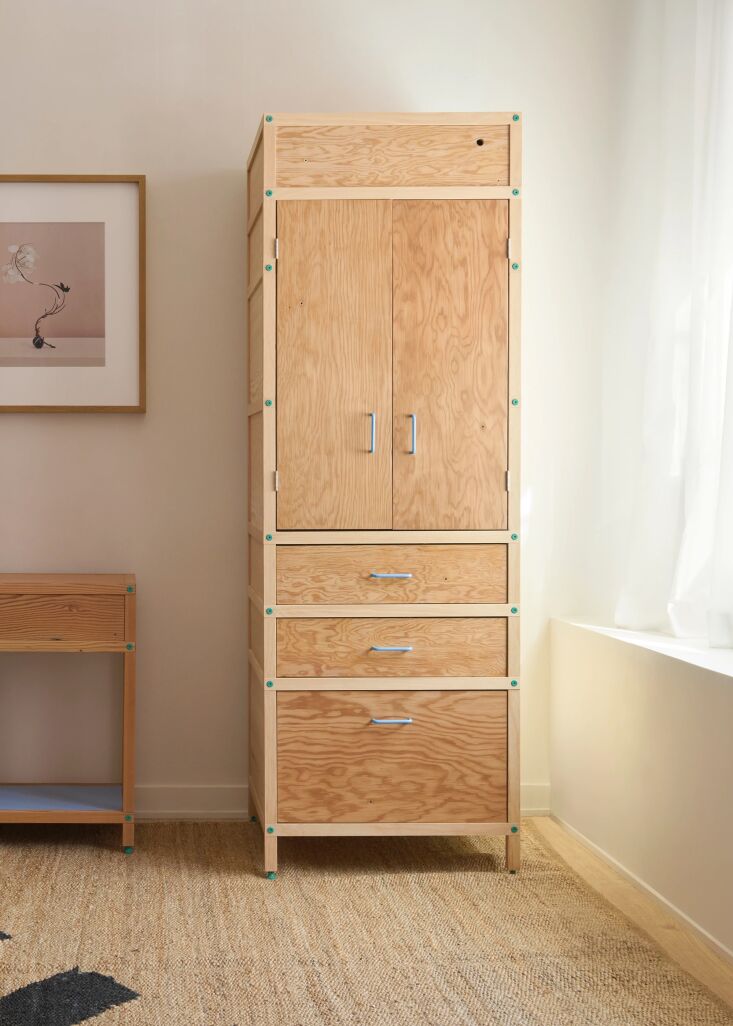 Above: June invites clients to choose from a wide palette of woods and also reclaimed timber, which she used for this custom pantry. “The wood was salvaged from 1960s kitchen cabinet fronts that were painted pink. I sanded them to reveal the original ply and cut them as face panels. I powder-coated the vintage metal drawer pulls in blue.”
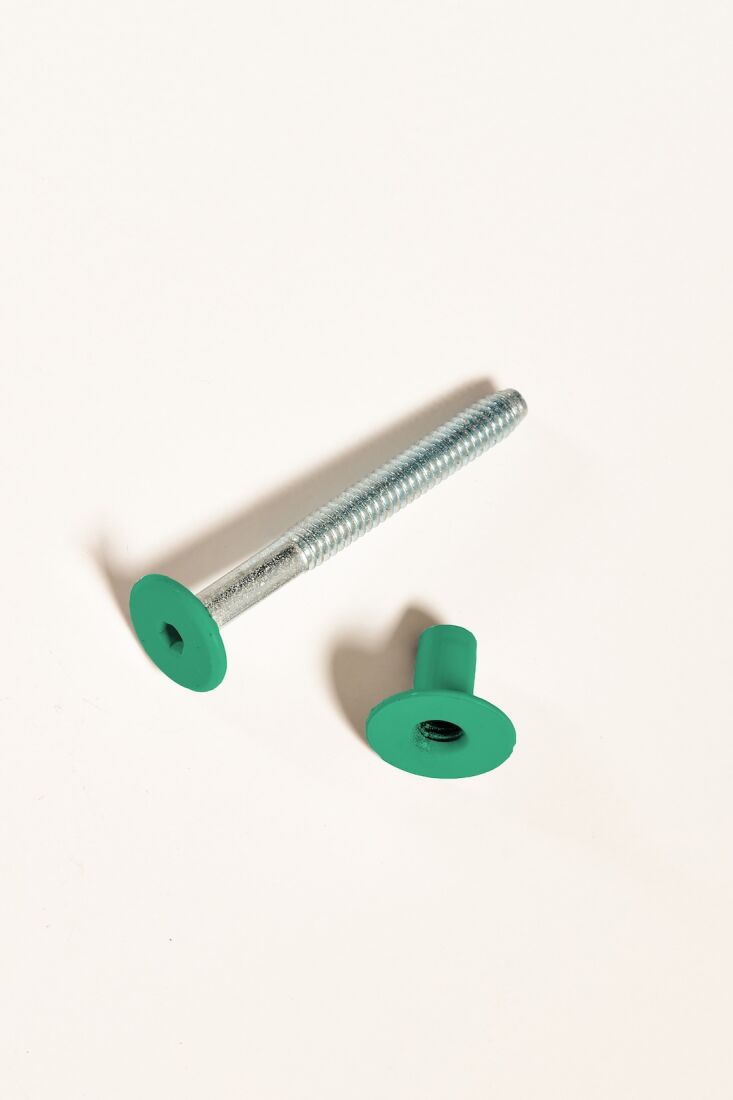
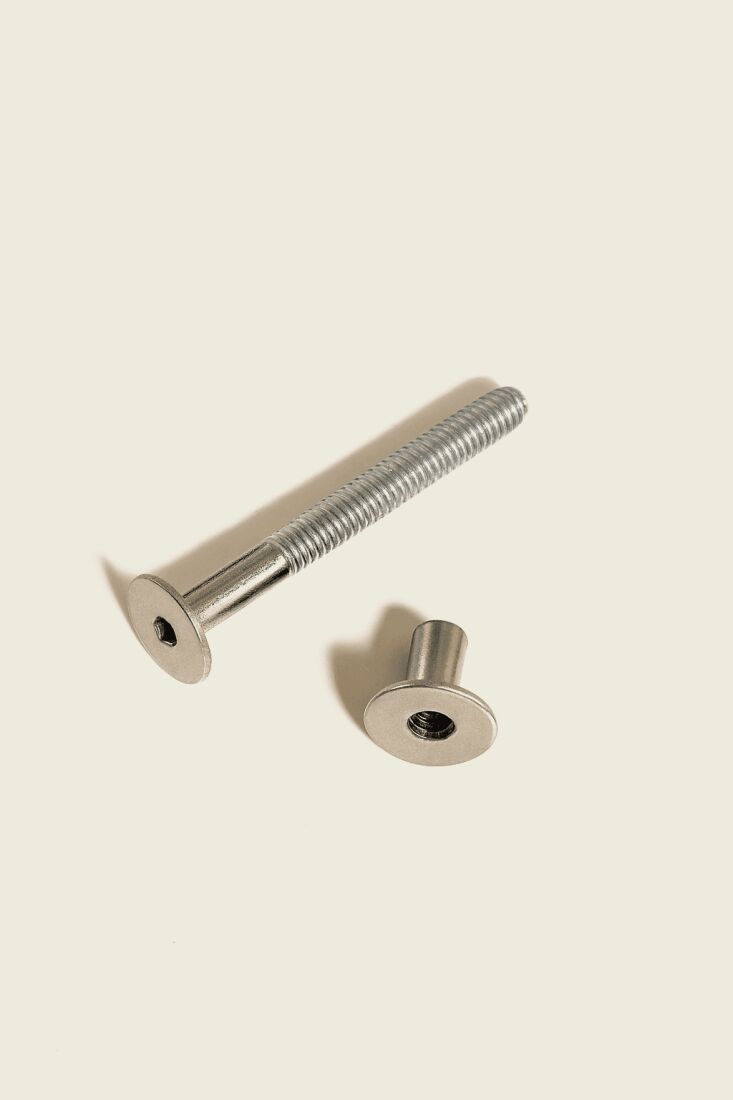
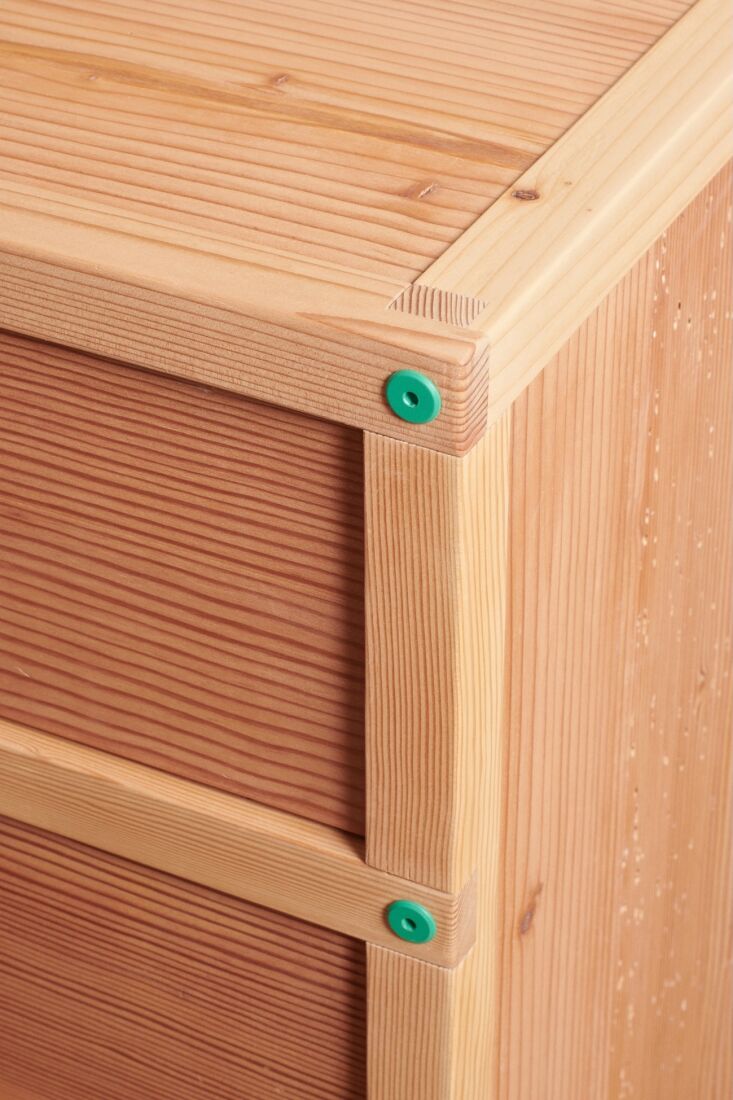 Above: June turns exposed bolts into ornament. These are on a sideboard of reclaimed Douglas fir that came out of an office in an old industrial building.
Loose Parts Workshop
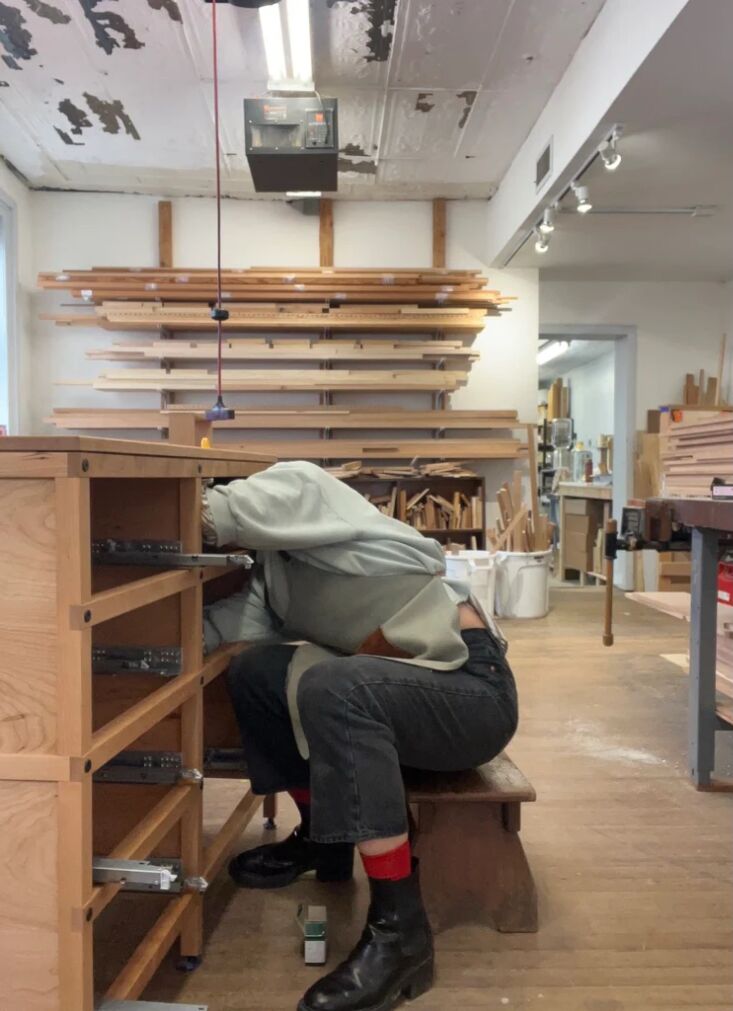 Above: A self portrait by June of a cherry sideboard in progress. “My practice grew out of working in tight spaces, where pieces had to come apart and back together to fit through the door. Hence the name Loose Parts.”
She’ll be hosting an open house in her showroom (388 Main St, Catskill, NY) during Upstate Art Weekend, June 26-29 2026.
Some more adaptable kitchen designs:
For daily dispatches and more favorite finds, head to Remodelista.com. For bonus content—like our weekly Quick Takes column—consider joining us as a paid subscriber.
Remodelista participates in affiliate marketing programs, which means we may get paid commissions on products purchased through our links to retailer sites.
