

A Textile Collector’s Colorful Family Apartment in Copenhagen: At Home with Cecilie Stöger Nachman
by Alexa Hotz
I first learned of the work of Cecilie Stöger Nachman through a collaboration she once did with Copenhagen children’s store Studio Mini. Through Nachmans, Cecilie’s “own small online universe”, she creates handmade objects from her archive of vintage printed fabrics. I promptly bought one of her fabric-covered boxes and have been using it as a repository for all the small treasures of my daughter’s childhood—a found piece of string, a smooth rock, pocket-sized drawings. I was immediately enamored with Cecilie’s approach; her work feels as special and enduring as the handmade objects from generations past. So when I noticed that she and her family had moved into a new home that reflected the same sensibility, I reached out to learn more.
Cecilie lives with her husband, Ulrik Ejlers, an art director at an advertising agency, and their two daughters—Hannah, age 7, and Dora, age 4—in Frederiksberg C, in central Copenhagen. They had lived in the neighborhood for nearly 15 years before finding their perfect apartment there. “[Frederiksberg] feels like a small village in the middle of the city, with leafy residential streets, and we love how central it is and that both of our workplaces are only a 10-minute bike ride away,” says Cecilie, who plans to step back from her in-house role at The Poster Club to focus on Nachmans 2.0 and launch a creative agency with two Copenhagen-based partners.
The 1,100-square-foot ground-floor apartment occupies a building dating to 1901, with its original details intact, though it required considerable updating. “The apartment was in fairly poor condition when we took it over,” Cecilie explains. “Fortunately, the bathroom was relatively new and finished in neutral materials, and we kept the original floor plan. But we installed a new kitchen and hired a carpenter to create several built-in solutions. We also refinished the floors and repainted throughout.”
The result is colorful and whimsical, yet distinctly grown-up. “For me, a home should reflect the people who live there. Both my husband and I love color, so it makes perfect sense that our home is full of it. We could never live in a completely streamlined white space.” Here’s a look inside.
Photography by Caroline Parkel courtesy of Cecilie Stöger Nachman.
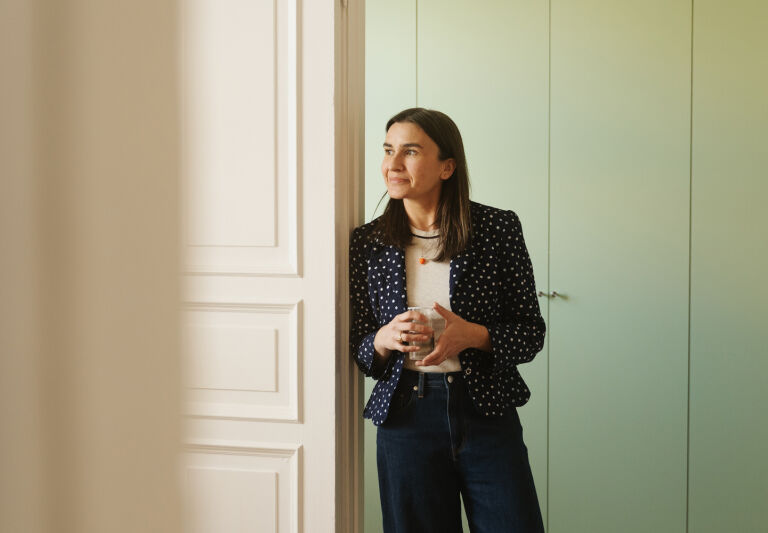
 Above: Cecilie in the hallway with original pine floorboards they sanded and treated with white lye soap. “The scent is wonderful whenever we wash the floors,” she says.
Cecilie looks forward to growing into the newly renovated space: “At the moment, our apartment is actually a little too clean for my taste, but it’s a new home and these things take time. I’m looking forward to gradually adding layers of vintage lamps, textiles, books, and collected objects.”
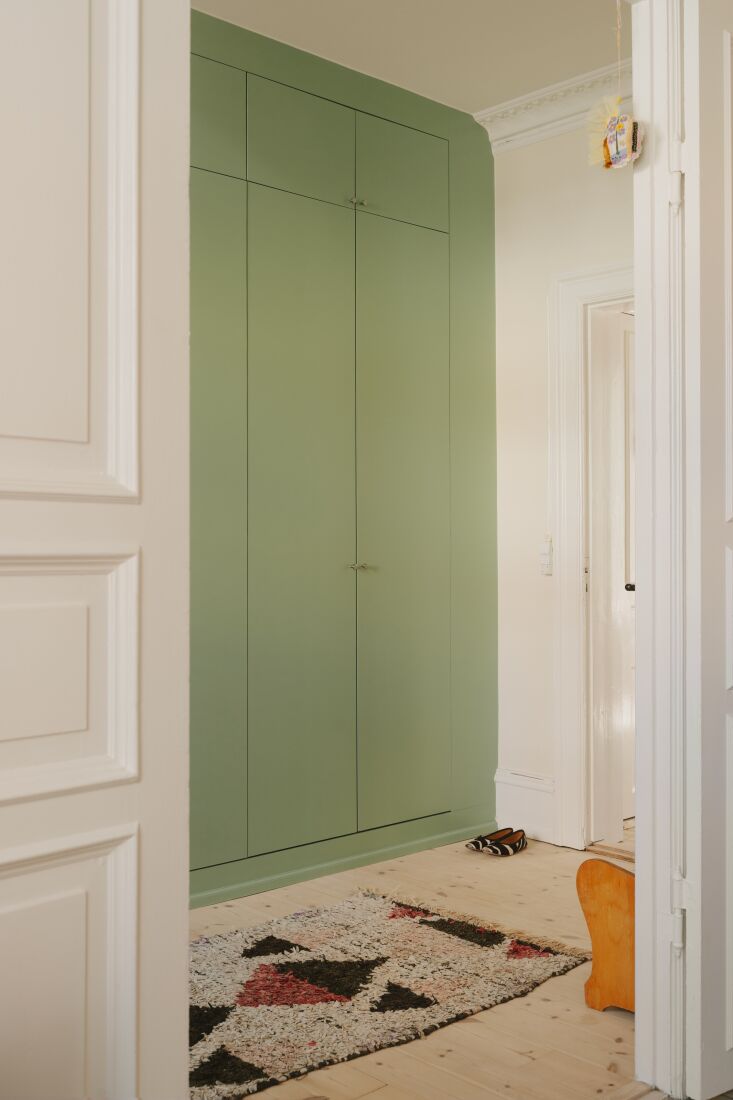 Above: The Moroccan rug is from Larusi and the small textile hanging in the hallway is by Helle Høgsbro of Crème de la Crème à la Helle. The 5-meter-long wall of cabinetry was custom-built by a carpenter and hand-painted in Griegst 07 Lia by Griegst for Blēo. (“We love Italy, and the color reminds me of the legendary green paneling at Da Giacomo restaurant in Milan.”)
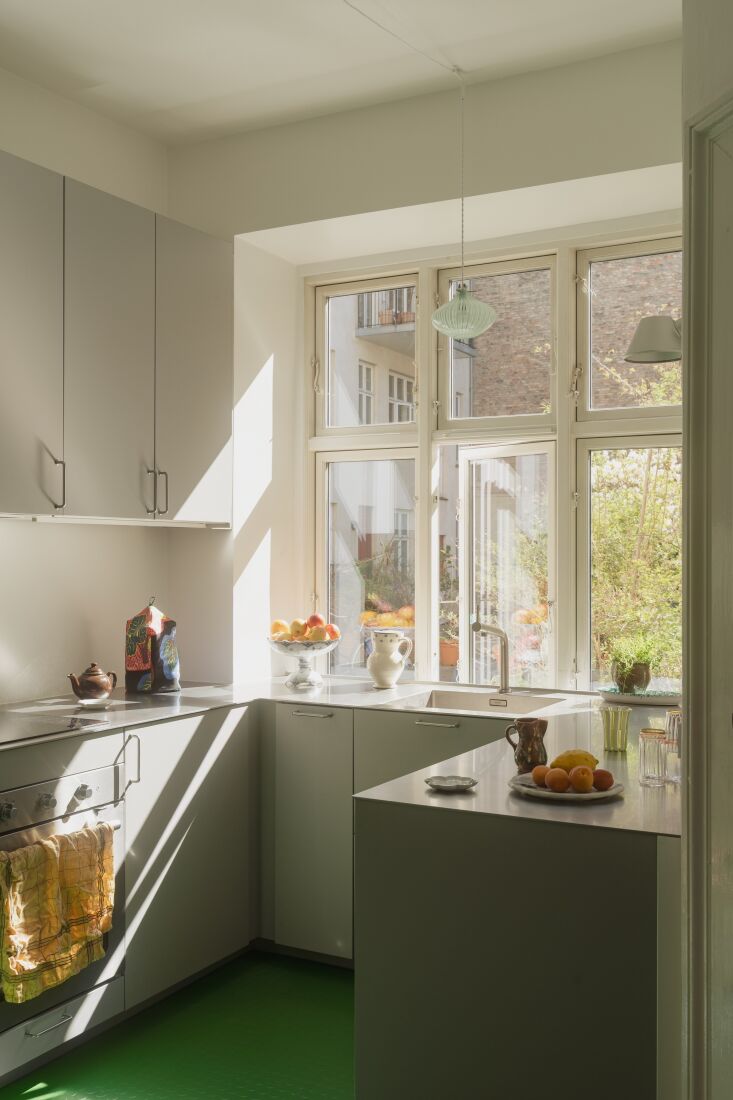 Above: The kitchen is completely new and is Ulrik’s domain, the family cook. The floor is green Pirelli rubber flooring—”the type you often see in institutions and ferries”—with a streamlined Ikea kitchen with a stainless steel worktop and integrated sink. The faucet, oven, and cooktop are all from Ikea. The ceiling lamp is a Swedish vintage piece. “Over time, I hope to fill the kitchen with lots of vintage ceramics and artwork to soften the industrial look,” she explains.
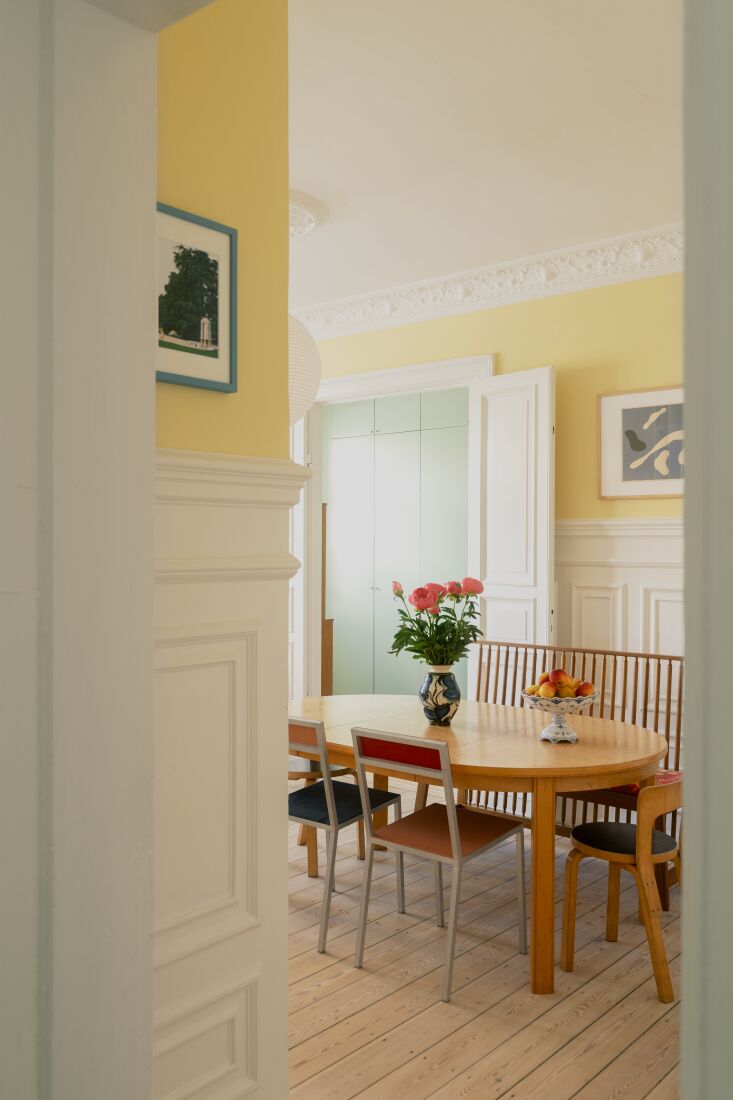 Above: The yellow paint is Farrow & Ball Dayroom Yellow No. 233: “We tried countless shades because yellow is surprisingly difficult to get right. This one creates a feeling of perpetual sunshine without being overwhelming.” The dining table was found at a Swedish auction; it’s pared with a pair of vintage Alvar Aalto 66 Chairs and the Ilse Crawford Bench with Back 444 for De La Espada with a cushion Cecilie upholstered in Josef Frank Textile Catleya fabric from Svenskt.
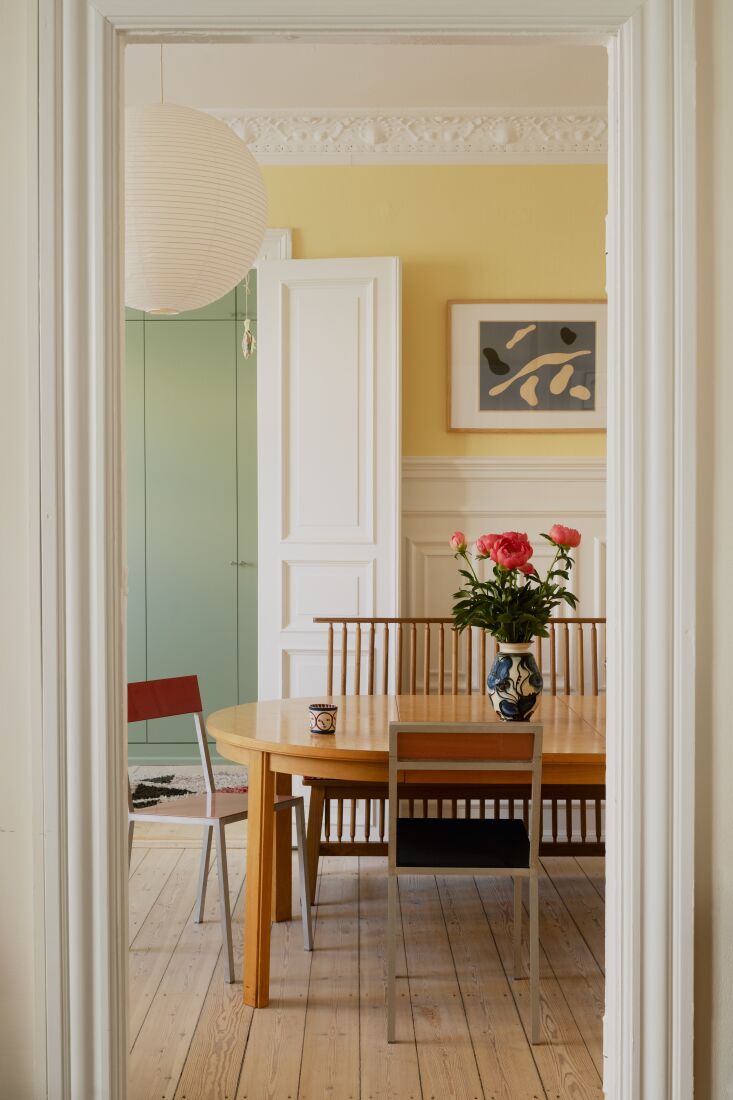 Above: The chairs are from Muller Van Severen—”a version of their First Chair, hand painted by the designers themselves in their studio.” Cecilie helped install an exhibition of Muller Van Severen furniture at Copenhagen’s The Apartment in 2014. The ceiling lamp is the Rice Paper Shade from HAY.
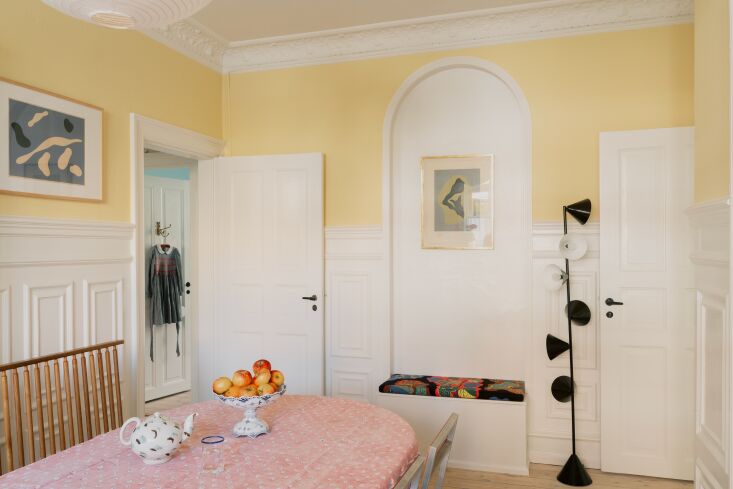 Above: Cecilie and Ulrik had a carpenter build the bench into an alcove that was previously a fireplace. “It provides practical storage and also hides our router—a little life hack.” The cushion is upholstered in Josef Frank Textile Poisons fabric from Svenskt Tenn. The floor lamp is the Atelier Areti Vertical One.
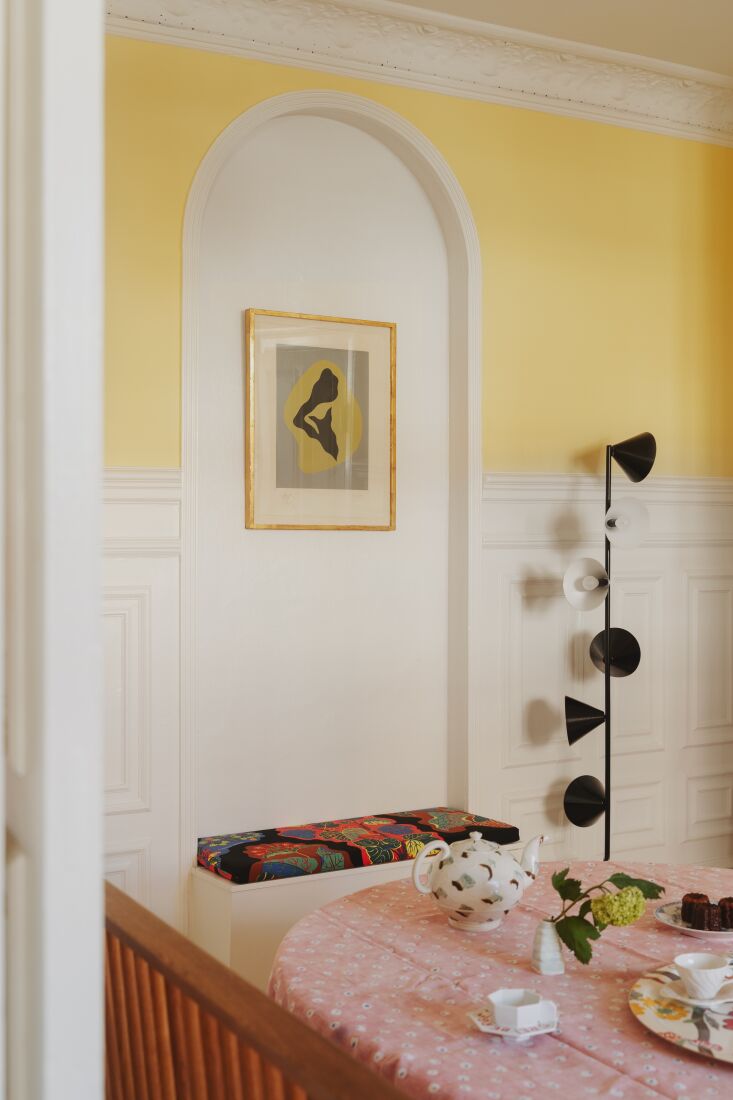 Above: Both Jean Arp works are lithographs bought at an auction. The teapot is by Linda Sikora bought from Tetomo.
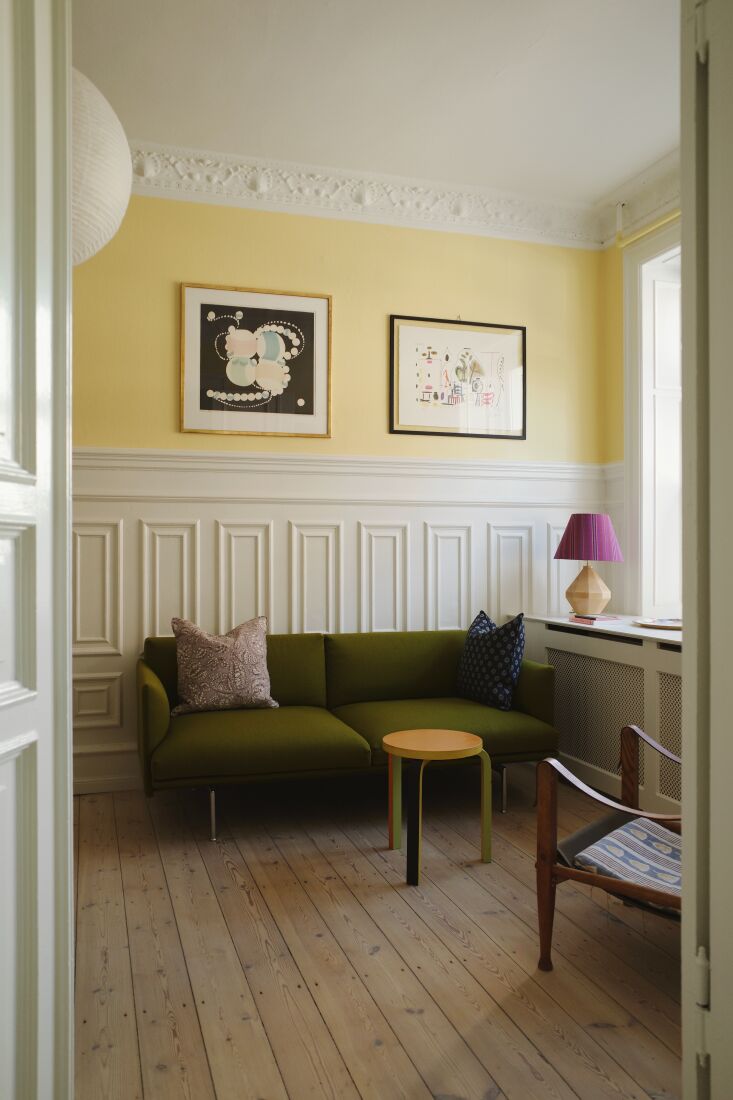 Above: The sofa is a Muuto Outline Sofa upholstered in Kvadrat Vidar fabric. The stool is a custom Alvar Aalto Stool 60. The Kaare Klint Safari Chair is a family heirloom. The artwork is by Carl Fredrik Reuterswärd and a Picasso lithograph.
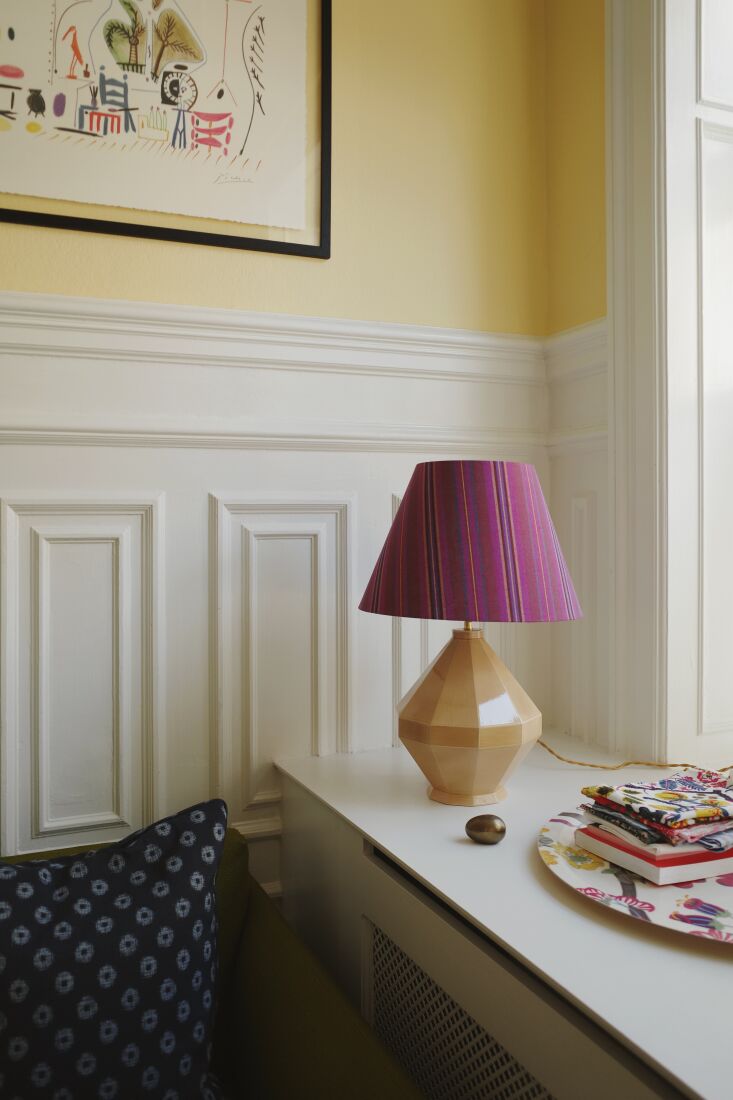 Above: The cushions and ceramic table lamp are both from Helle Thygesen, a friend and collaborator of Cecilie’s.
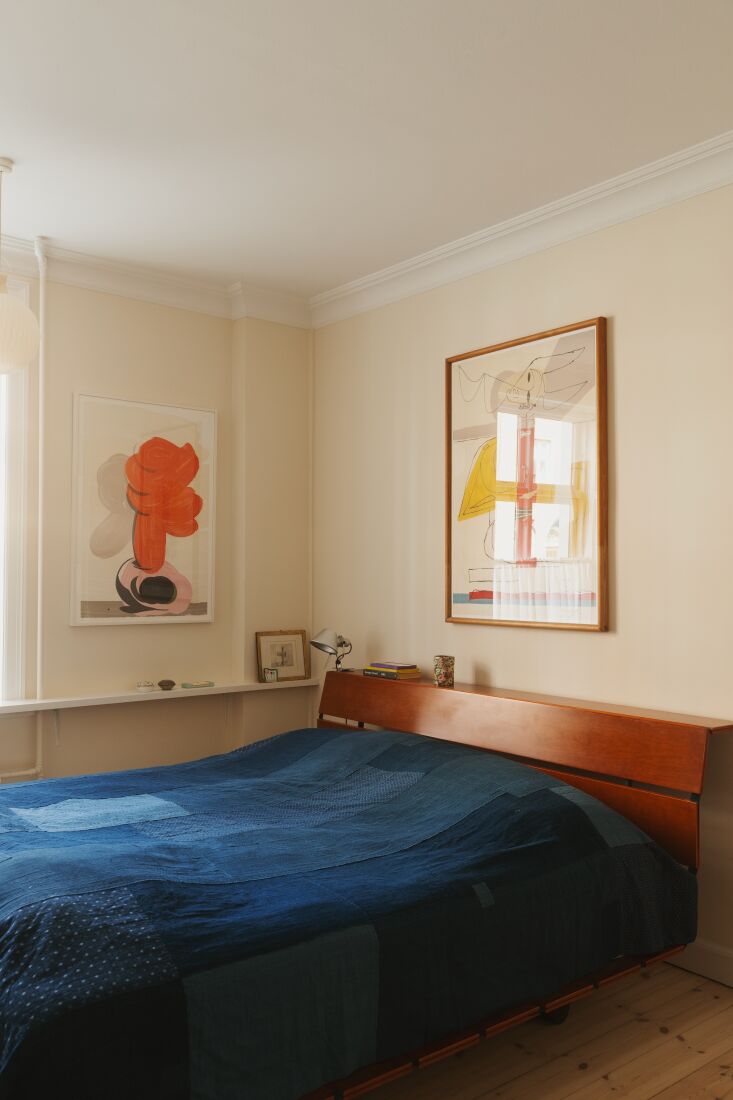 Above: A vintage Vico Magistretti Tadao bed frame in teak, and an Indigo Kasane Quilt designed and produced by friend Marie Bertelsen who owns Tetomo. The bedside light is the Artemide Tolomeo Clip Spot. The large artwork over the bed is a vintage Le Corbusier lithograph inherited from Ulrik’s grandfather and the other work is by Morten Buch. The wall color is 17 Mercer Street by Halleroed for Blēo.
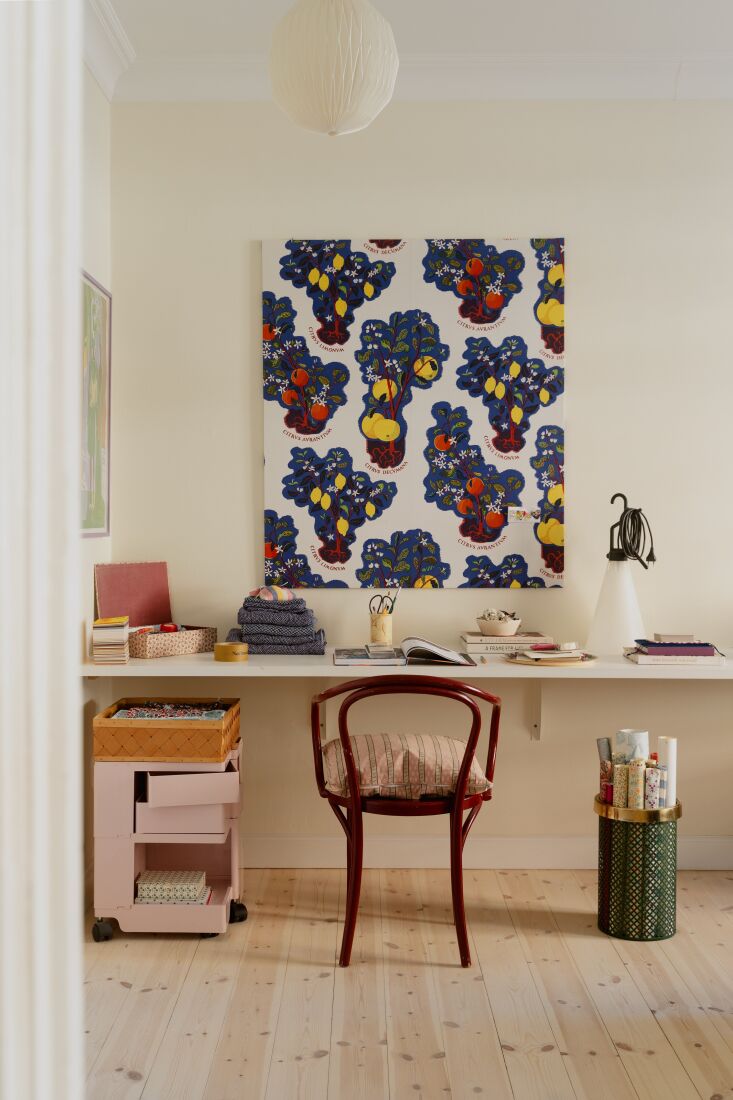 Above: Cecilie’s home office is designed with a Kaare Klint 101 Pendant Light, a large noticeboard by Cecilie covered with Josef Frank fabric from Svensk Tenn, and a Thonet Armchair in Rusty Red.
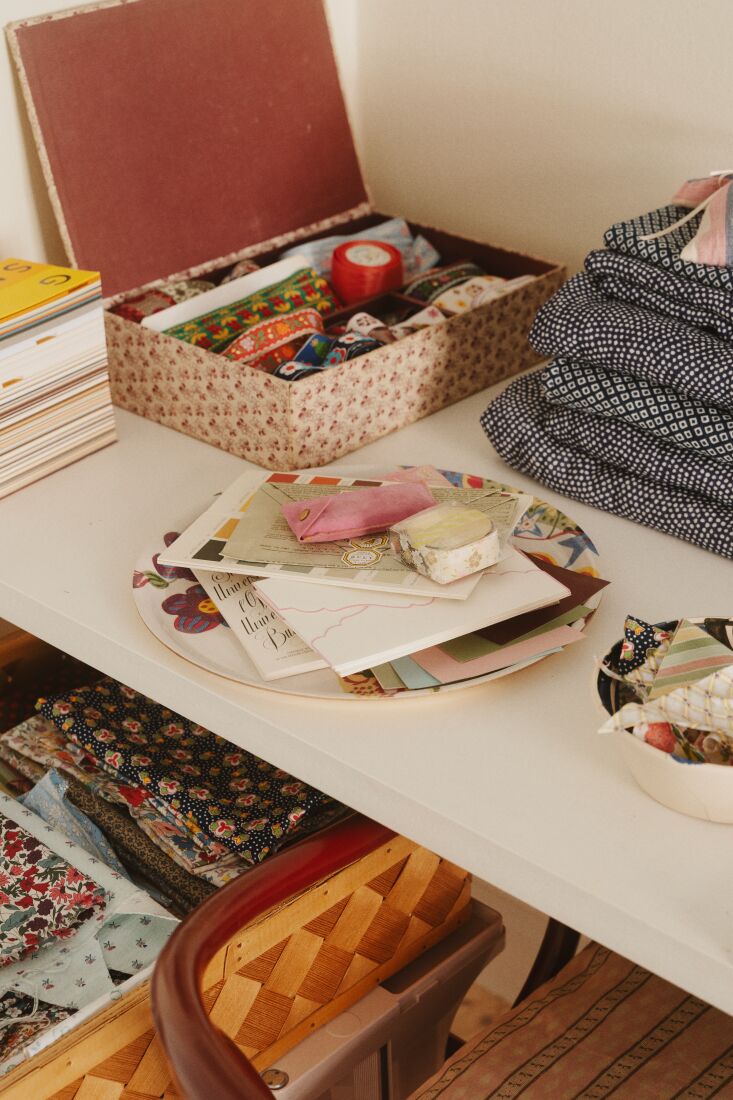 Above: A look at pieces from Cecilie’s fabric archive and collection of rare and vintage notions she uses for Nachmans.
“I started making my fabric-covered boxes in the spring of 2020 when everything shut down during the pandemic. My passion for collecting vintage textiles suddenly found a purpose, and I loved the meditative process of working with my hands and shutting everything else out,” she explains. “At the same time, we had our youngest daughter, and the boxes were flexible enough to make from home while she slept. There was a great deal of interest, and that became the beginning of Nachmans.”
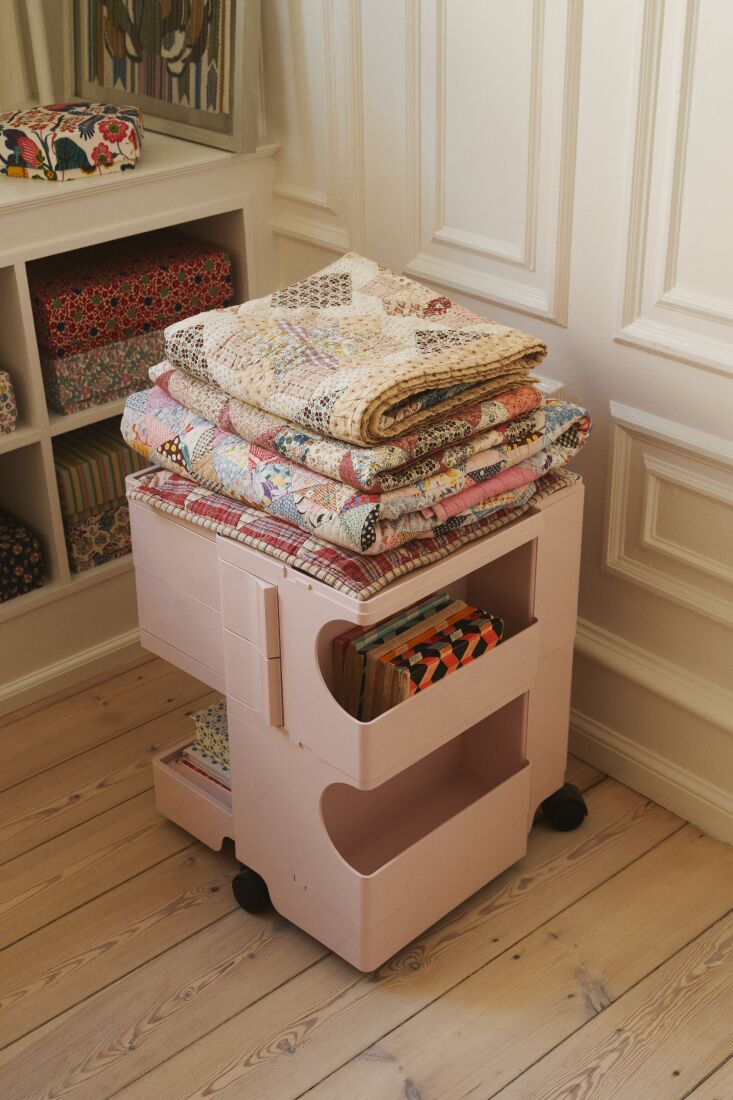 Above: A vintage pink Joe Colombo trolley holds “some of my many textiles and ribbons,” she explains.
 Above: “I have a large, old display cabinet that is ‘my cabinet’ filled with treasures I’ve inherited or picked up on my travels: small chocolate boxes from Demel in Vienna, marbled paper boxes from Florence, Murano glass, a golden egg by Carl Auböck, ceramics from Kähler and Griegst, pieces inherited from my grandparents, and things my daughters have made for me.”
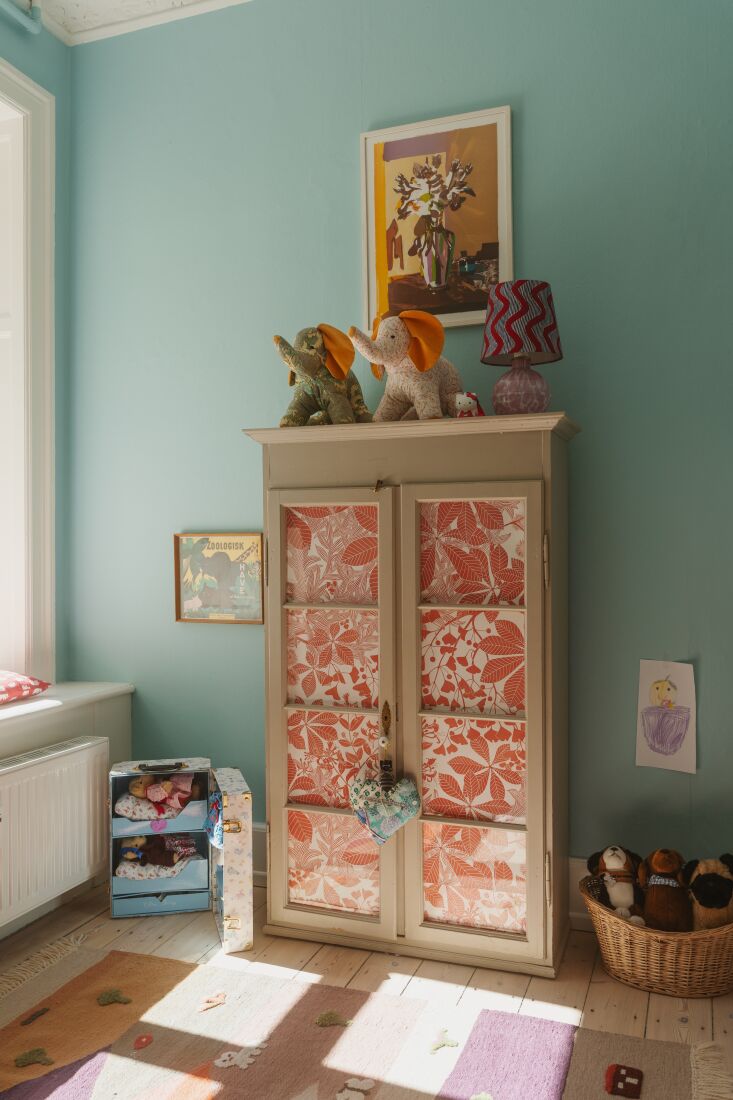 Above: The two girls share a bedroom overlooking the garden. The display cabinet is a family heirloom that Cecilie had painted and lined with hand-printed wallpaper from Marthe Armitage Chestnut Wallpaper, attached using painter’s tape on the back. The rug is by Mini Knots from Studio Mini. The elephants are from Tout Petit Atelier. The wall color is HA RO 24 Baby Blue by Halleroed for Blēo.
For more Copenhagen interiors see our posts:
- A Little Bit of This, A Little Bit of That: A Celebration of Art and Design at The Residence in Copenhagen
- Kitchen of the Week: Restoring 1870s Charm in a Copenhagen Kitchen, Delft Tiles and All
- A Testing Ground for Objects: Inside the Copenhagen Apartment of Kasia Sznajder and Fred Aartun of aarticles
- Young Architect Freja Bak Josias’s Art-Filled Family Hideaway in Copenhagen
- Femte Til Venstre: A Danish Couple’s Thoughtfully Appointed 1927 Townhouse in Copenhagen

Kitchen of the Week: At Home with a Couple Who Design Kitchens of Sustainable Bamboo
by Margot Guralnick
When you design and produce kitchens for a living, you get to use your own quarters as a testing ground. Kine Ask Stenersen and Kristoffer Eng are the couple behind Ask og Eng, the Oslo, Norway-based workshop known for its artful Ikea hacks: they specialize in making bamboo fronts for Ikea kitchen cabinets.
The duo also create their own fully custom kitchens, bathrooms, and furniture. After living with one of their very first Ikea upgrades, they decided to replace it with a bespoke design that showcases their bamboo finish. See Ikea Elevated for a look at their initial line, and join us for a tour of their kitchen.
Photography by Kine Ask Stenersen, courtesy of Ask og Eng.
 Above: The couple and their two young sons live in Drammen, Norway, in a 1930’s wooden house that they’ve made their own by taking down walls, installing French doors and windows, and exposing—and sanding and oiling—the original pine floor. The dining table is an Ask og Eng bamboo design, the A3 (sadly no longer available; browse their other bamboo furniture here).
Drammen is a 40-minute commute to the Ask og Eng workshop and showroom in Oslo. Kine and Kristoffer both grew up in Drammen—he’s an architect and she studied environmental geography (and brings a green mindset to their collaborations). Five years ago, they moved here from Oslo to be close to family, and say that it’s thanks to Kristoffer’s engineer father and his know-how and many tools (plus relatives ready to help with childcare), that they were able to get their company off the ground.
 Above: “The kitchen is visible from the living room, so we wanted it to resemble a piece of furniture,” says Kine. The cabinets are made entirely of bamboo inside and out; they extend from wall to wall—nearly 23 feet—and are in a just-introduced, vertical-grained Ask og Eng finish called Rye.
Their former kitchen, which they had “sawn, sanded, and oiled” in their garage, got disassembled and most of the parts have found new homes in other projects; many of the furnishings and appliances stayed put.
 Above: Step stools enable Vilmer, 5, and Artur, 1, to reach the counter of jura gray, a durable limestone patterned with fossils and shells. The induction cooktop is by Bora of Germany. The light at the end of the counter is the Accent Swing Wall Lamp by Remodelista favorite Wo & We of Lyon, France.
 Above: Kristoffer assists in waffle batter production.
 Above: Like all Ask og Eng kitchen designs, the drawers have cutout pulls and are fitted inside according to use.
Some of the advantages of working in bamboo, the couple say, are that it’s a fast-growing grass that’s lightweight and strong. They get their raw material from certified plantations “to be sure it’s not only sustainable but produced responsibly.”
 Above: A Birch Hook Rack keeps crucial kitchen tools off the counter. Discover more of the many uses for peg rails in our book Remodelista: The Organized Home, and for sources see Object Lessons: The Shaker Peg Rail.
 Above: All of Ask og Eng’s drawer and cabinet fronts are made of bamboo that’s been sanded, treated with pigmented oil, and sealed with a hard wax oil from Osmo to make them water- and spill-resistant. The sink has a Quooker faucet in patinated brass.
Of the overhead storage, Kine says, “The room is very sunny but we have a lot of dark periods here. To keep the space feeling open and bright, we decided against wall-hung cabinets and instead used our A7 Cross Shelf.”
 Above: To protect the limestone, there’s a collection of cutting boards on hand.
 Above: Kine and Artur. The couple were able to reuse appliances such as the dishwasher, concealed here behind a bamboo front.
 Above: Neff wall ovens are incorporated into a pantry wall. The Ask og Eng A7 Cross Shelf comes in large (shown here) and small (shown over the counter).
 Above: There’s a breakfast table and &Tradition’s rice paper Formakami Pendant tucked into a corner next to the fridge.
 Above: Gubi’s now-classic Semi Pendant from 1968 hovers above the dining table. (See the light in brass in A ‘Dreamiest Dream Kitchen’ in Yorkshire, England.)
 Above: The kitchen viewed from the living room.
Here are some other standout kitchens that designers created for themselves:
- An Architect’s Own Custom Kitchen in London
- A Designer’s Ikea Hack in Provence, Before and After
- An Architect-Designer Couple’s Own Cottage Kitchen in Los Feliz
N.B.: This story originally ran on March 5, 2020 and has been updated with new information and links. Follow the couple on Instagram @askogeng to see their more recent quarters in Mallorca.
For daily dispatches and more favorite finds, head to Remodelista.com. For bonus content—like our weekly Quick Takes column—consider joining us as a paid subscriber.
Remodelista participates in affiliate marketing programs, which means we may get paid commissions on products purchased through our links to retailer sites.
