

Expert Advice: 6 Lessons in Outdoor Entertaining from Food Studio Farm House Outside Copenhagen
by Alexa Hotz
Forty-five minutes outside Copenhagen, surrounded by the fields and forests of Humleore, Food Studio Farm House is a country retreat built around the pleasure of food, nature, and gathering. Food Studio hosts everything from long lunches and dinners in the garden to weddings, workshops, and celebrations, with the landscape—and increasingly, the Farm House’s own regenerative farm—playing an integral role.
At the heart of it all is a distinctly unfussy approach to hospitality. Long tables encourage conversation; vegetables double as decoration; meals might begin with a walk through the fields; and unpredictable Danish weather is something to accommodate rather than resist. And while Food Studio operates on a scale most of us don’t at home, the thinking behind its gatherings is surprisingly adaptable: work with what’s in season, make use of the landscape you have, and focus less on perfection than on making people feel welcome. We spoke with Food Studio creative lead Rosita Olsen about the team’s approach to outdoor entertaining—and the ideas worth borrowing for gatherings of any size. Here are six lessons to take home.
Photography courtesy of Food Studio.
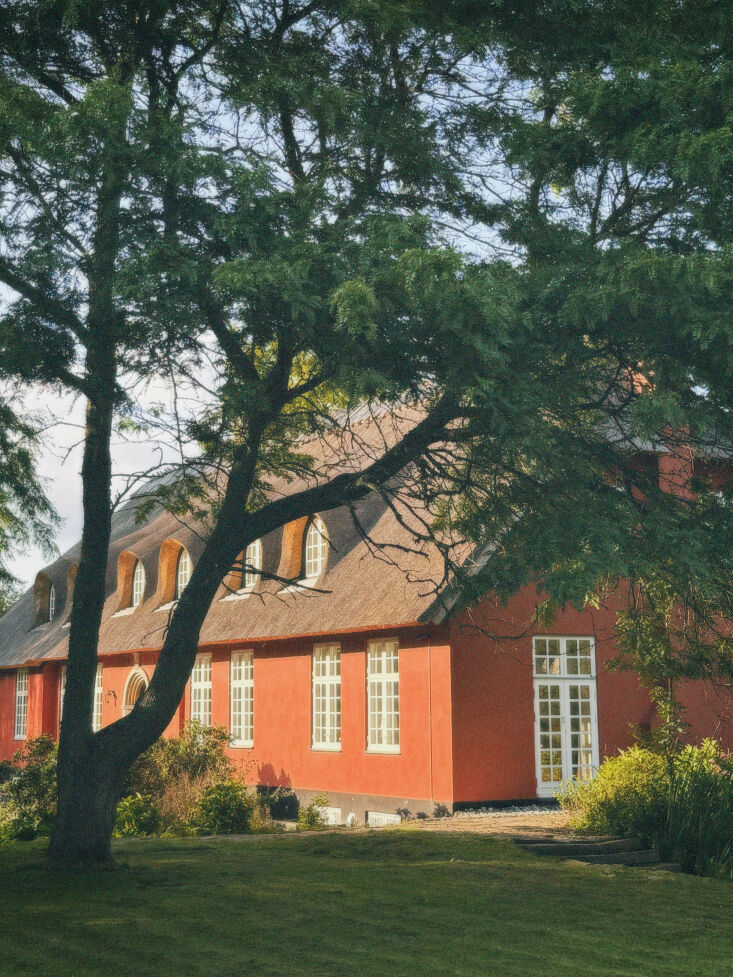 Above: The historic Danish house is made up of five bedrooms that can accommodate up to 10 guests—with interiors inspired by both English and Nordic country living.
1. Let the Season Lead
Rather than beginning with a menu or a table setting, Food Studio starts with the season. “It shapes everything—from what’s on the menu to how we set the table,” says Olsen. In spring, that might mean serving the first asparagus; come late summer, roe deer might be cooked over an open fire.
The season determines the setting, too. A clear day might call for a long lunch in a meadow, while rain sends the gathering beneath a tent. “Danish weather is wonderfully unpredictable, so we’ve learned not to fight it but to prepare for it,” Olsen says. “The best outdoor events embrace the conditions rather than trying to control them.”
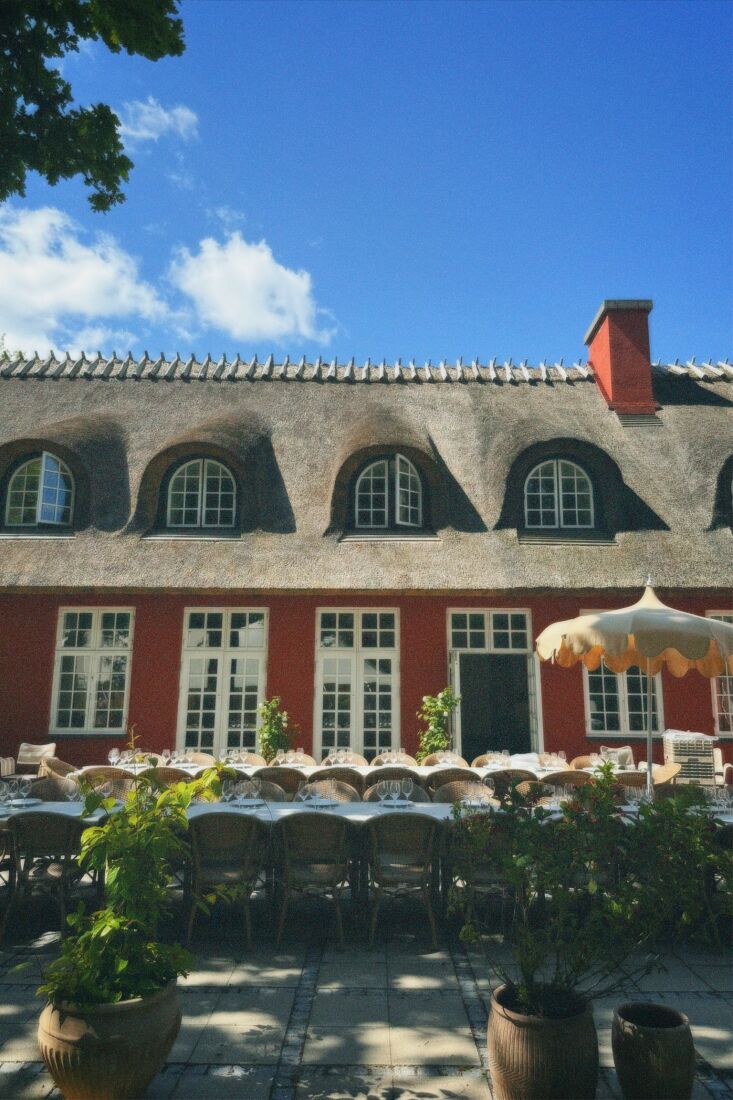 Above: Two long tables run the length of the farm house.
2. The Landscape Is the Party
Food Studio has staged dinners in forests, on beaches, and in private gardens, but Olsen is quick to point out that a spectacular setting isn’t a prerequisite. “Hospitality matters far more than having the ‘perfect’ location,” she says. Instead, look for ways to make whatever landscape you have available part of the experience rather than simply a backdrop.
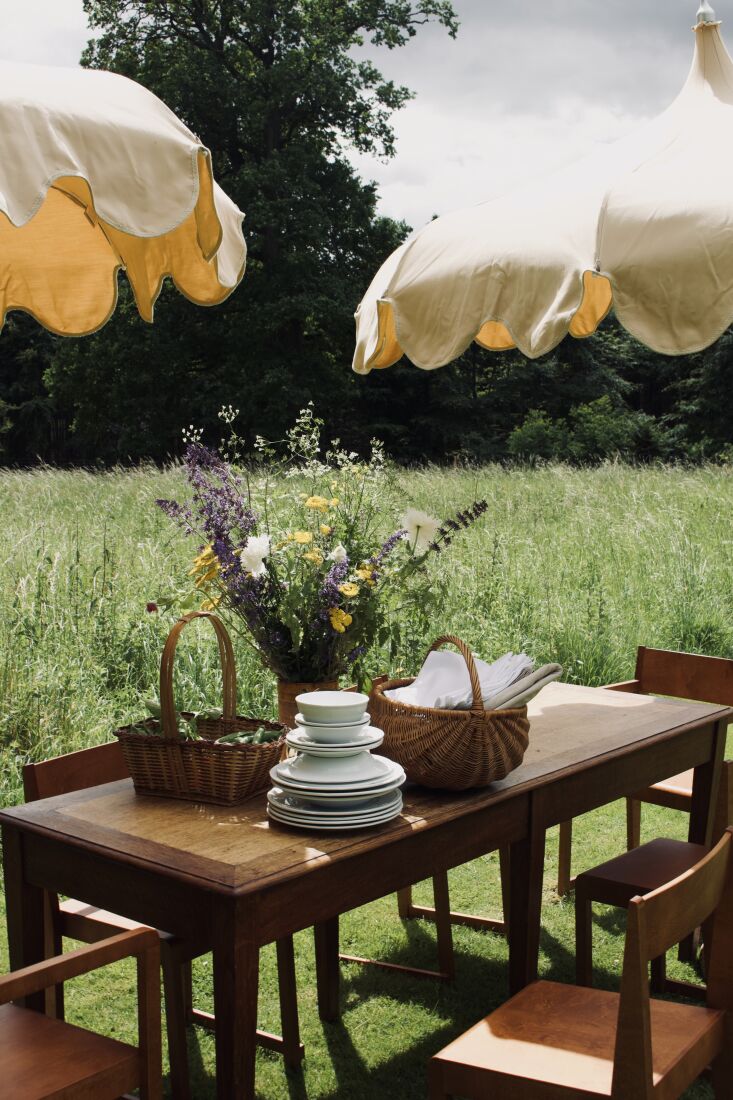 Above: A creative stack of plates and baskets with napkins or snap peas.
One reliable way to draw people into their surroundings? Cook outdoors. Food Studio frequently cooks over fire, which provides warmth, slows the pace of the evening, and gives guests a natural place to congregate. The team often uses OFYR grills, but Olsen says a simple fire pit can have much the same effect.
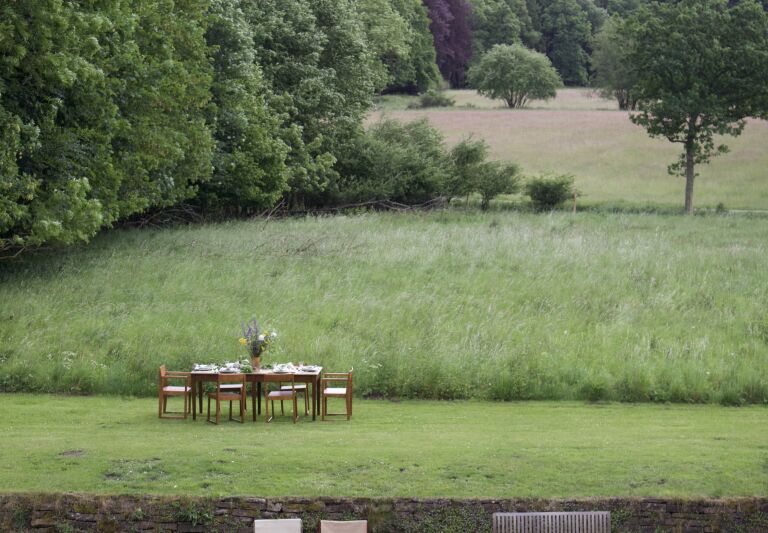
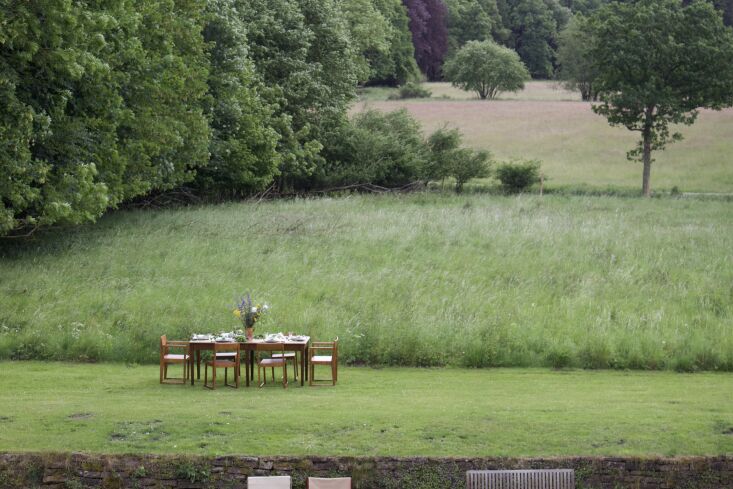 Above: A farm lunch is set with wooden tables and chairs in the property’s meadow.
3. Think Like a Grower
Food Studio’s developing regenerative farm grows seasonal vegetables, herbs, and edible flowers for its kitchens and events, but Olsen says you don’t need acreage to adopt the same philosophy at home. “Start by shopping locally and buying what’s naturally in season instead of planning a menu around ingredients flown in from across the world.” A farmers’ market is enough of a starting point, as is growing a few herbs, tomatoes, or edible flowers on a balcony. Better still, let one especially good ingredient determine the meal. “When the produce is at its best, you don’t have to do very much to it.”
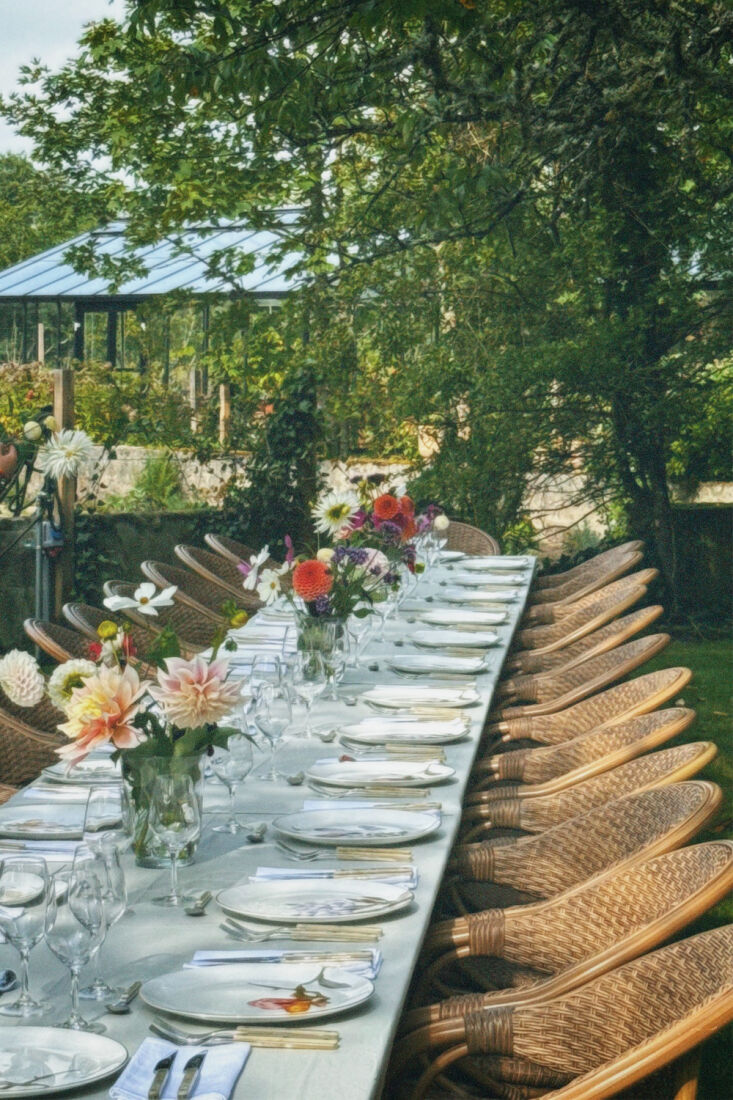 Above: The Farm House is, as they describe, “an attempt to move closer to a more self-sufficient way of running a venue,” with much of the food served grown right outside the door. This includes vegetables, herbs, flowers, and honey—all sourced from the forest.
At the Farm House, the connection goes further: guests might forage, cook together, or head into the fields before sitting down for dinner. “We want guests to understand not just what they’re eating, but where it comes from and why that matters,” Olsen says. The lesson translates on a smaller scale, too: the closer the experience of gathering is to the food itself, the more memorable the meal becomes.
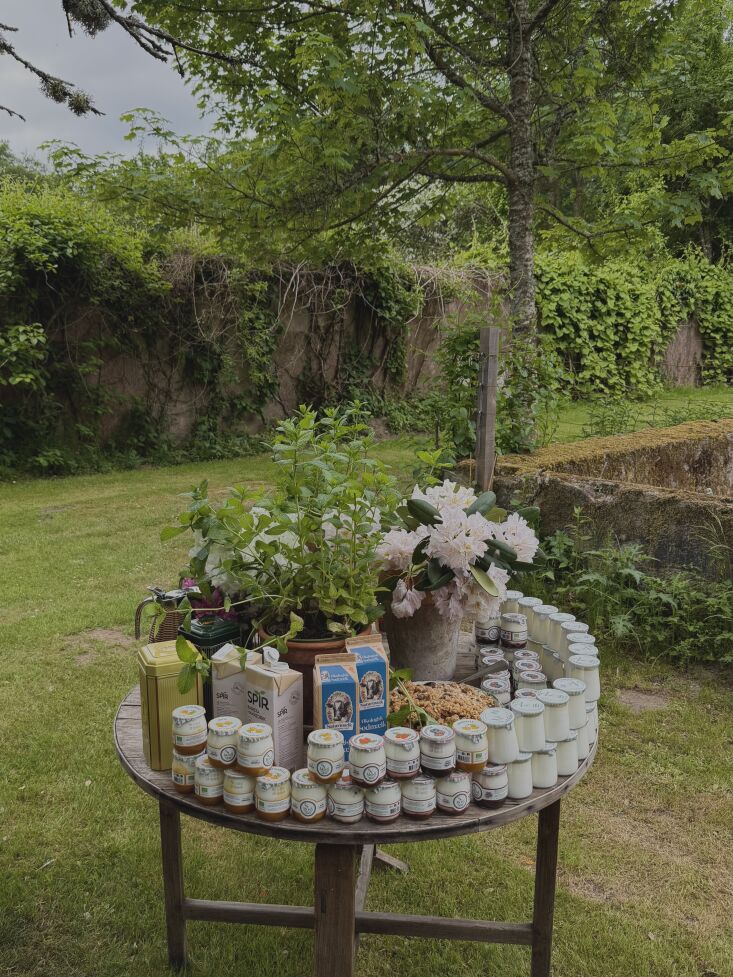 Above: Breakfast is served with tinned tea, granola, milk, and a surround of yogurt.
4. Decorate with Dinner
Skip the elaborate tablescape. Food Studio often decorates with the same things destined for the kitchen: “Beautiful vegetables, baskets of fruit, herbs and seasonal flowers usually create a stronger impression than elaborate styling,” says Olsen.
Again, follow what’s growing. A handful of sunflowers at the height of summer or branches gathered from the surrounding landscape can be all that’s needed. (One practical caveat from Olsen: if you’re decorating with produce, have more of it than you think you’ll need.)
The same looseness applies to the table itself. “Our biggest rule is probably an anti-rule: don’t overthink it,” she says. Food Studio favors tables that feel collected rather than perfectly coordinated: rumpled linen, handmade ceramics, just-picked vegetables, and flowers that don’t necessarily match. “Nature isn’t perfect, and an outdoor table shouldn’t try to be either.”
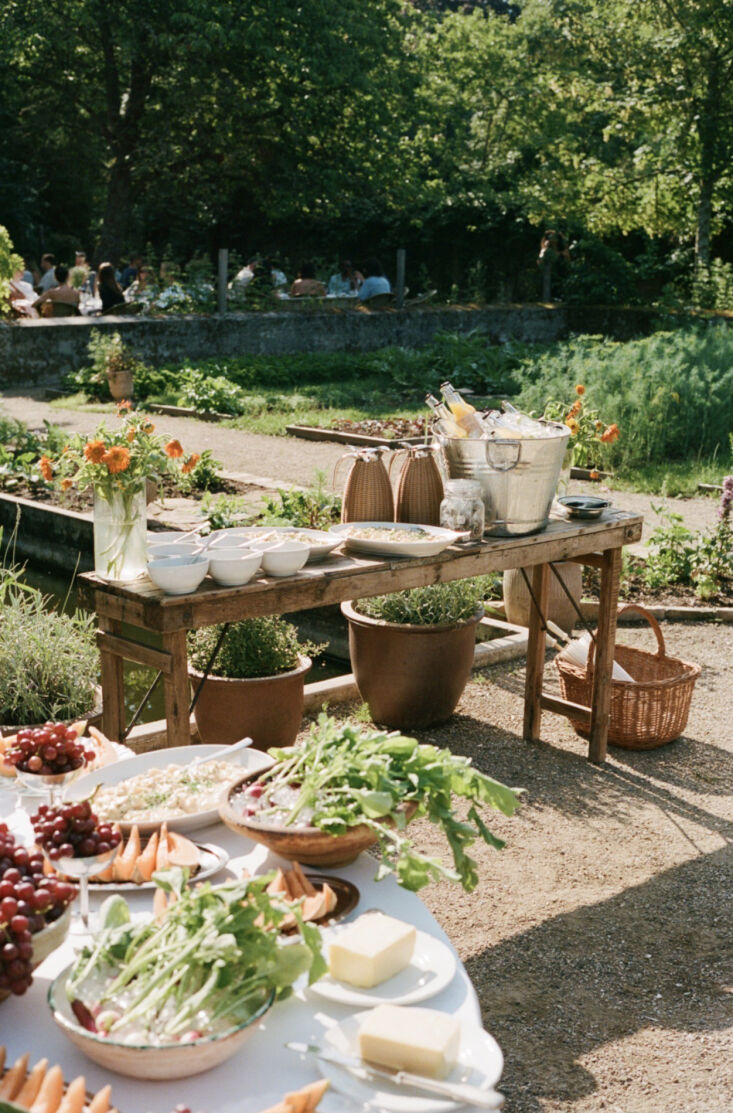 Above: Bunches of grapes, sliced melon, and radishes on ice decorate the length of the tables while doubling as food for guests.
5. Have a Plan B That’s as Good as Plan A
Outdoor entertaining inevitably involves relinquishing some control, but that doesn’t mean leaving everything to chance. “Preparation is everything,” Olsen says. “We always have a Plan B that feels just as intentional as Plan A.” At Food Studio, sailcloth tents provide shelter during summer, while Nordic tents fitted with wood-burning stoves extend outdoor gatherings into autumn and winter. On a domestic scale, the principle is the same: consider shelter, changing light, blankets, and a source of warmth before anyone arrives. Rather than treating these as emergency measures, make them part of the atmosphere. “If people are comfortable, they’re far more likely to relax and enjoy the moment—regardless of the weather.”
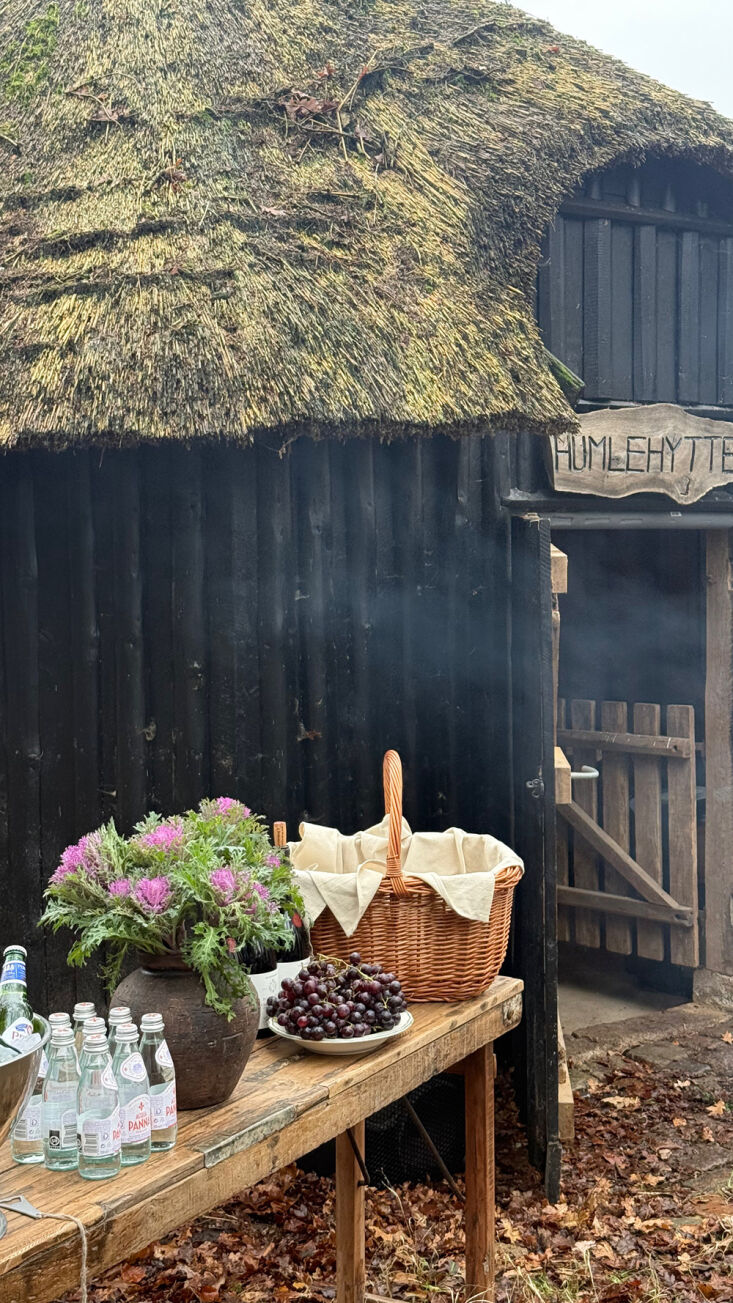 Above: An autumnal gathering takes place between an indoor location—the barns on the property—and outdoor tables.
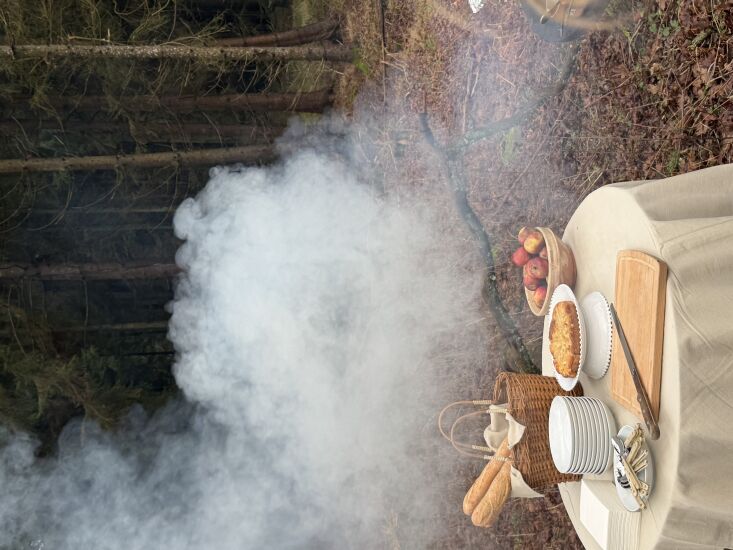 Above: An outdoor grill brings warmth to the autumnal gathering.
6. Hospitality, Not Perfection
For all the attention Food Studio gives to food and setting, Olsen’s most important advice has little to do with either: “Don’t try to impress your guests by doing things out of your comfort zone—make them feel at home.” For Food Studio, that starts with thinking about the people and purpose behind a gathering. A long lunch might unfold in the kitchen garden; a wedding ceremony beneath the trees; a retreat around foraging, cooking, or a fire. But the underlying intention remains the same.
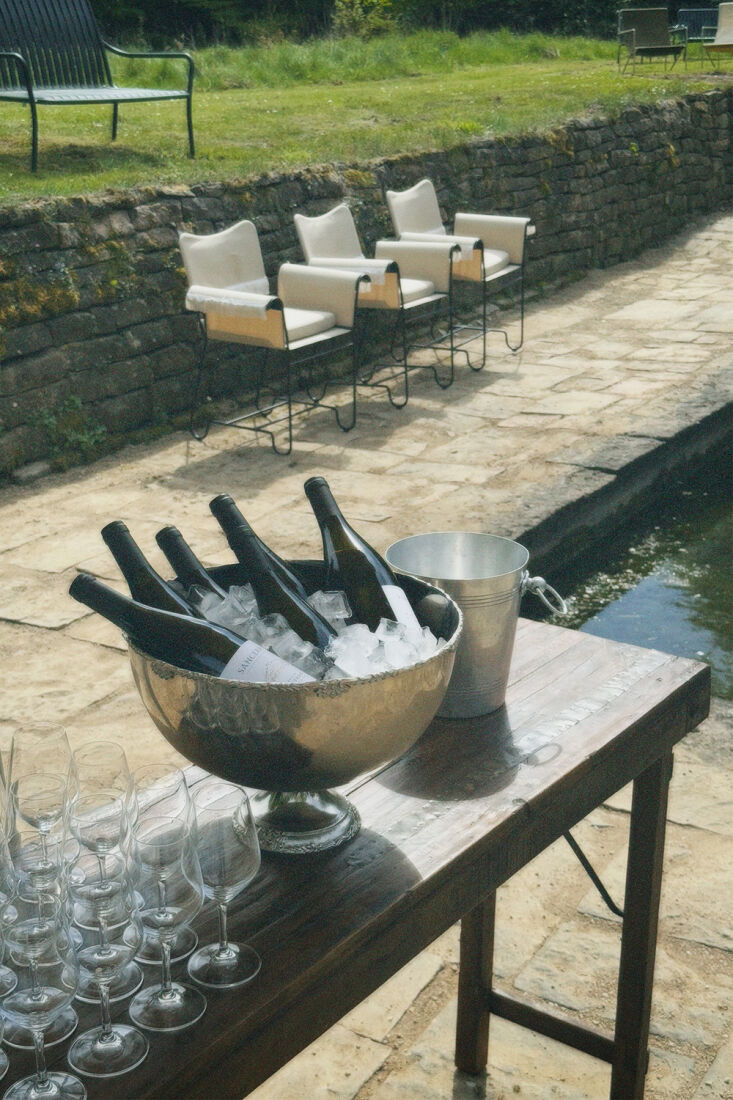 Above: A pond-side ice bucket and glasses at the ready.
Long tables are something of a Food Studio signature for precisely this reason. “We love long tables—not just because they look beautiful, but because they encourage conversation,” Olsen says. “Sitting shoulder to shoulder creates a different kind of atmosphere and intimacy.”
In the end, a successful gathering isn’t measured by how seamlessly it was styled. “People rarely remember whether every detail was perfect,” Olsen says. “They remember how they felt, the conversations they had, and whether they were made to feel welcome. Good hospitality isn’t about perfection; it’s about generosity.”
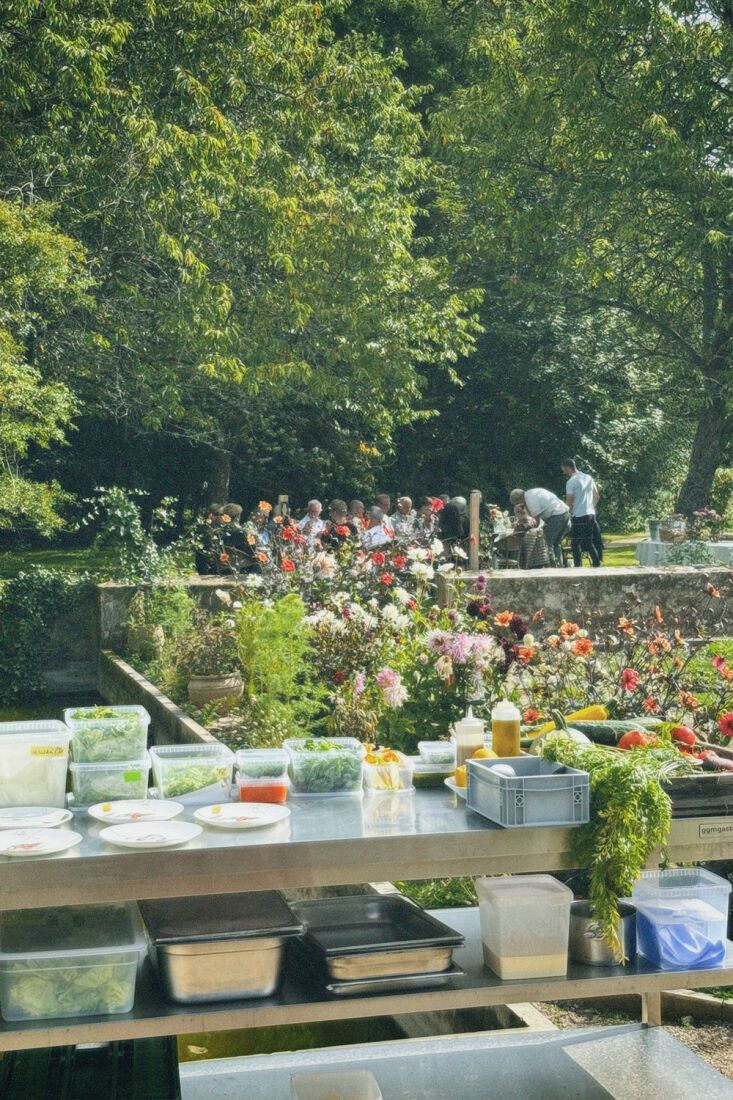 Above: Prep stations aren’t hidden away, but integrated into the landscape where where farm-to-kitchen-to-table becomes a circular experience.
For more entertaining advice:
- Expert Advice: How to Throw a Dinner Party with Minimal Effort, from an SF Creative Director
- 10 Summer Entertaining Tips from a Hostess Extraordinaire
- Deep Casual Hosting: 5 Ideas for the Autumn Table from the Remodelista Archives
- 10 Tips for Living the French Way, from ‘Joie: A Parisian’s Guide to Celebrating the Good Life’
Italian Lessons: Cenerentola Chianti, a Family House Reconsidered
by Alexa Hotz
The Dutch arrived in Chianti earlier than one might expect. Among them were Isabella Van Marle’s grandparents, who settled in the countryside between Florence and Siena in the 1960s. Van Marle, born in London and now based in Amsterdam, spent her childhood summers in the area; in the late 1990s, her family acquired a 19th-century country house on the Chiantigiana, since named Cenerentola—Italian for “Cinderella.” Today, Cenerentola Chianti is divided into two apartments, available to rent separately or together.
A curator and artistic director, Van Marle has approached the house with a curator’s eye and a light touch. Rather than remake it as an idealized version of rural Tuscany, she preserved its basic structure and defining features: plastered walls, wooden beams, arched windows, and cotto floors. The main intervention was to redesign the kitchens serving its two apartments; elsewhere, the rooms have been assembled gradually and instinctively.
Italian design classics and anonymous antiques sit alongside pieces commissioned from friends and finds collected in Florence, Arezzo, Siena, Bologna, Brussels, and farther afield. The result is neither conventionally Tuscan nor conspicuously modern. Tuscan by circumstance rather than styling, Cenerentola is an old family place made newly useful—and rather particular—by the next generation.
Photography by Eefje De Coninck and Senne Van der Ven of Senne & Eefje for Cenerentola Chianti.
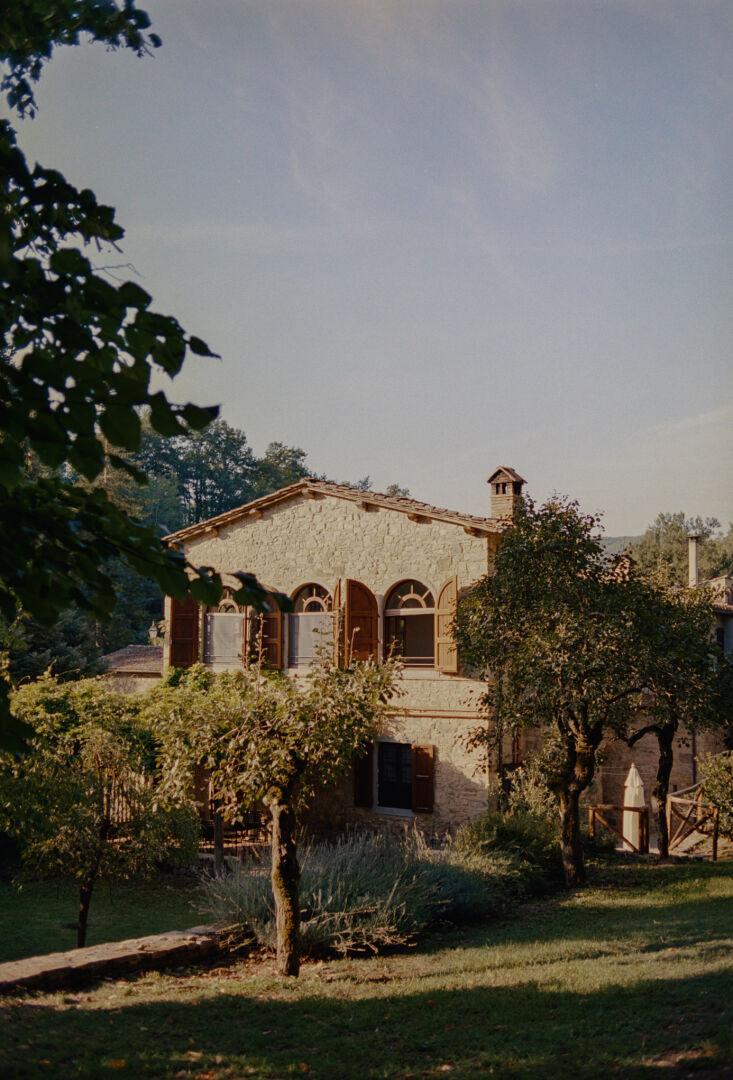 Above: Cenerentola contains six bedrooms, five bathrooms, two kitchens, and two living rooms across its ground and first floors. Taken together, the two apartments accommodate up to 12 guests.
 Above: A lush pergola and traditional shutters adorn the exterior of the 19th century property.
 Above: The restoration retained the building’s original plastered walls, wooden beams, arched windows, and traditional cotto floors.
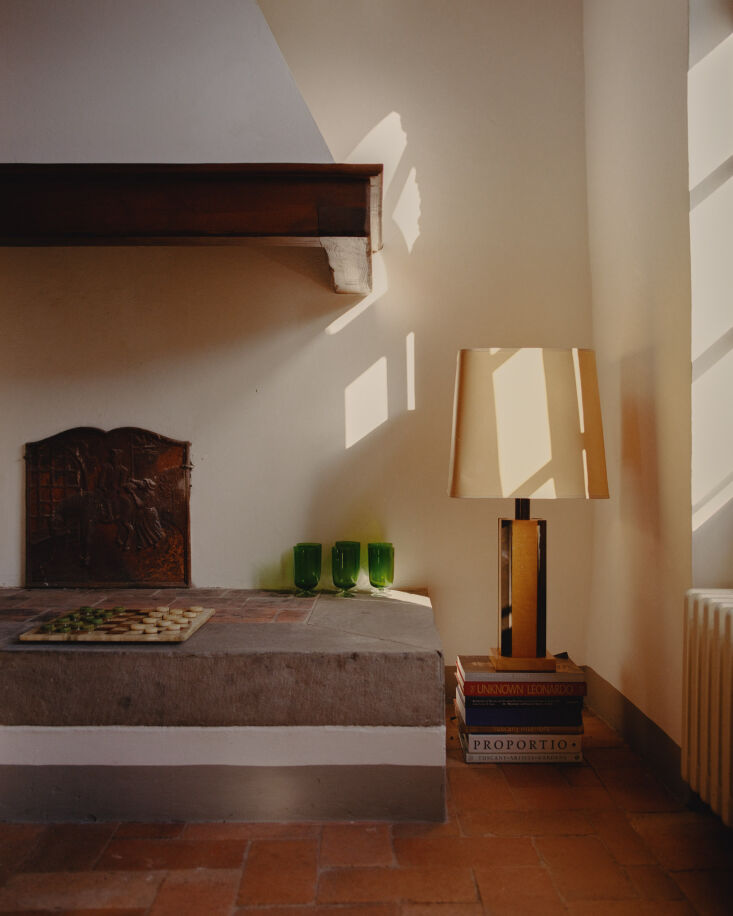 Above: A burl-wood lamp found in Brussels sits among antique glassware—part of Van Marle’s deliberately loose mixture of provenance and period.
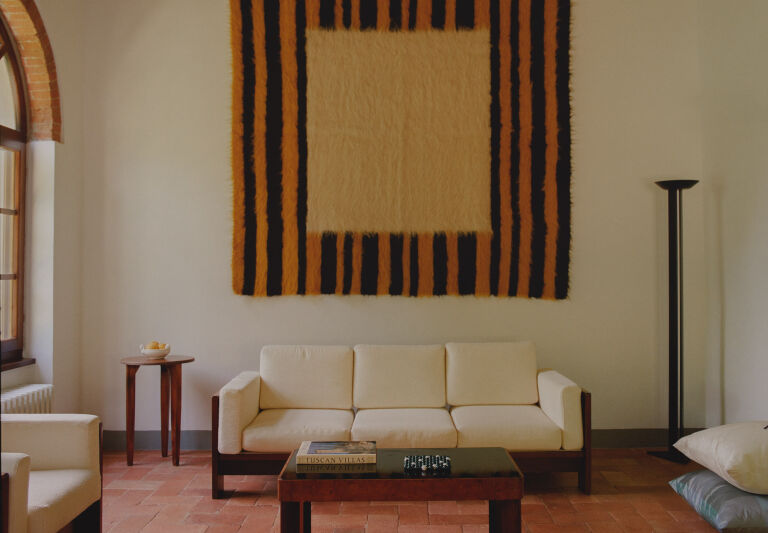
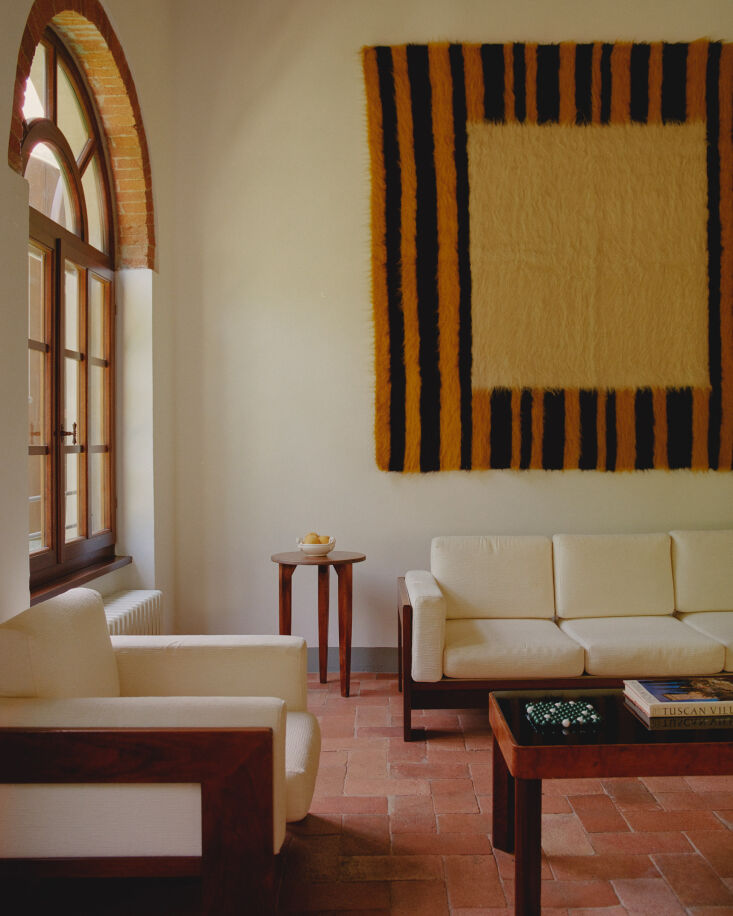 Above: The Bastiano chair and sofa, designed by Afra and Tobia Scarpa for Gavina in 1960, make up the ground floor living space.
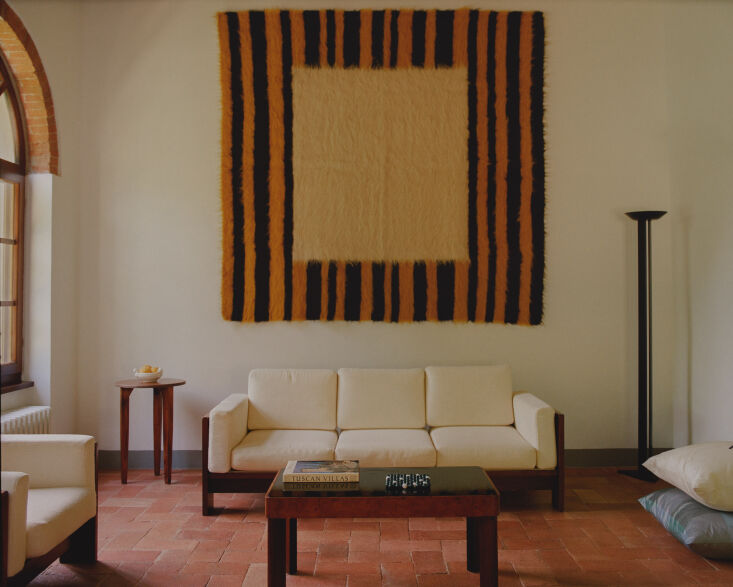 Above: The fringed Bombini textile is by New Zealand-born, Paris-based artist and textile designer Grace Atkinson. It was handcrafted using a traditional technique developed in the 14th century by communities in Ukraine’s Carpathian Mountains.
 Above: The ground-floor kitchen takes its cues from traditional Tuscan kitchens where designer Liam Dean created the kitchen cabinetry in okoumé wood with marble counters.
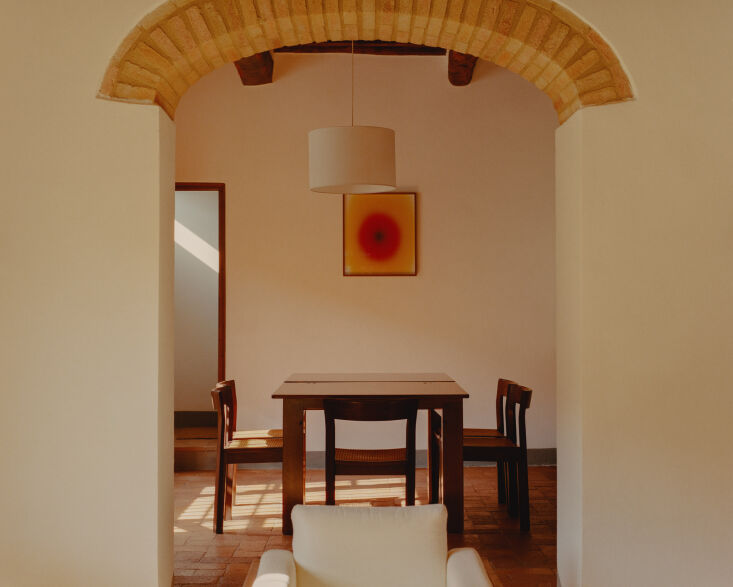 Above: Artwork by South African artist Lea Colombo introduces a concentrated shot of color.
 Above: Elongated cushions are by Pien Barendregt of Amsterdam-based Pien Studios.
 Above: Liam Dean also designed the okoumé bedside tables. The small lamps were custom-made by a local Tuscan craftsman.
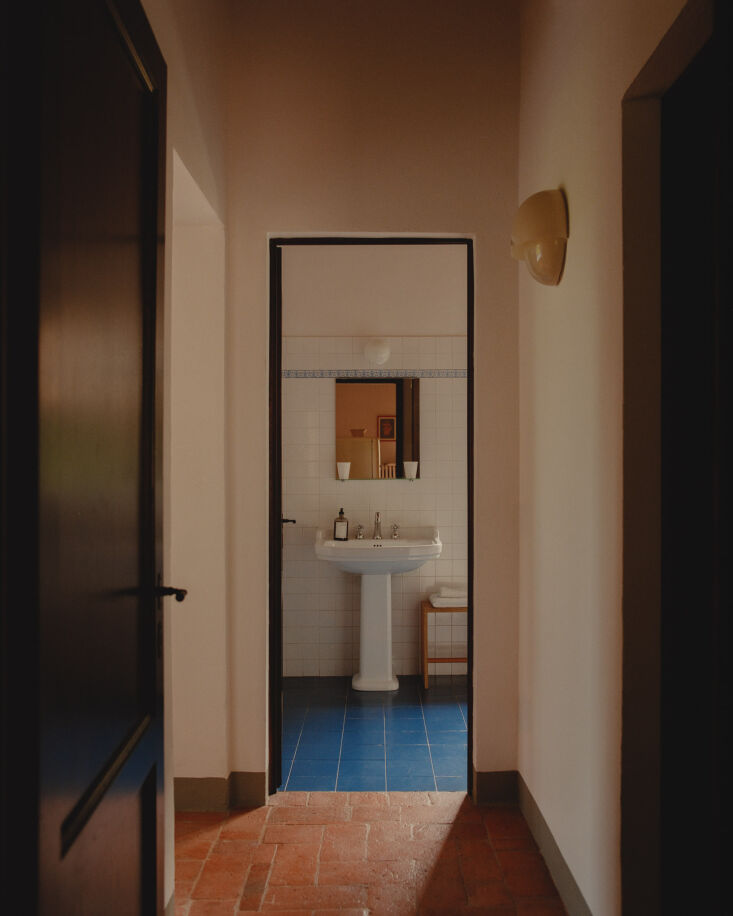 Above: In a departure from the surrounding neutral tones, the bathrooms are designed with blue tiled floors.
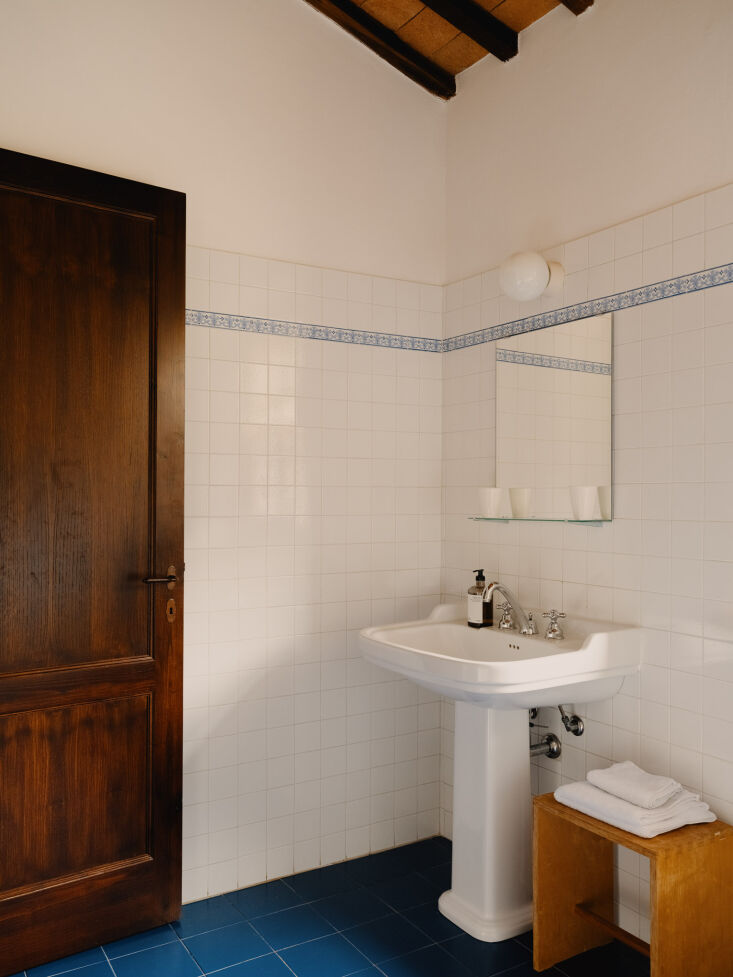 Above: A mix of traditional and modern in one of the many bathrooms on the property.
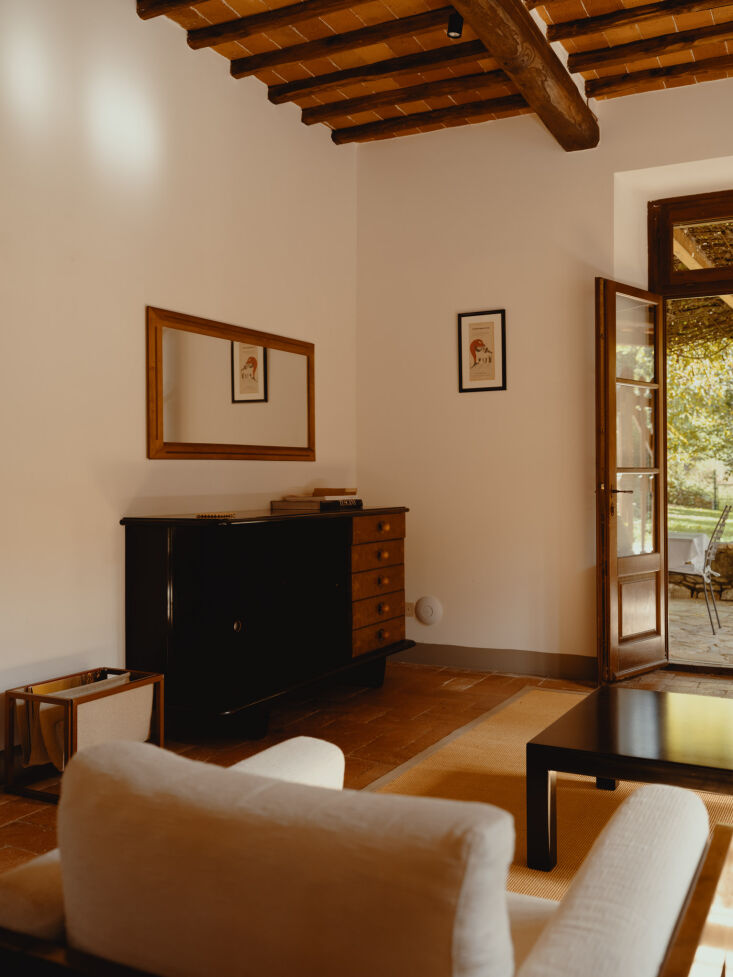 Above: Living spaces open out to the shaded garden.
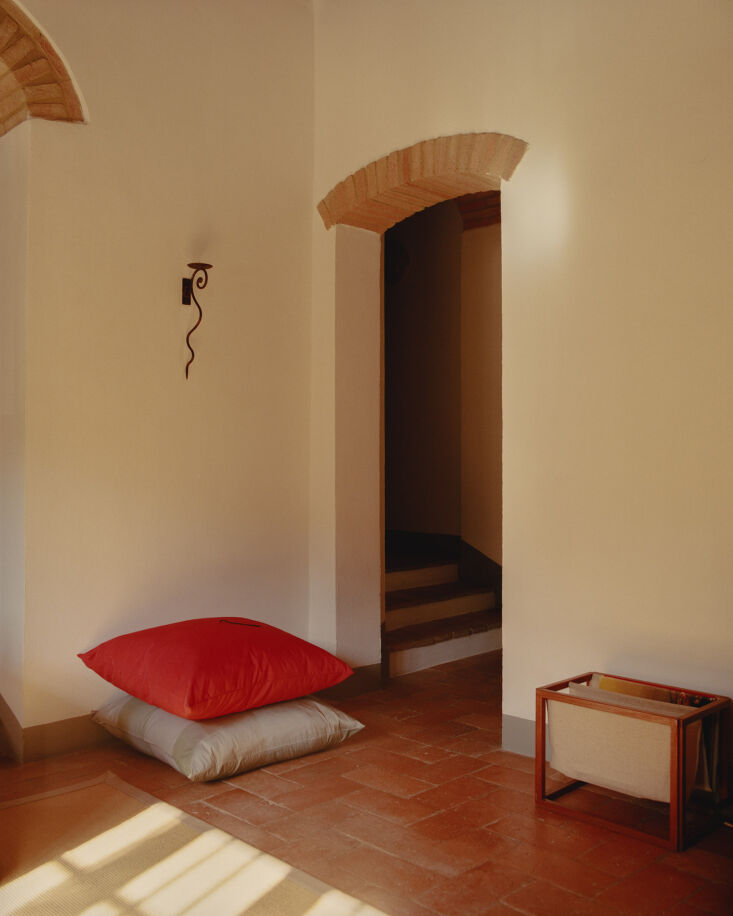 Above: Contemporary textiles, again from Pien Studios, soften the old house’s plaster walls and cotto floors.
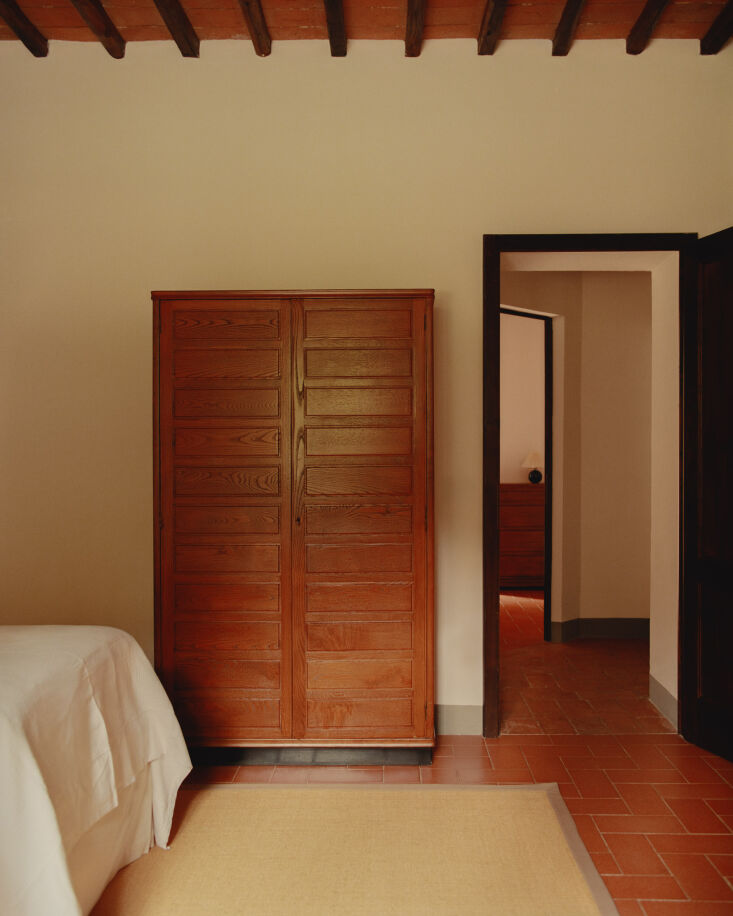 Above: A solid-oak wardrobe sourced through Spazio Leone brings the weight of a freestanding antique to the otherwise spare bedroom.
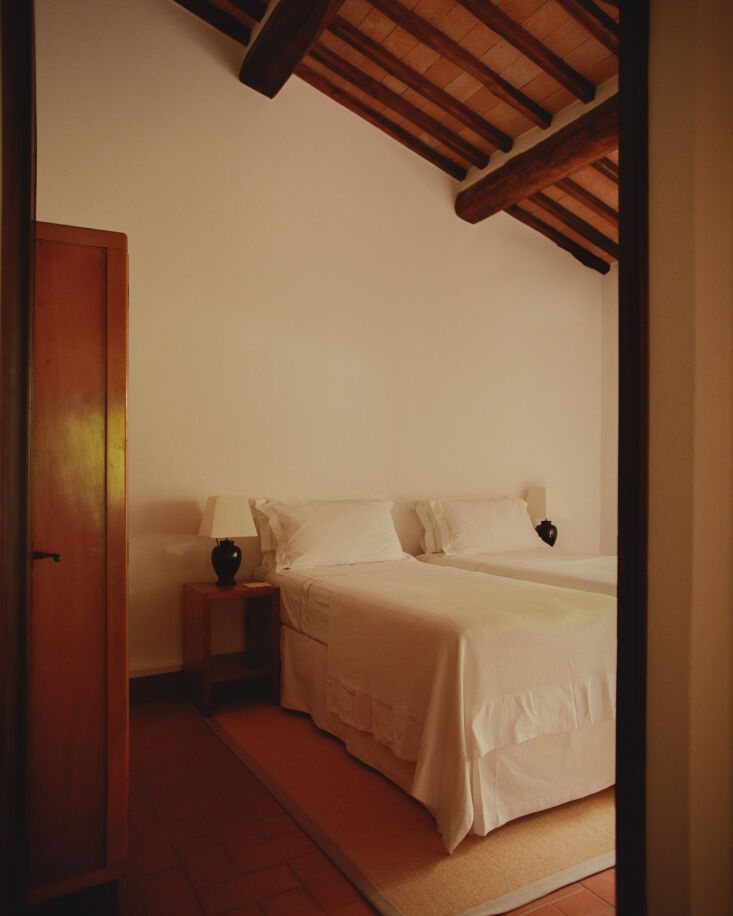 Above: Two single beds in an upstairs bedroom.
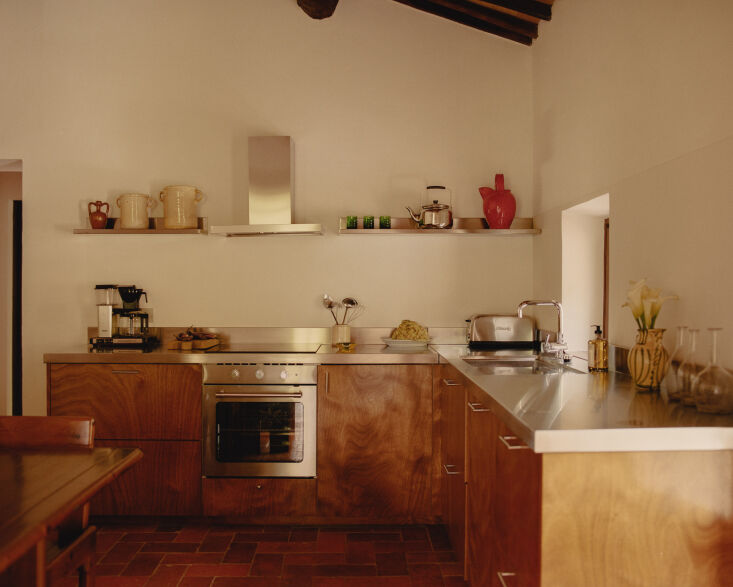 Above: Upstairs, the second kitchen has an L-shaped plan, okoumé cabinetry, and a slim stainless-steel countertop—a more streamlined counterpart to the traditional kitchen below.
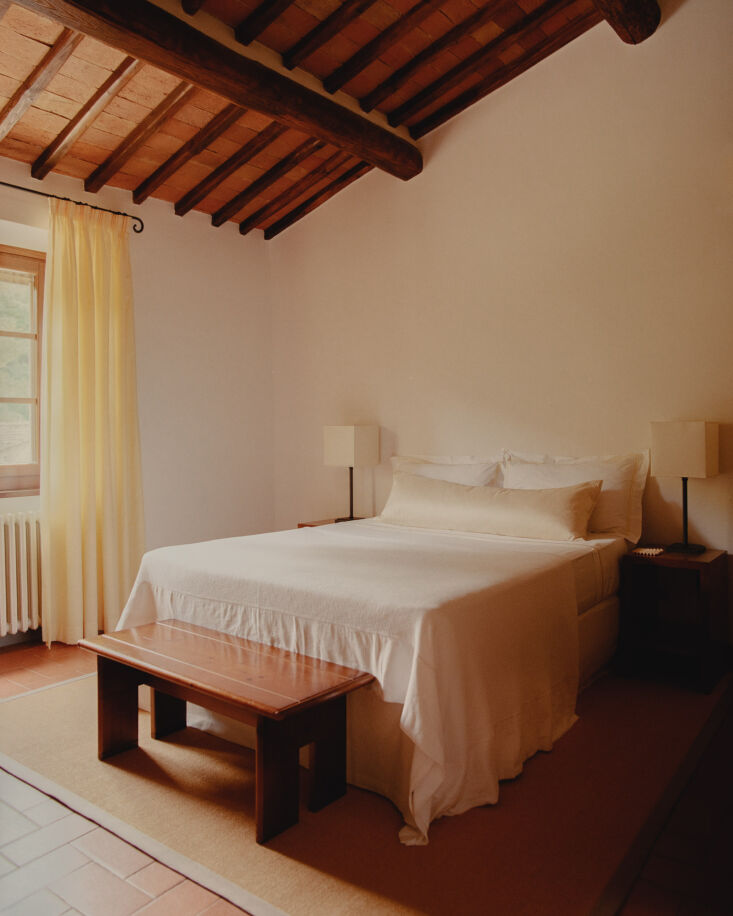 Above: In one bedroom, a bench by Italian designer Silvio Coppola for Fratelli Montina is paired with simple linens, a jute rug, and wrought iron bedside lamps.
 Above: Wrought iron hardware and pale yellow curtains frame the view to the garden.
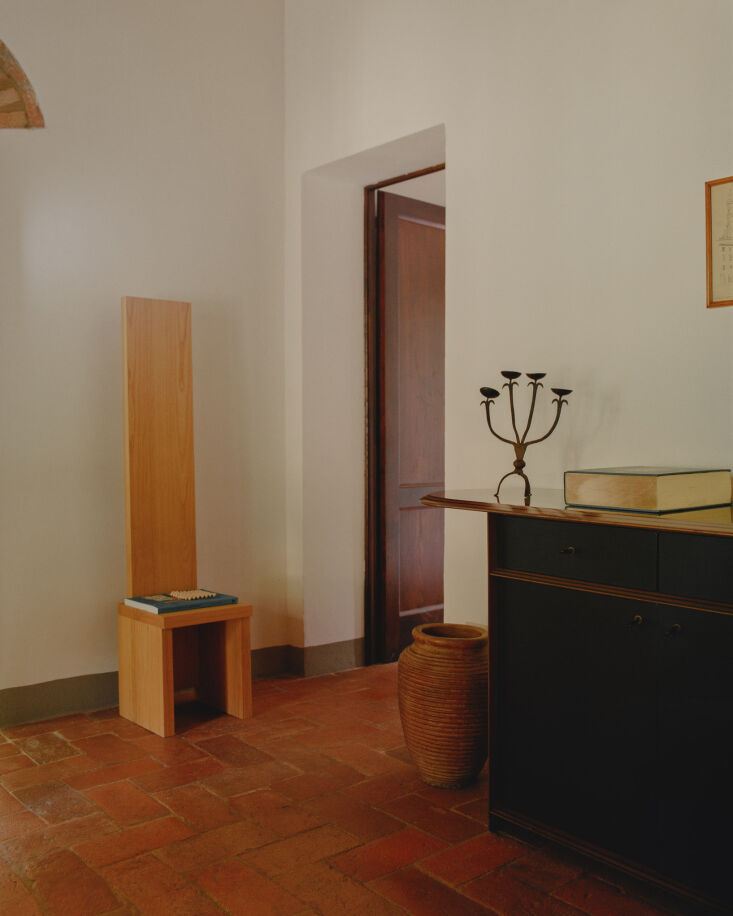 Above: A sculptural chair by Dale Stephens of TMPL Studio is made from English ash. Beside it, a sideboard by Afra and Tobia Scarpa was sourced from Spazio Leone.
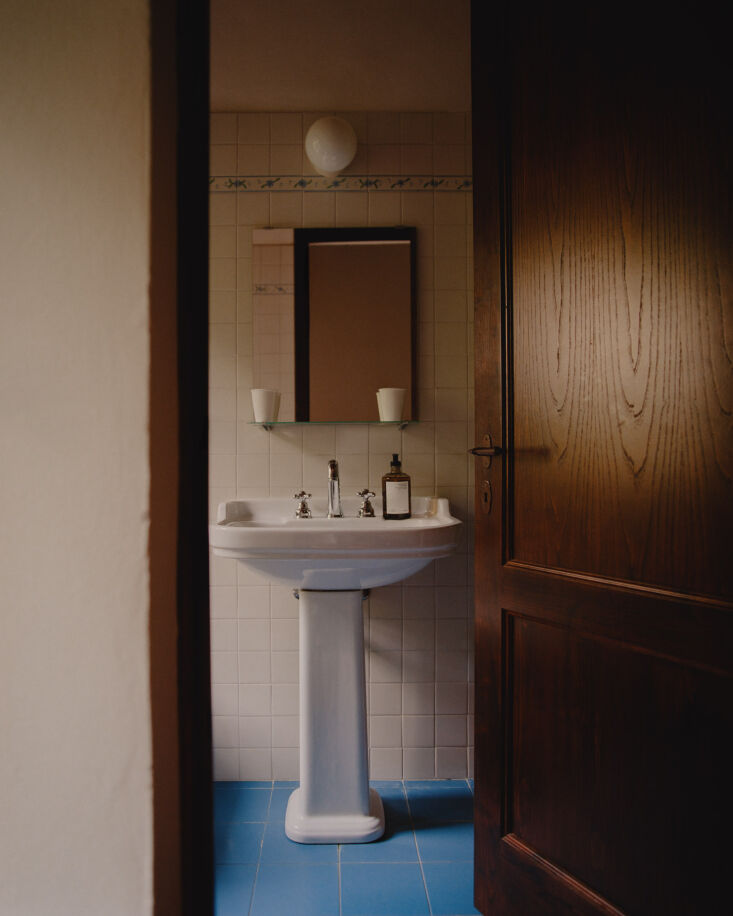 Above: Traditional pedestal sinks.
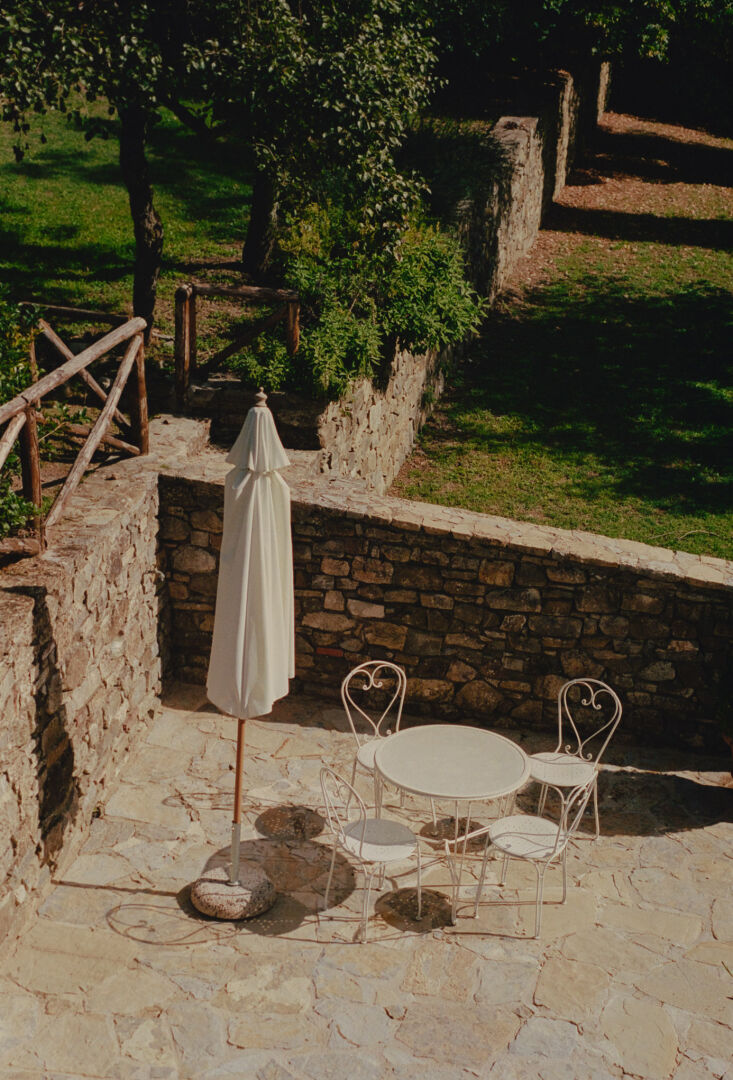 Above: The house extends into a garden with terraces and a private swimming pool.
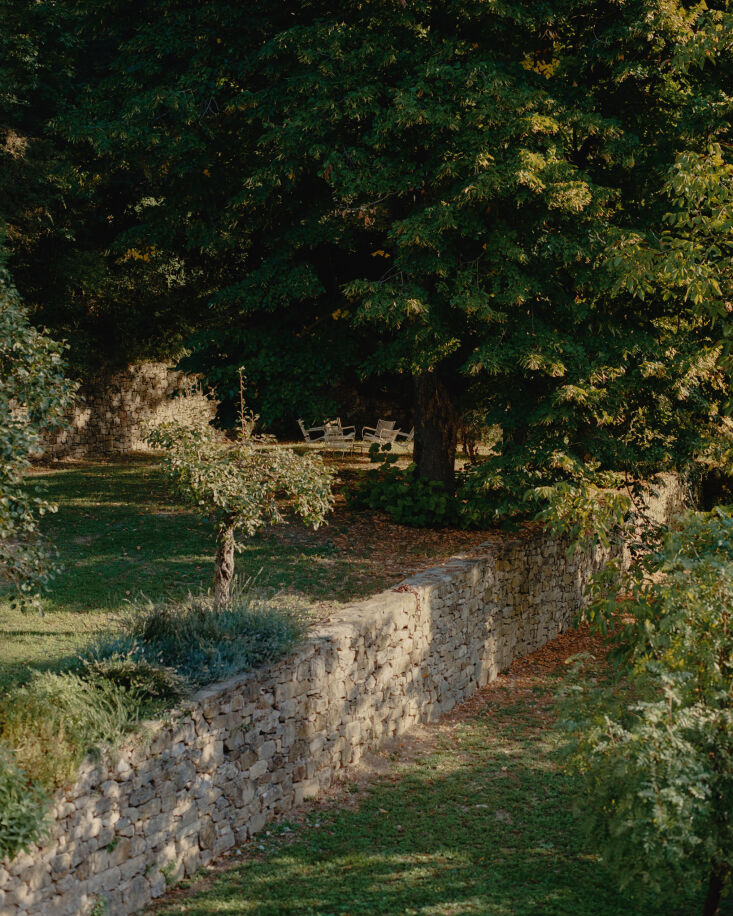 Above: A rambling Tuscan garden with plenty of shaded spaces for summer repose.
 Above: A collection of deck chairs, both solid and striped, surround the pool.
For more rural Italian retreats, see our posts:
For daily dispatches and more favorite finds, head to Remodelista.com. For bonus content—like our weekly Quick Takes column—consider joining us as a paid subscriber.
Remodelista participates in affiliate marketing programs, which means we may get paid commissions on products purchased through our links to retailer sites.
