


Waking Up Inside an Image: A Surrealist Guesthouse, Restaurant, and Bookshop in Mexico City
by Nicole Najafi
The most striking aspect of Pensión, the Mexico City guesthouse by Rafael Prieto and Bernardo Dominguez of Savvy Studio, is that it looks unlike any other design-forward hotel on your Instagram feed. It feels as though it were conceived entirely outside of the internet design vernacular. Salmon wall-to-wall carpet, large-scale photographic wallpaper, a bathtub in a bedroom—there are unexpected twists and surprises at every turn as Prieto and Dominguez subvert your expectations.
What began as a small three-room project has recently expanded to ten rooms, each with its own distinct design that feels like a little private world, alongside the launch of Café Ideal, a restaurant-bar on the ground floor with a menu by Prieto’s friend and frequent collaborator (and Remodelista favorite) Laila Gohar. On the second floor is Prieto and Jorge de la Garza’s bookstore, Librería, where you can pick up rare art books from independent publishers.
Eat, sleep, and shop all under one (sublimely designed) roof. Here’s a tour of the three spaces.
Photography by Ricardo Acuña, except where noted, courtesy of Rafael Prieto.
Cafe Ideal
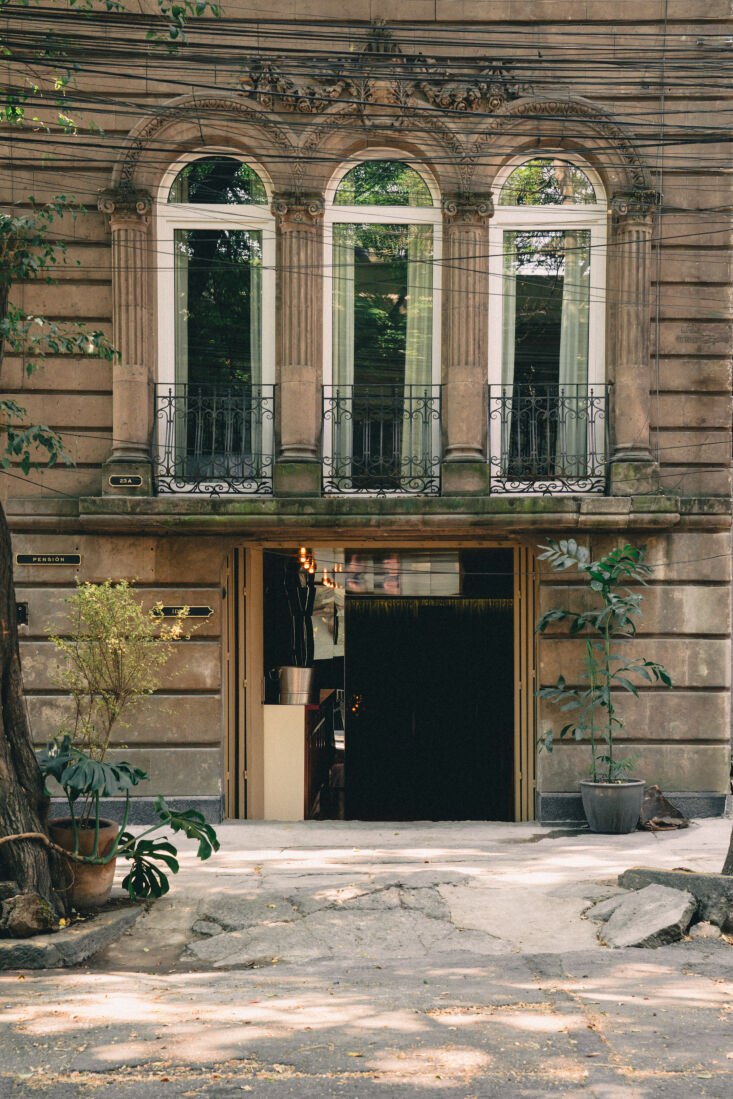 Above: The new Café Ideal is set within an early-1900s Porfirian mansion on a quiet, tree-lined street in Mexico City’s Roma Norte neighborhood. The arched windows, iron Juliet balcony, and cantera stone facade are distinct architectural details of the period and place.
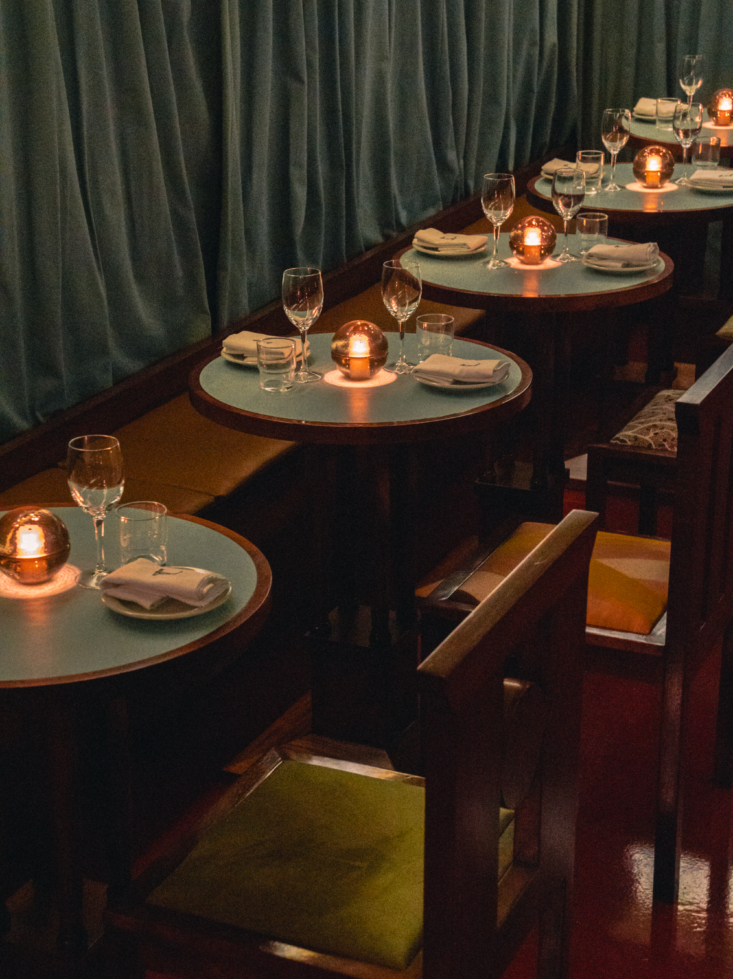
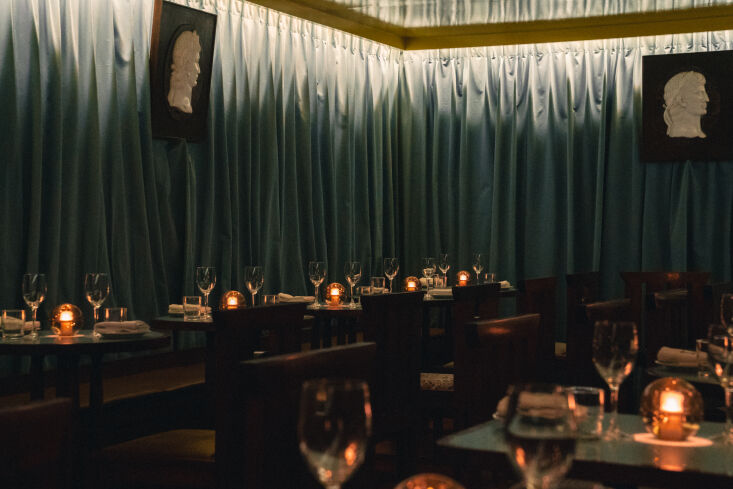 Above: The dining room at Café Ideal is an homage to 1970s Mexico City. Powder-blue archival fabric forms the pinch-pleat wall curtains, adorned with antique marble cameo portraits.
Pensión
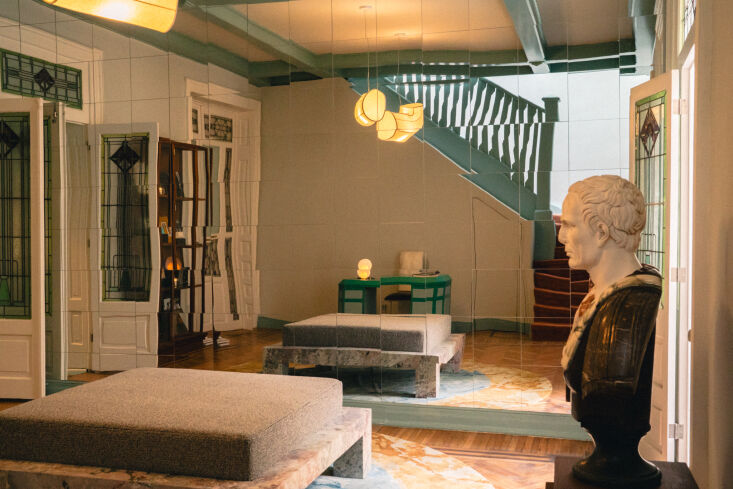 Above: The reception room at Pensión features a linen pendant light by Marrow Project, marble plinth bench, antique plaster bust, and cheeky teal accent color. The wall-sized mirror imbues the space with a slightly off-kilter, surrealist feeling.
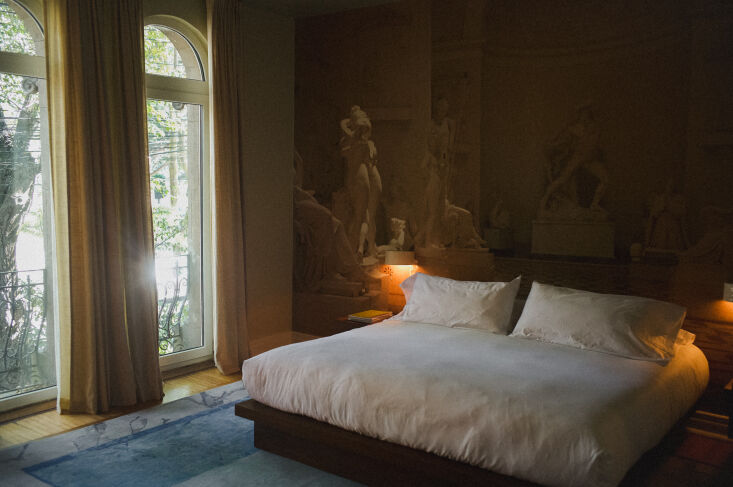 Above: The guest rooms are designed with a unique photographic wallpaper using analog photos taken by Prieto in collaboration with Wallpaper Projects. “The intention was really to give each room its own emotional backdrop, something immersive rather than decorative,” Rafael tells us. “A photograph carries memory and time in a way a pattern can’t. You’re not just waking up in a room; you’re waking up inside an image.” Photograph by Max Farago.
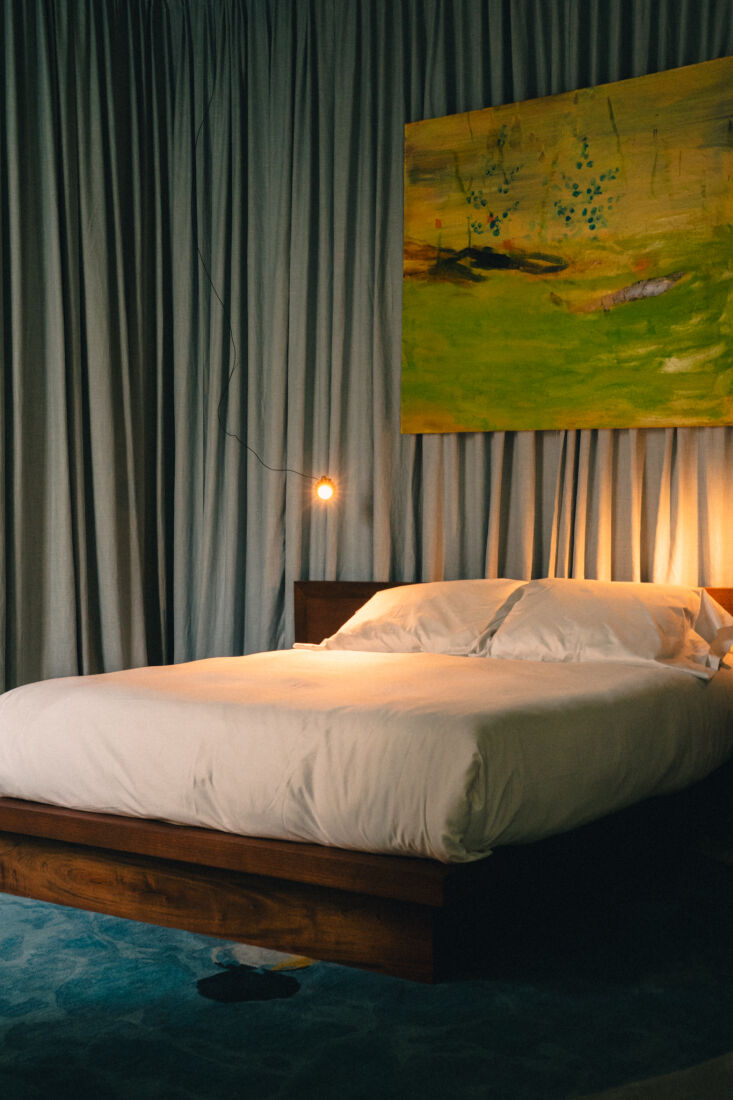 Above: A warm and inviting guestroom with a rug from Prieto’s Swimming Pools collection for Christopher Farr. The pinch-pleat wall curtains recall the ones in Café Ideal. “We approached each room with the instinct of a collector rather than the logic of a hotelier,” says Rafael. “Everything was chosen by someone who cared about it.”
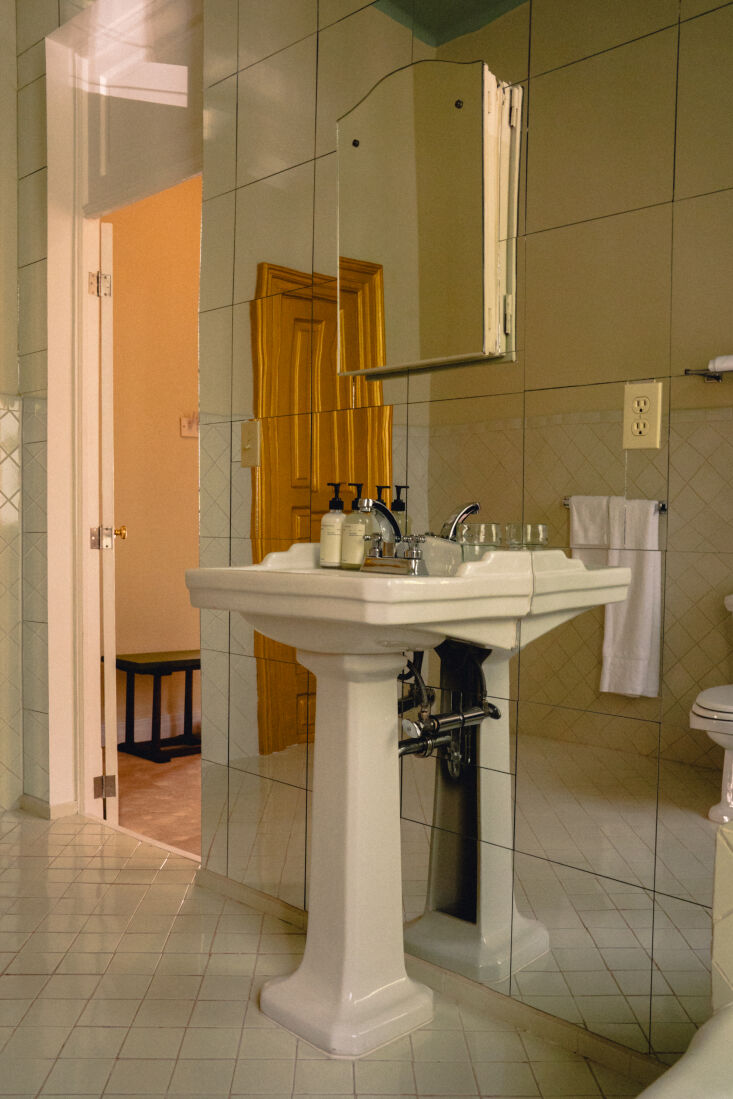 Above: A guestroom bathroom with an original porcelain sink. When asked about the process of restoring a century-old building, Prieto said, “You work slowly, you listen to what’s there, you try not to force it. Patience and respect for the detail that already exists.”
Bookstore
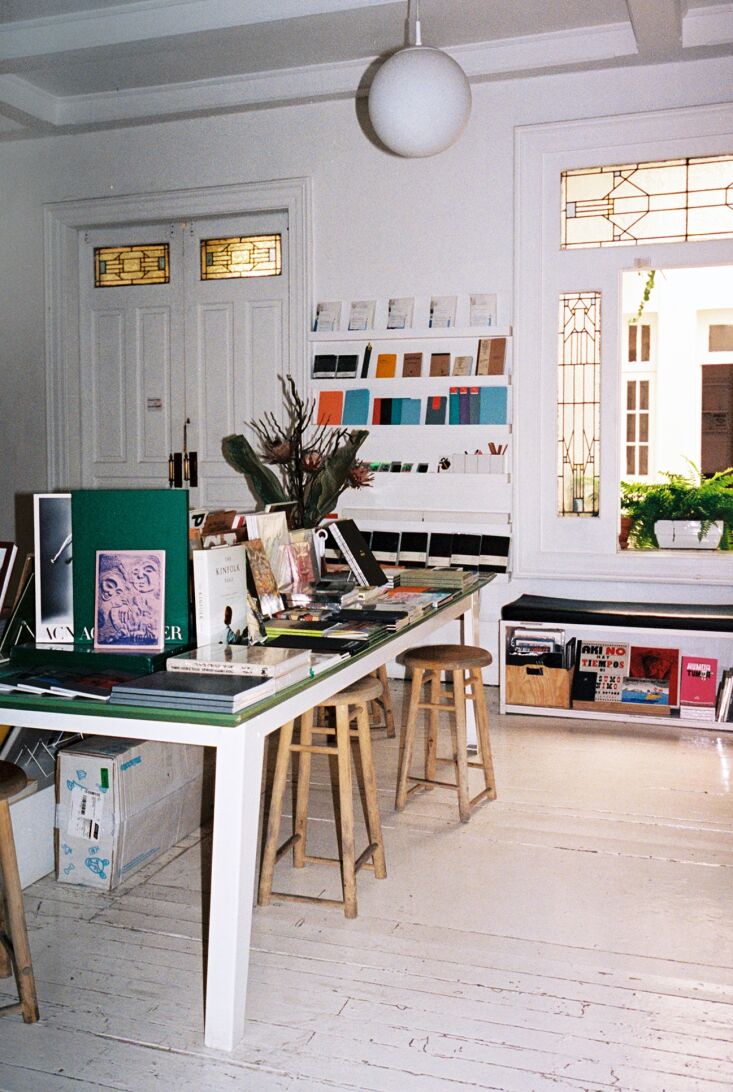 Above: The second floor bookstore, Librería, with rare and independent art books. The modern books set against the backdrop of the Belle Époque stained-glass windows make for a brilliant contrast. Photograph by Adrianna Glaviano.
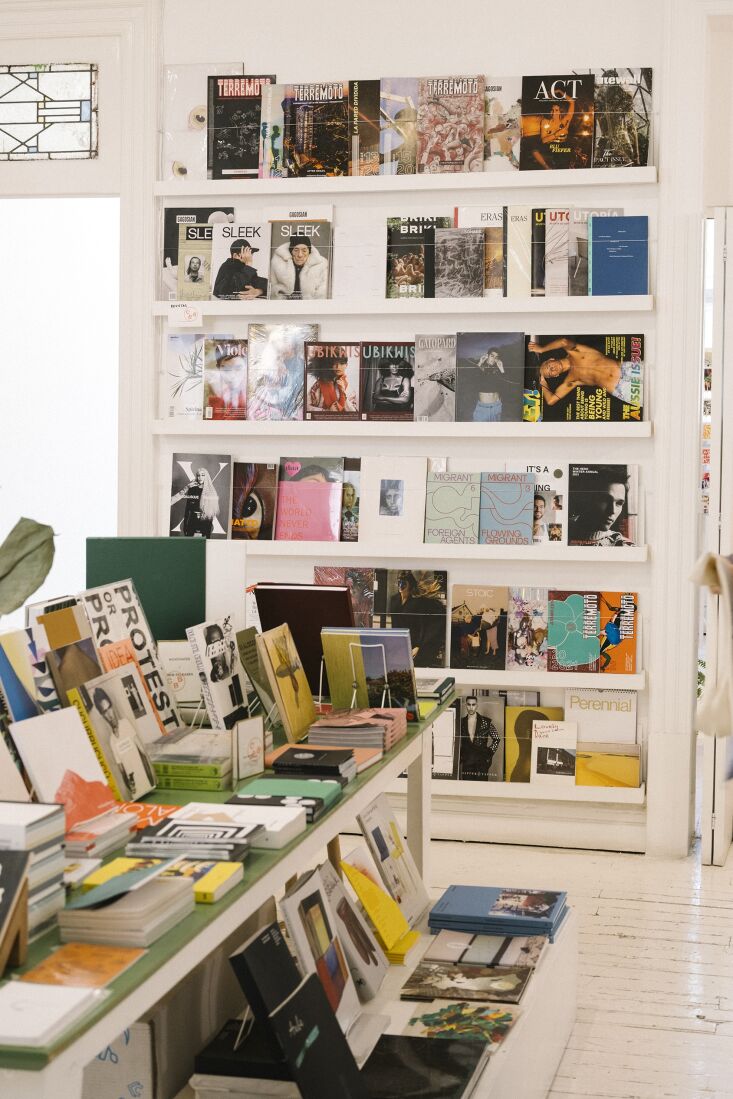 Above: Librería’s collection spans photography, architecture, design, decoration, ceramics, the culinary arts, and artistic monographs. Photograph by Adrianna Glaviano.
More standouts nearby:

Kitchen of the Week: Frama’s Freestanding Components Made By Top-Drawer Swedish Cabinetmaker Kvänum
by Margot Guralnick
A decade or so ago, when Niels Strøyer Christophersen founded his celebrated Copenhagen design firm, Frama, he used his living quarters in a restored 1905 watchmaker’s shop as a showcase for his studio’s work. Extolling natural, unpretentious materials, ease of use, and reverence for the old, Christophersen went on to created refreshingly simple elements for the home, including his own kitchen out of parts found on the street. It served as a model for Frama’s initial kitchens composed of freestanding, wood-framed components.
“The first Frama kitchen was based on principles refined to their most essential,” explains the company. “The aim was to celebrate the essentials of cooking and being.” Frama has now taken its kitchen offerings to the next level: collaborating with Swedish cabinetmaker Kvänum, a century-old kitchen maker and supplier to the Swedish royal court, it offers Frama Modules by Kvänum, a line of kitchen components in two wooden frames.
Photography courtesy of Frama.
Frama’s Kitchen Modules in Ginger
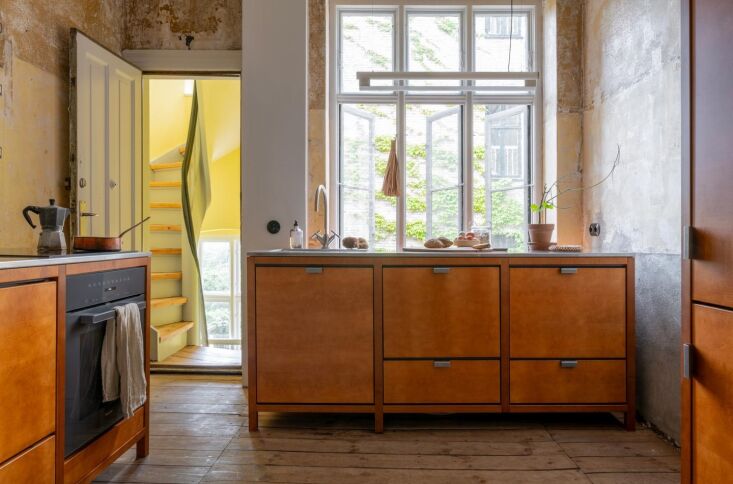 Above: Christophersen describes the new line as “traditional craft meets Frama’s distinctly straightforward aesthetic.”
The modules are made of birch, here stained a warm hue they’ve dubbed Ginger, with milled stainless steel pulls.
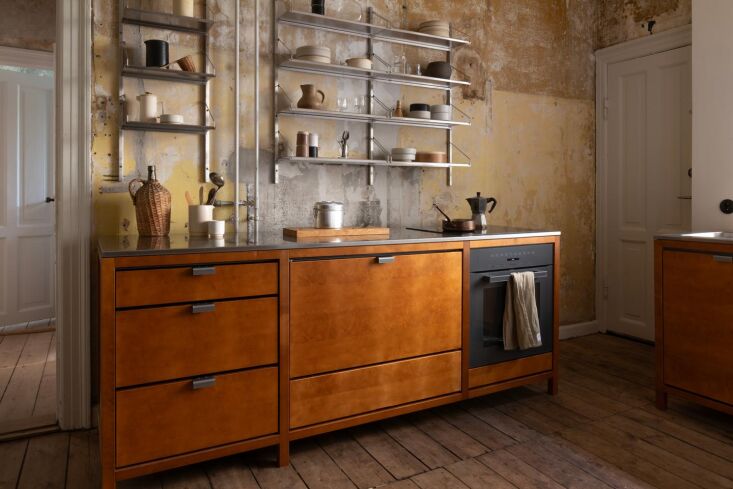 Above: The freestanding wooden components are offered with stainless steel or stone countertops. They’re paired here with Frama’s customizable Shelf Library system and stackable Ceramic Tableware. The appliances are all by Miele.
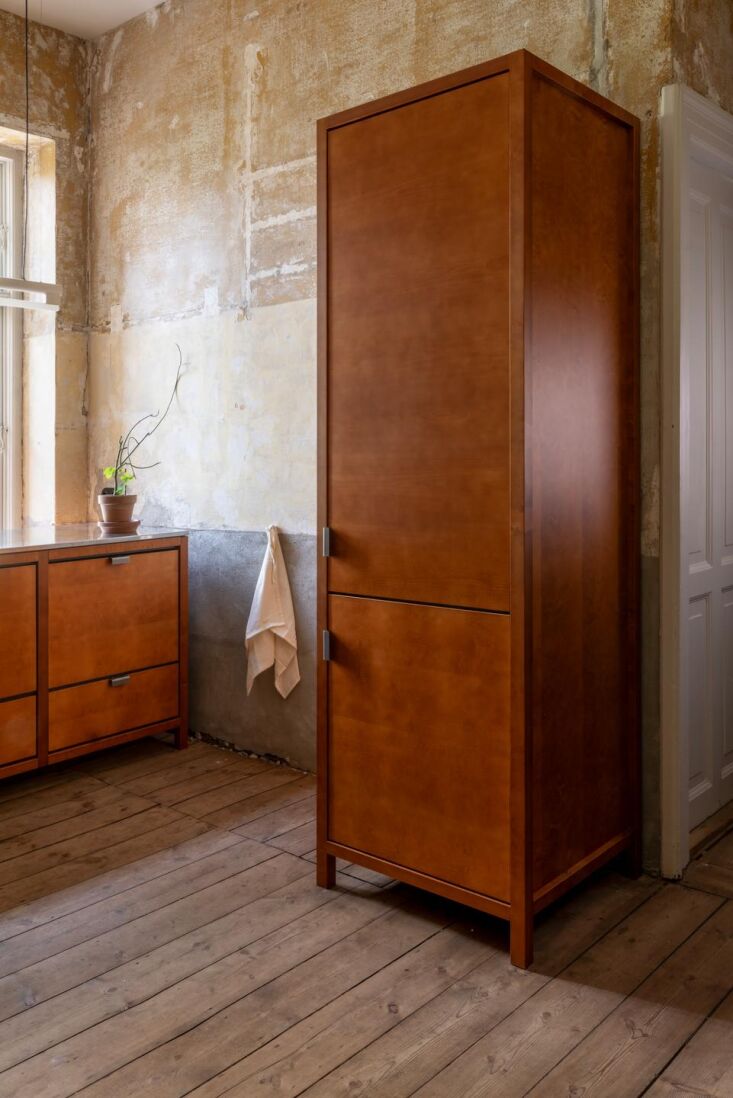 Above: “Without the need for mounting to walls or floors, ultimate flexibility was the practical point of inspiration,” writes Frama.
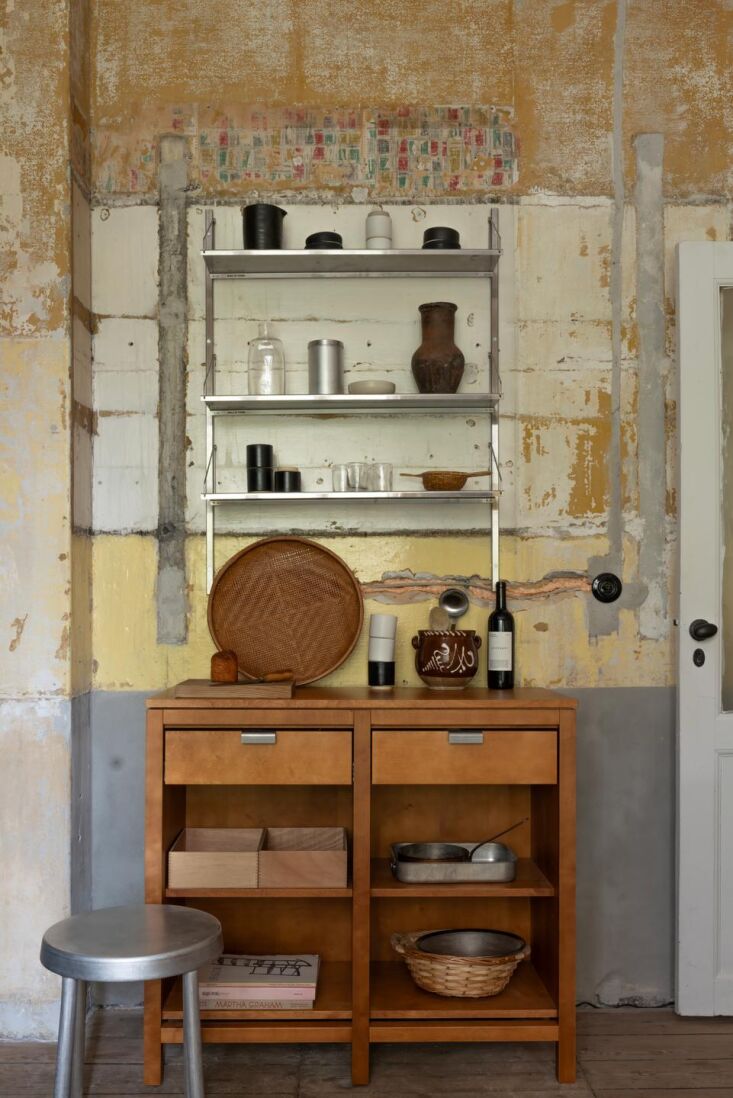 Above: A sideboard offers flexible open and closed storage and can also work elsewhere in the house. Frama’s offerings now range from tables and chairs to towels and perfume. “Most of my work has been about asking what is the least I could fill it with, and removing things, stripping them back,” Christophersen told The Modern House journal.
Frama’s Kitchen Modules in Chestnut
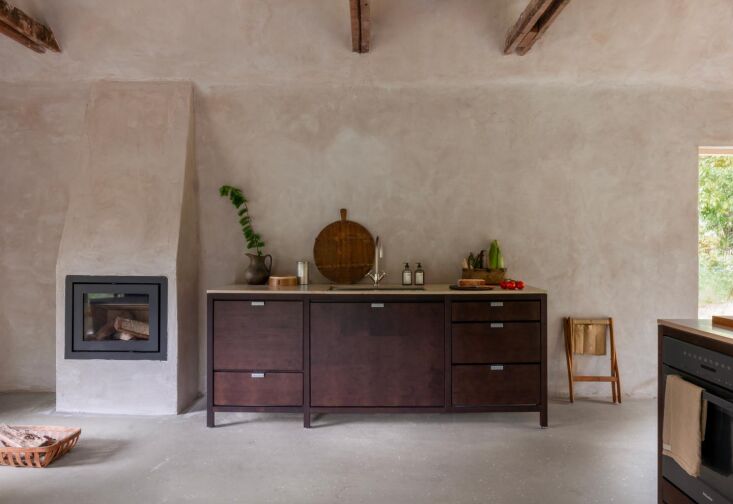 Above: Frama notes that its kitchen designs were originally created for urban settings but look equally at home in the countryside. These examples are made of stained birch in a color called Chestnut.
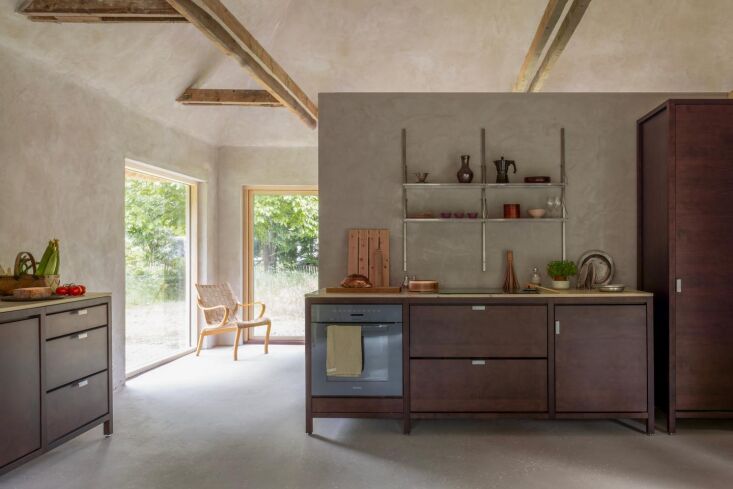 Above: All of the modules are freestanding pieces of furniture. The countertops here are Jura Beige limestone.The stainless steel shelves are from Frama’s Shelf Library system.
 Above: The faucet is the Tara Mixer by Dornbracht and that’s Frama’s signature Hand Wash. The brushed aluminum Tasca Table and oiled pine Bracket Chair are also by Frama.
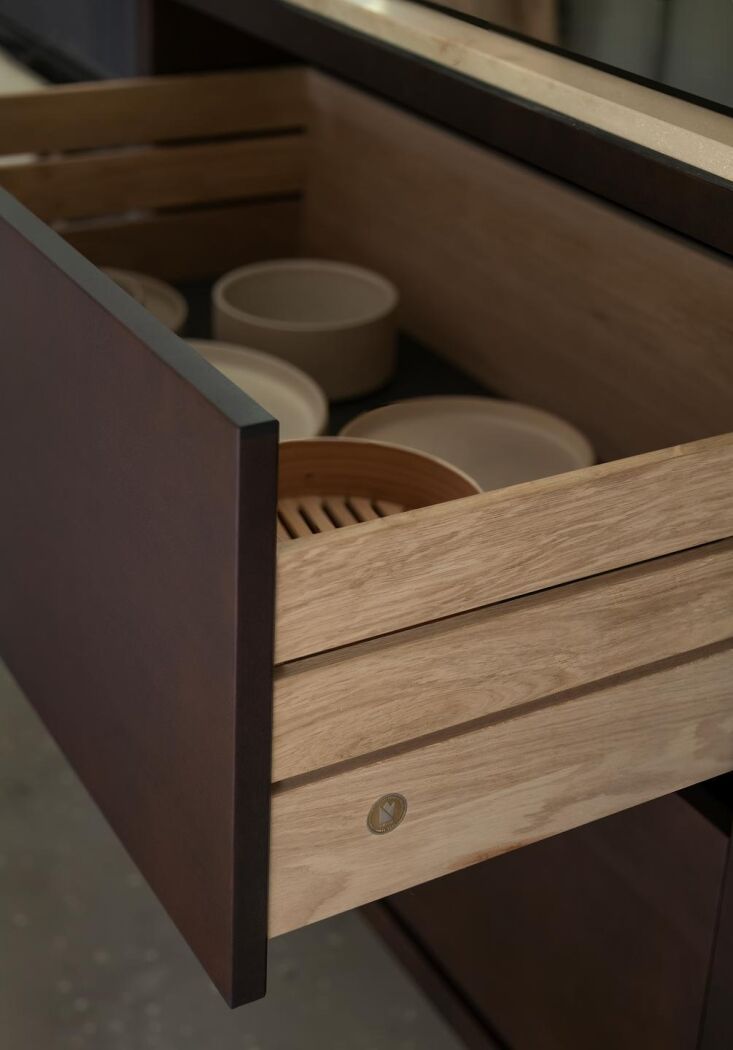 Above: Kvänum gets the hidden details right.
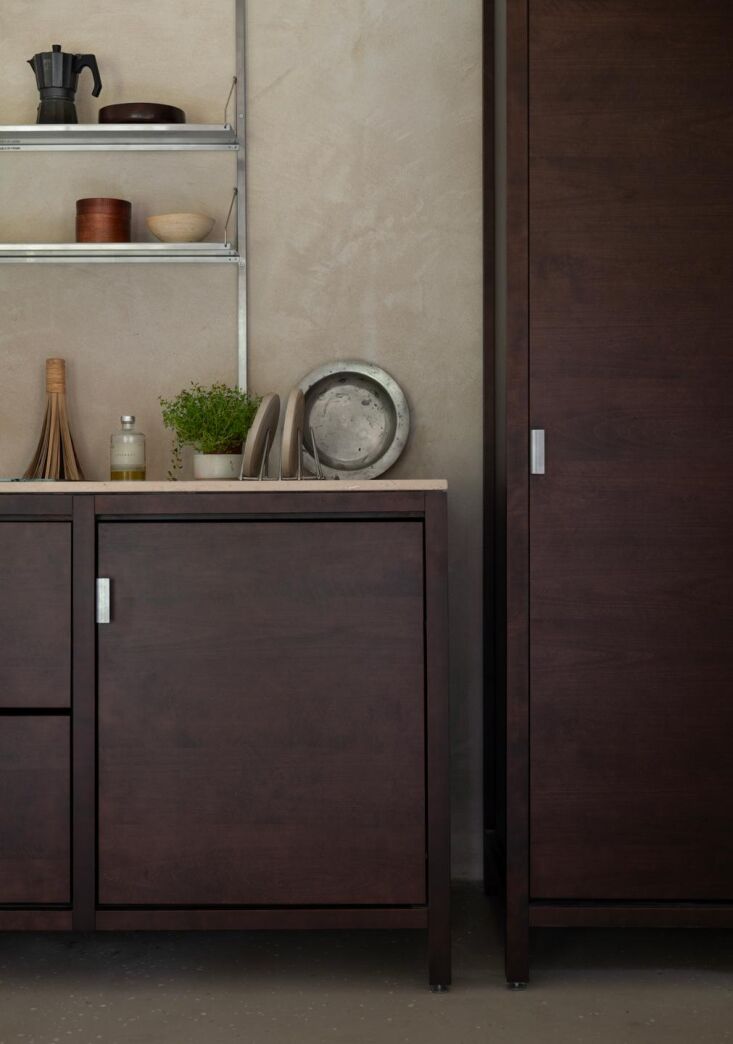 Above: Kvänum makes the Frama Modules to order and ships internationally.
Here’s Frama’s former kitchen system, pop-up in Brooklyn, and 2024 Rivet collection of Shiny Aluminum Shelves and Side Tables.
Three other sides of Kvänum:
- Kitchen of the Week: A Hushed Old-World Swedish Design
- A Classic English Kitchen in a Grand Copenhagen Remodel
- Steal This Look: A Dream Dressing Room from Sweden
N.B.: This story originally ran on October 17, 2024 and has been updated.
For daily dispatches and more favorite finds, head to Remodelista.com. For bonus content—like our weekly Quick Takes column—consider joining us as a paid subscriber.
Remodelista participates in affiliate marketing programs, which means we may get paid commissions on products purchased through our links to retailer sites.
