

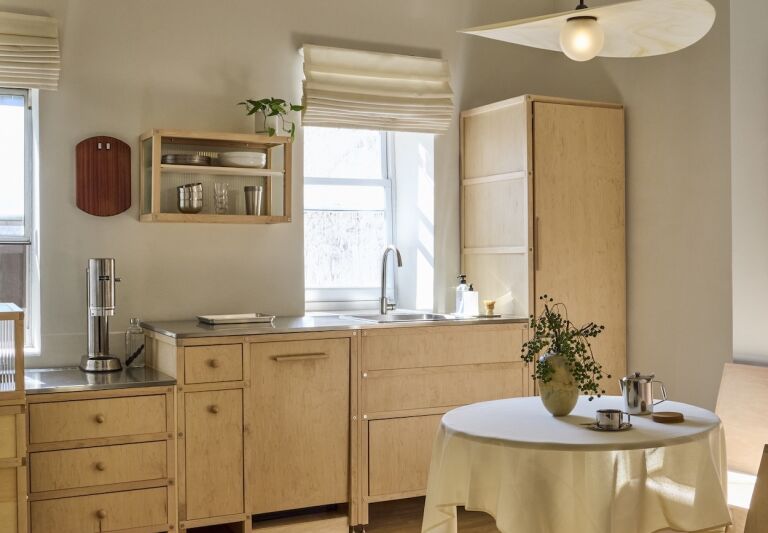
Kitchen(s) of the Week: Freestanding Cabinetry by Loose Parts in Upstate NY
by Margot Guralnick
Jennifer June creates kitchens that are purpose-built, great-looking, and made to last. And those are but a few of the reasons to admire what she does. June is both an interior designer and a cabinetmaker, a useful if uncommon combination. She’s also a teacher at Parsons School of Design, her alma mater—she co-leads the MFA Interior Design program’s Circular Interiors Studio, which focuses on extending the life cycle and reusability of objects.
In upstate New York, where June lives, she runs Loose Parts, her furniture company, which recently introduced the Workshop Kitchen, an adaptable, modular system of freestanding, solid-wood cabinets. “Working in interiors, you see the amount of waste that is generated in home renovations,” she says. “Kitchens in particular are problematic, primarily because the site-built systems and materials commonly used—MDF, laminates, heavily glued composites—are hard to disassemble without destroying them. I wanted to rethink the kitchen as a series of discrete furniture pieces that can move between homes and be repaired over time.”
Photography by Black & Steil, unless noted, all courtesy of Loose Parts (@loose_parts).
Jennifer June’s Own Workshop Kitchen
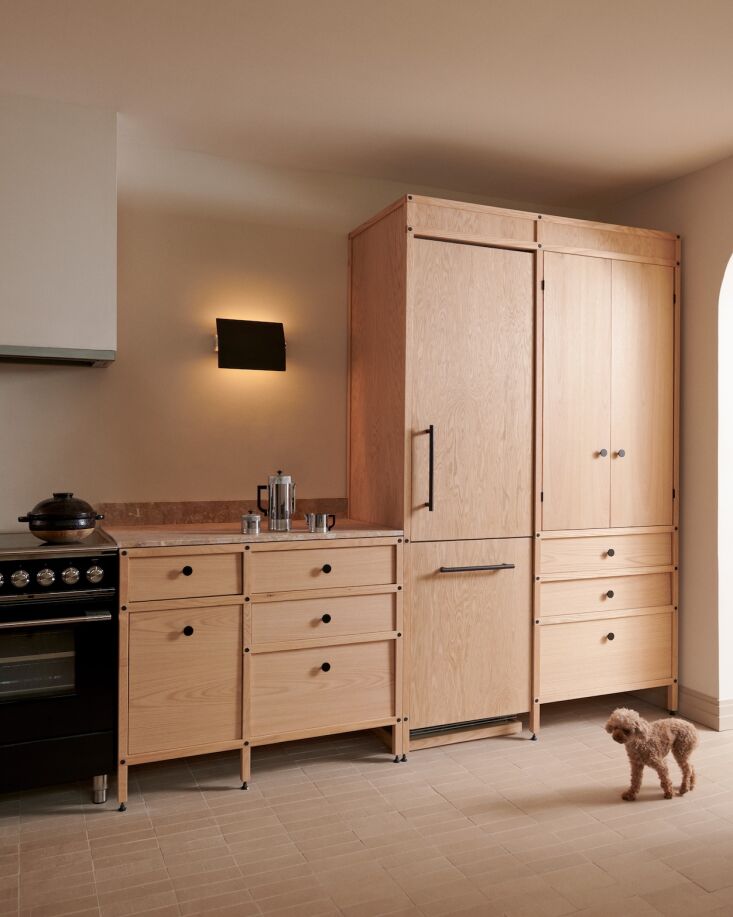 Above: June and her husband, Tim, a data scientist, live with their teacup poodle, Pebbles, in a hamlet just outside of Hudson, New York. The couple both have carpentry skills and approached the remodel of their 1850 house as a testing ground for clean building practices, including installing geothermal heating and lime plaster walls.
Their kitchen sits in place of the original and has cabinets of red oak. June selected their Fisher & Paykel 30-inch Induction Range partly because it has adjustable knobs instead of digital settings—and recommends it and their Fisher & Paykel panel-ready 24-inch Series 9 Integrated Refrigerator Freezer. The wall lamp is a reissue of Charlotte Perriand’s Applique à Volet Pivotant purchased secondhand from Somerset House, one of her go-to sources for vintage modern design.
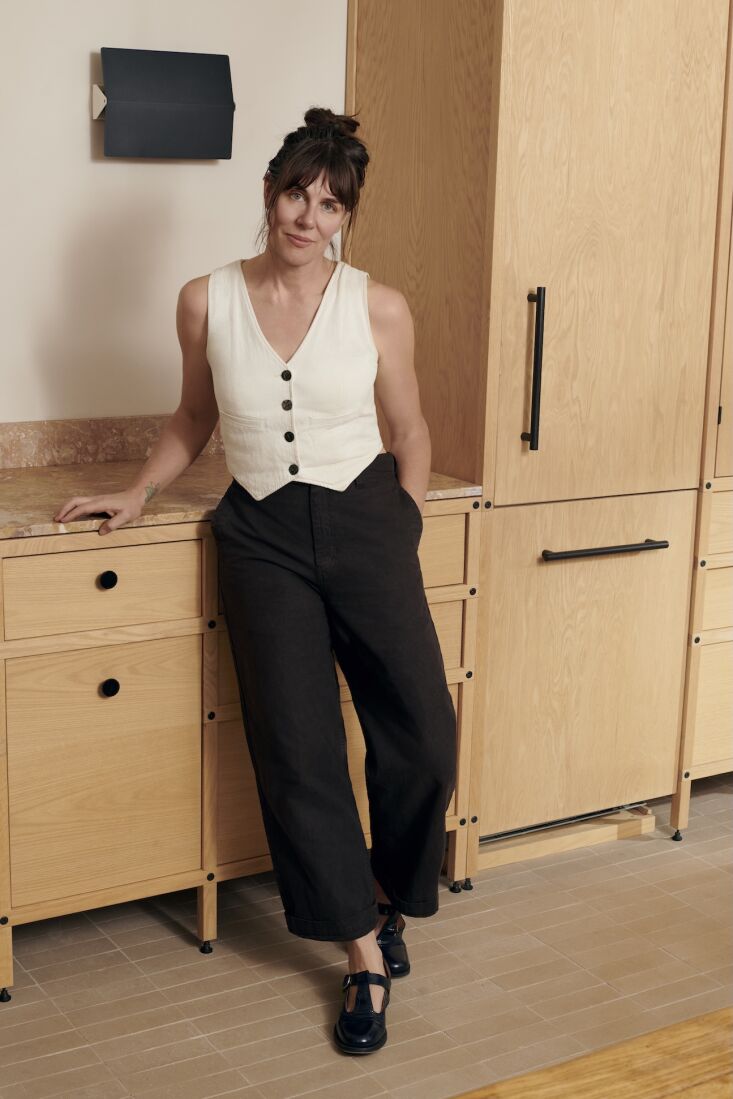 Above: “I didn’t come to cabinetmaking through a traditional woodworking path,” says June, explaining that she studied printmaking at the Oregon College of Art and Craft. “My first experience working with wood came through carving print blocks; eventually, I became more interested in the carved object itself than the print it produced.”
Out of school, she had her own wallpaper line, which led to an interest in interiors—and her Parsons masters degrees in interior and lighting design. It was during the pandemic, while she and Tim were holed up in his family cabin in Oregon. that she devoted herself to fully learning carpentry: her late father-in-law was a builder and she had access to his workshop and all of his tools. She now has her own fully kitted out studio in Catskill, New York.
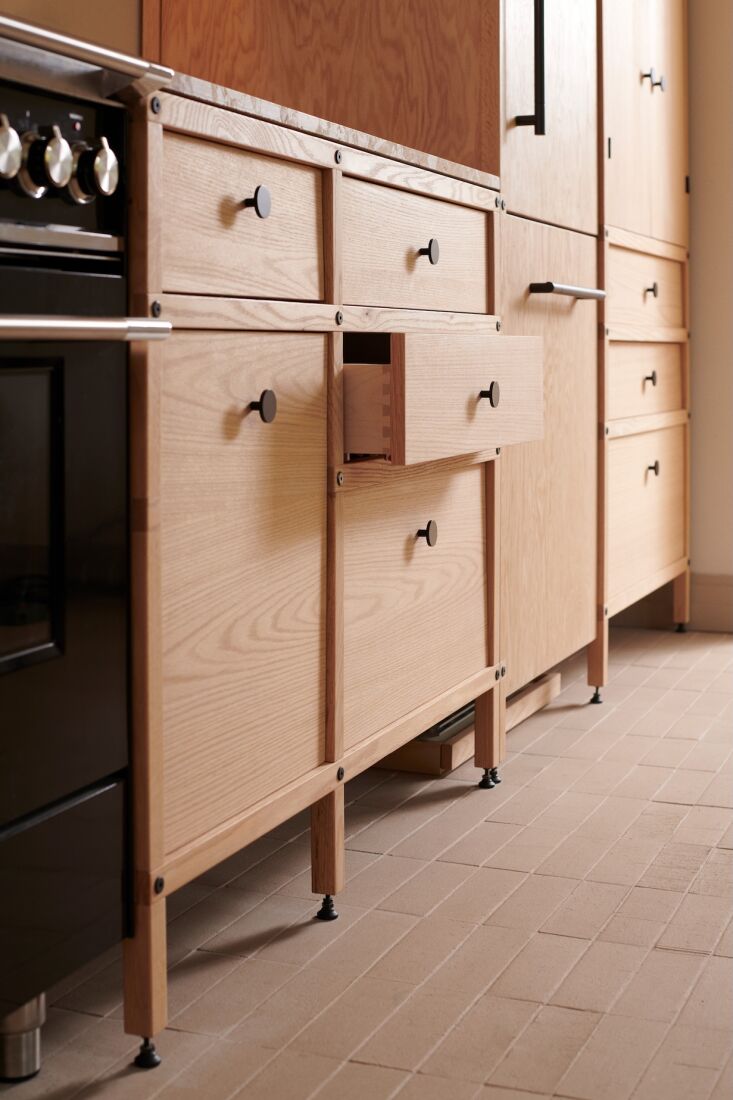 Above: June’s cabinets are entirely solid wood, including the drawer boxes, and have dovetailed joinery. She made the marble counter from a stone yard remnant. The floor is tiled with Clé’s unglazed Foundry Flats: Standard Issue bricks in Sand. The floor and cabinets are sealed with Osmo’s raw, matte finish of linseed oil and hard wax.
June uses hardwoods from “responsibly managed American forests, primarily in the Northeast and Appalachian corridor” and works with a family-owned mill in operation for four generations. “Wood wears in, not out,” she says.
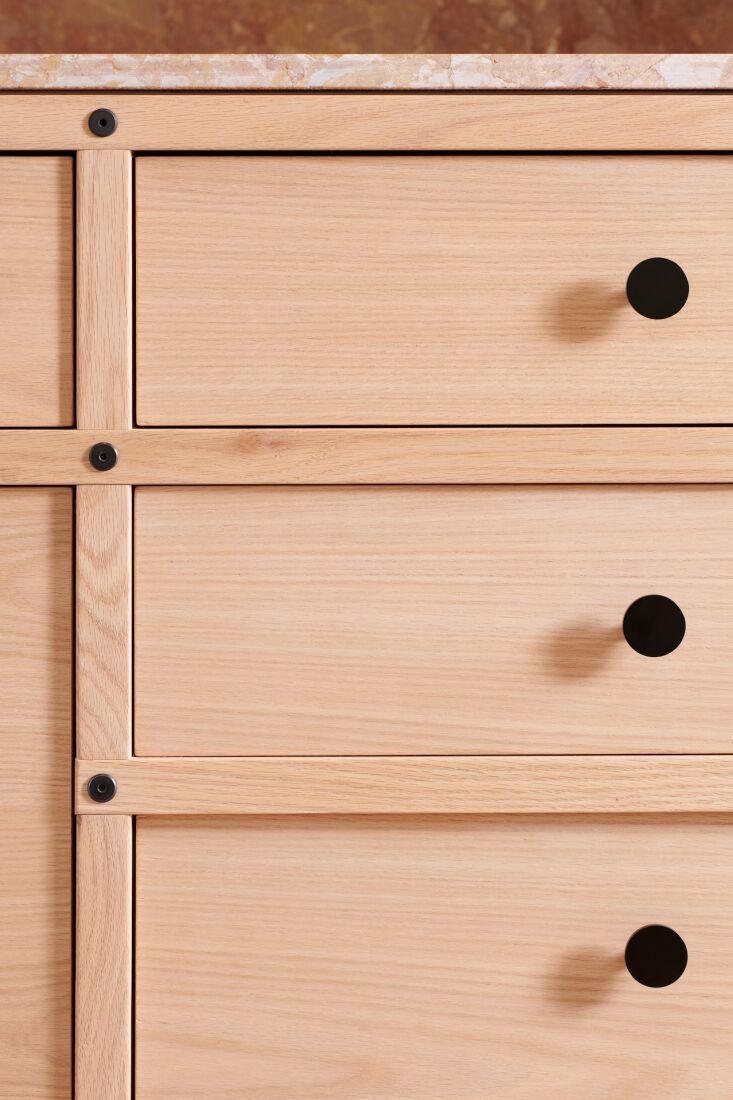 Above: The black oxide drawer pulls are June’s signature hardware, which she has made to her specs. Her cabinets are designed to come apart easily—and she intentionally makes their construction visible: “when you can’t see how something is made, which is the case with most of what we’re surrounded by, it distances you from the fact that a person built it. When the design is apparent, users have agency to do things like fix and transform it.”
Hello Human Office Kitchen
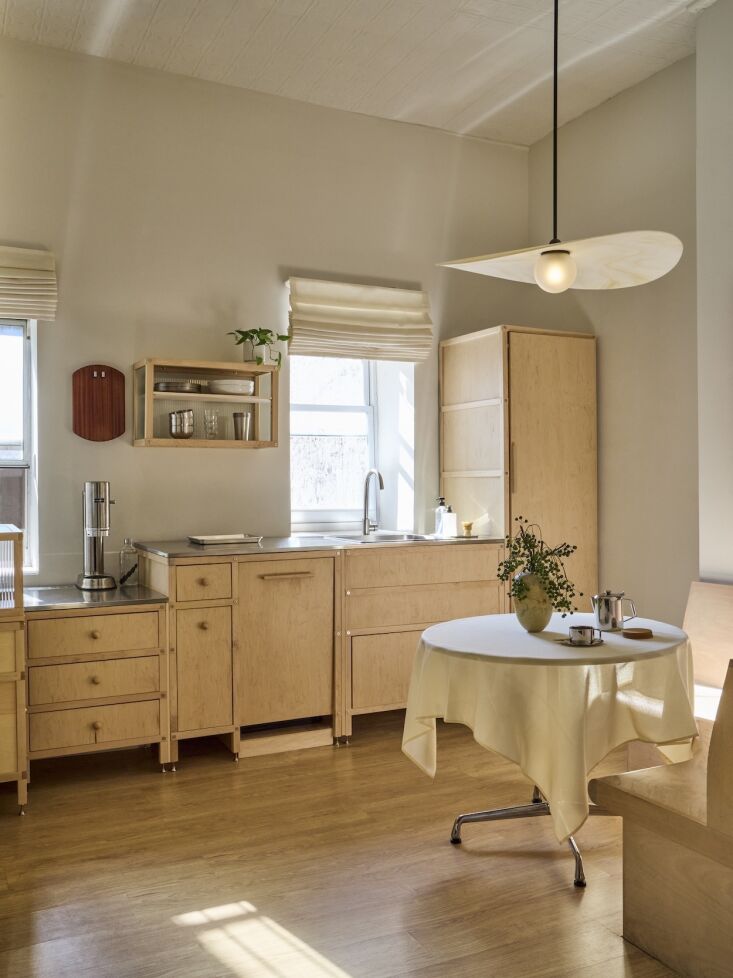 Above: For Hello Human, an NYC public relations firm that represents indie creative businesses, including June’s own, she upgraded the office’s existing Ikea kitchen with modular maple cabinets and a stainless steel counter. It’s accessorized with work by Hello Human clients, including Lichen’s hanging cutting board. Photograph by Jonathan Hökklo.
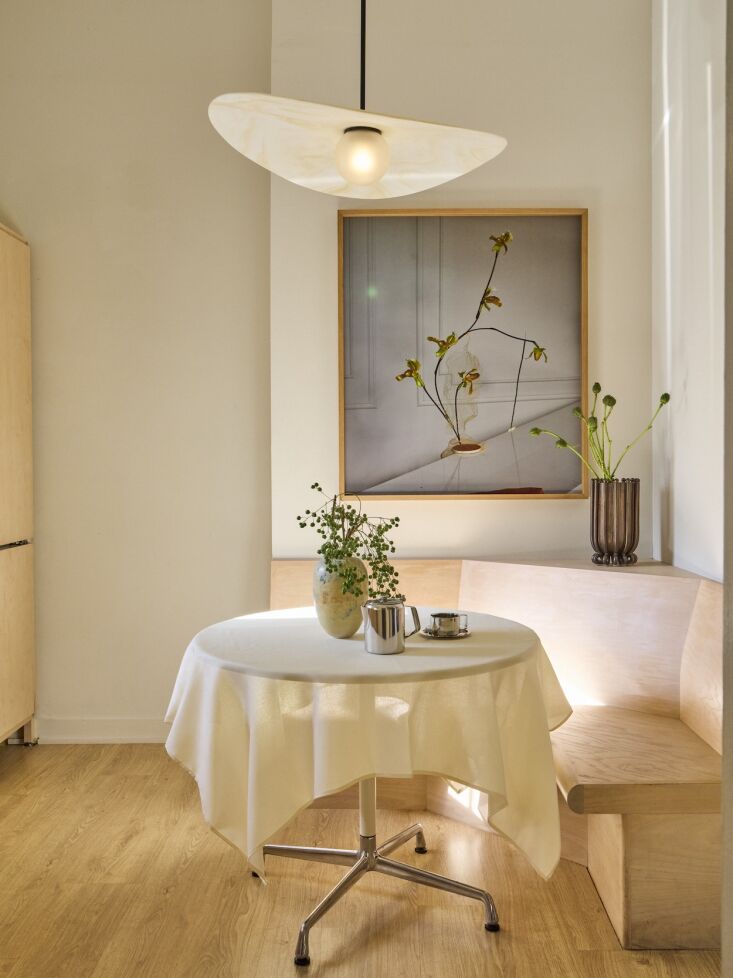 Above: The kitchen came with its banquette. The hanging light is the Myrna Pendant by by Hello Human clients Ladies and Gentleman Studio. Photograph by Jonathan Hökklo.
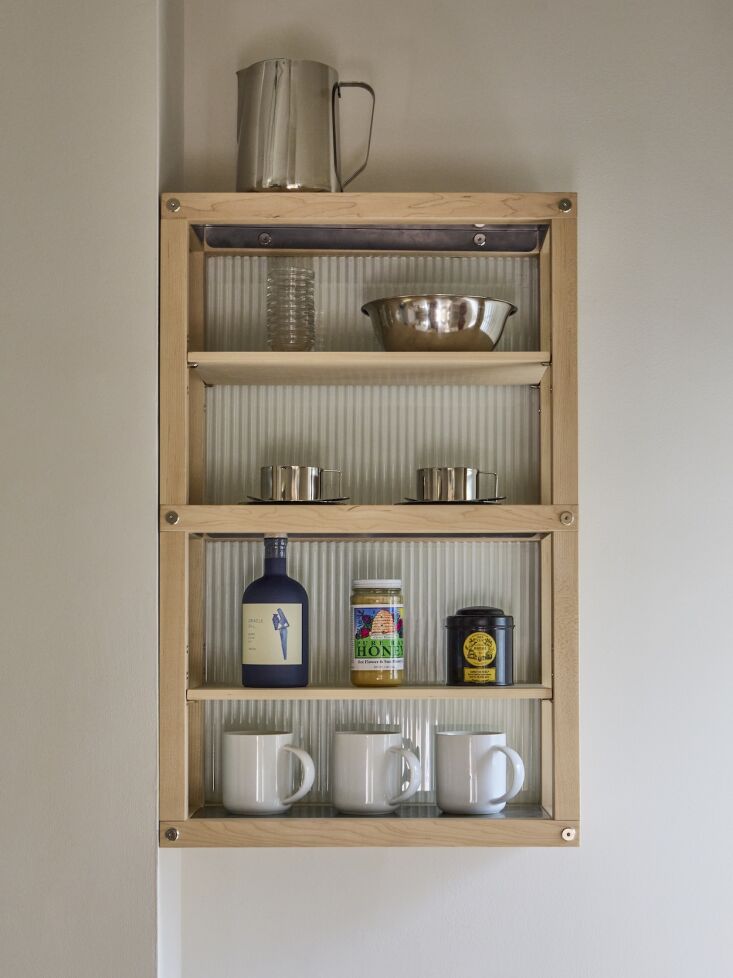 Above: The hanging shelves are red oak with nickel hardware and fluted glass. Photograph by Jonathan Hökklo.
Loose Parts Showroom
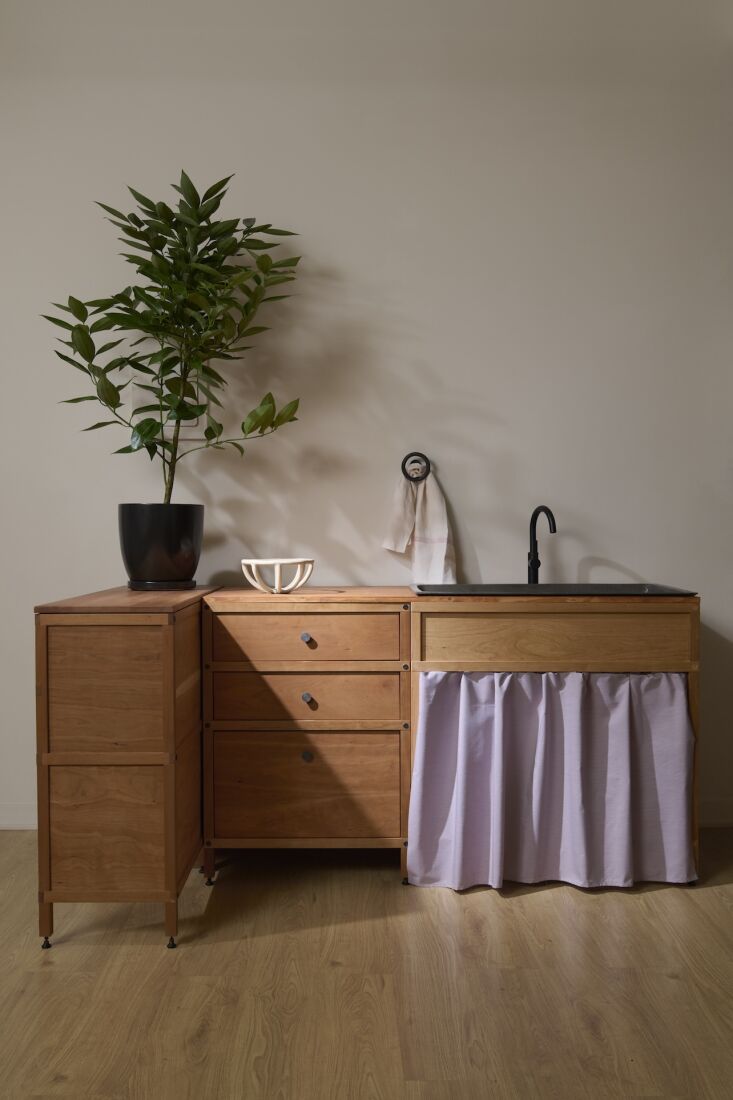 Above: The Loose Parts main workshop in Catskill, New York, has a small, by appointment showroom where clients can see the designs and materials in person. Her kitchens cost about $1,800 a linear square foot: small kitchens start at $14,000, medium at $24,000, and large at $40,000. All are solid wood built as furniture and price depend on materials choices and drawer count.
Shown here, a compact, L-shaped kitchen with an old cast-iron sink atop a cherry frame and black oxide hardware. The faucet is by Kraus. The Prong Fruit Bowl and Uni Wall Hook are by Brooklyn ceramic artist Virgina Sin. June found the grograin skirting fabric at NYC’s B & J Fabrics. Photograph by Jennifer June.
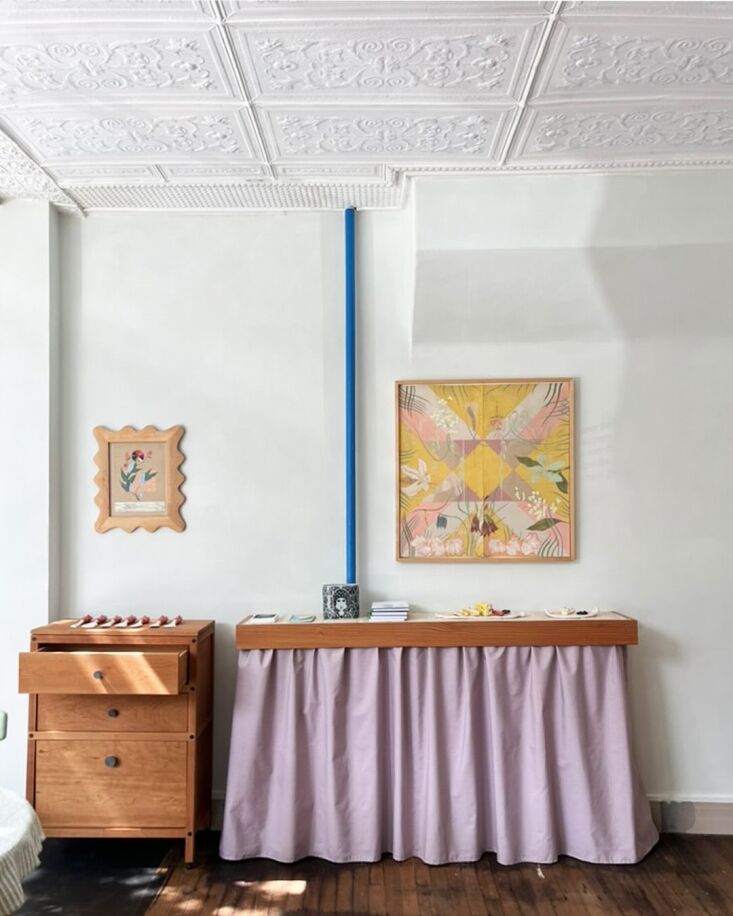 Above: A tiled and skirted fir shelf covers a radiator in the studio—the wood frame keeps the fabric from the heat. The painting is by Lauren Cohen and the collage in a handmade maple frame is by Gemma Bailey. Photograph by Jennifer June.
Details
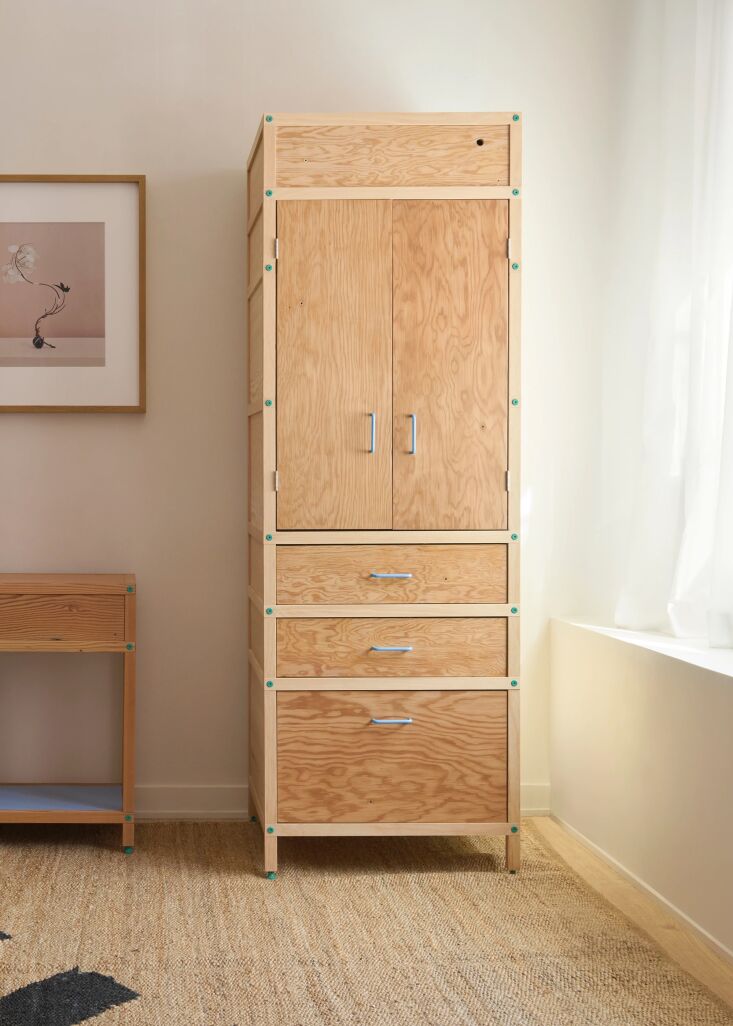 Above: June invites clients to choose from a wide palette of woods and also reclaimed timber, which she used for this custom pantry. “The wood was salvaged from 1960s kitchen cabinet fronts that were painted pink. I sanded them to reveal the original ply and cut them as face panels. I powder-coated the vintage metal drawer pulls in blue.” Photograph by Blacken
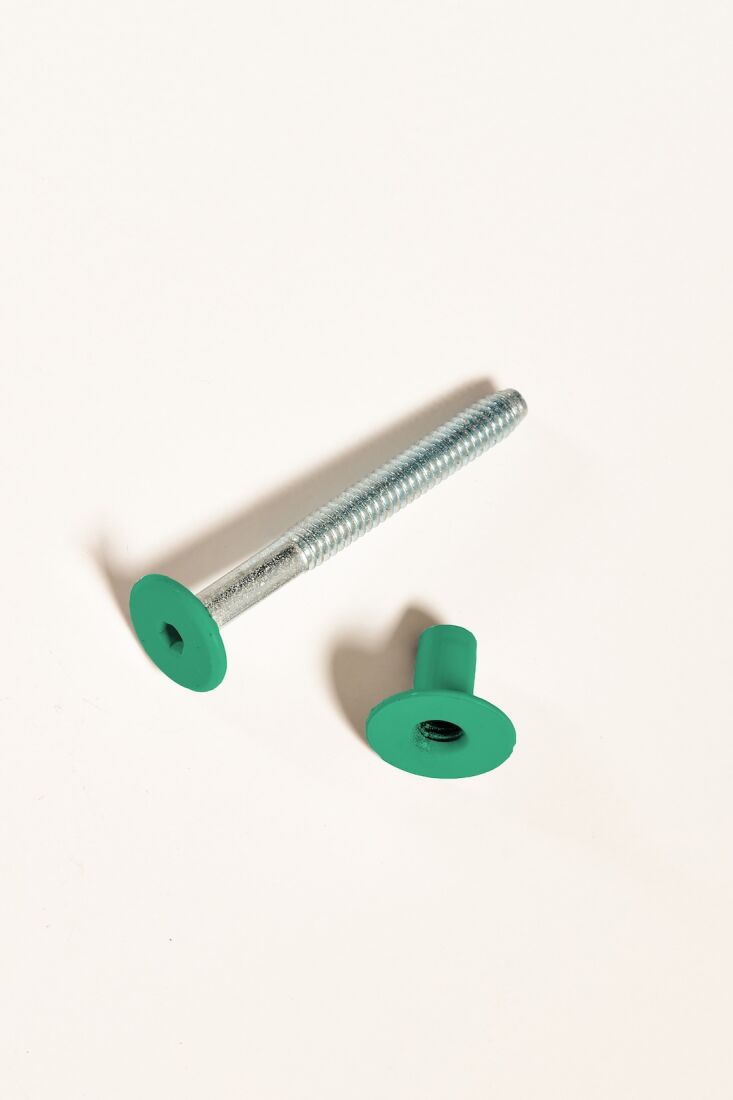
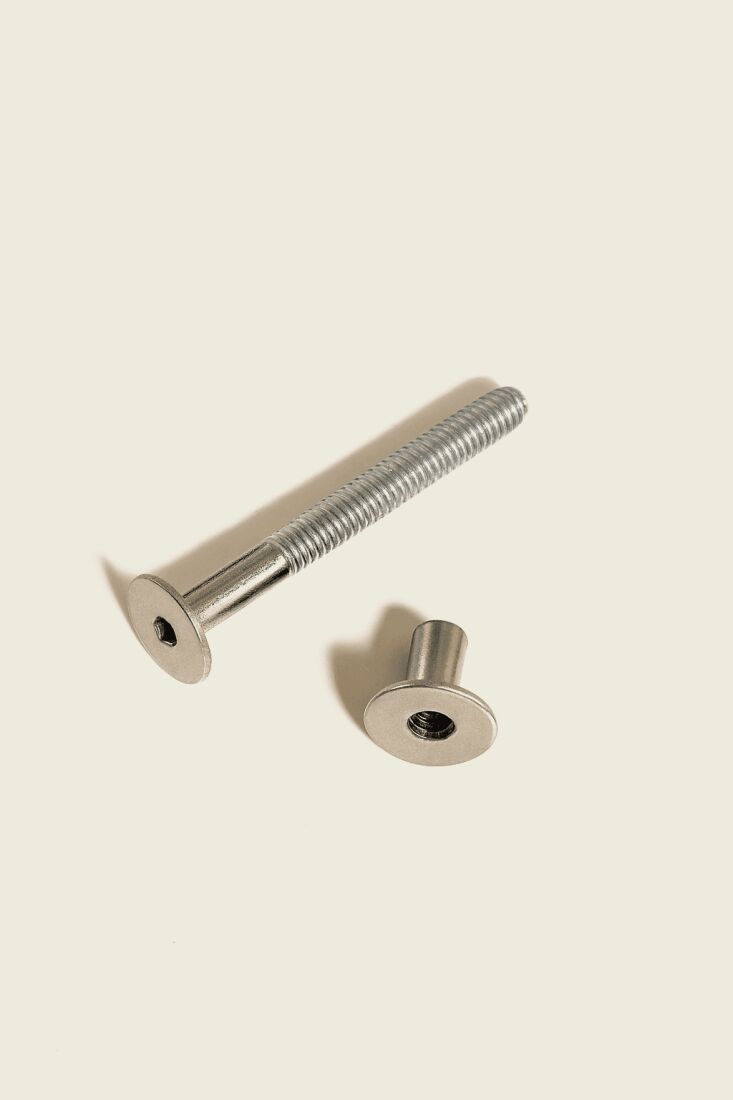
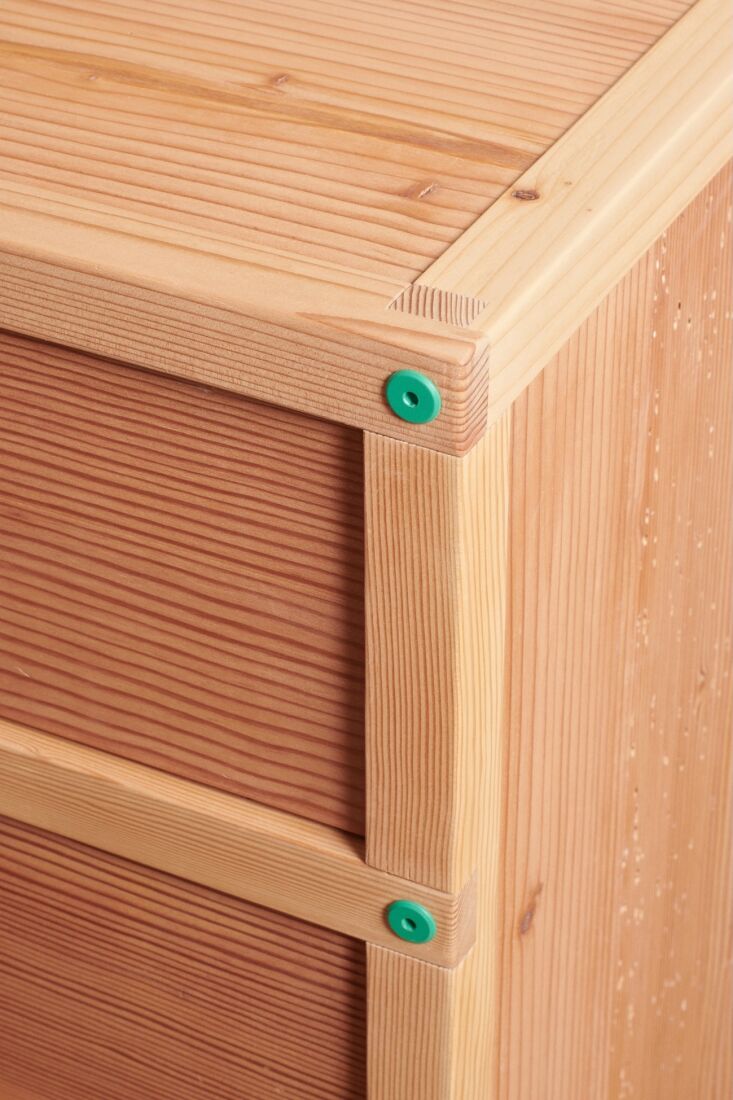 Above: June turns exposed bolts into ornament. These are on a sideboard of reclaimed Douglas fir that came out of an office in an old industrial building.
Loose Parts Workshop
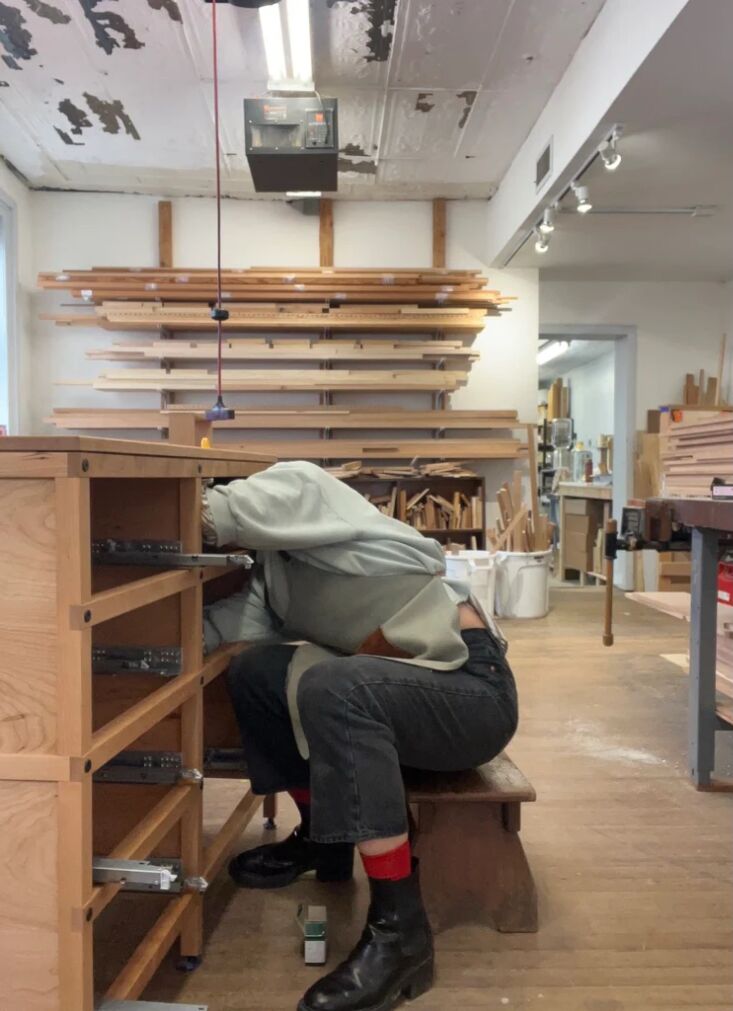 Above: A self portrait by June of a cherry sideboard in progress. “My practice grew out of working in tight spaces, where pieces had to come apart and back together to fit through the door. Hence the name Loose Parts.”
She’ll be hosting an open house in her showroom (388 Main St, Catskill, NY) during Upstate Art Weekend, June 26-29 2026.
Some more adaptable kitchen designs:
My Beautiful Luncheonette: La Cantine in Bushwick
by Julie Carlson
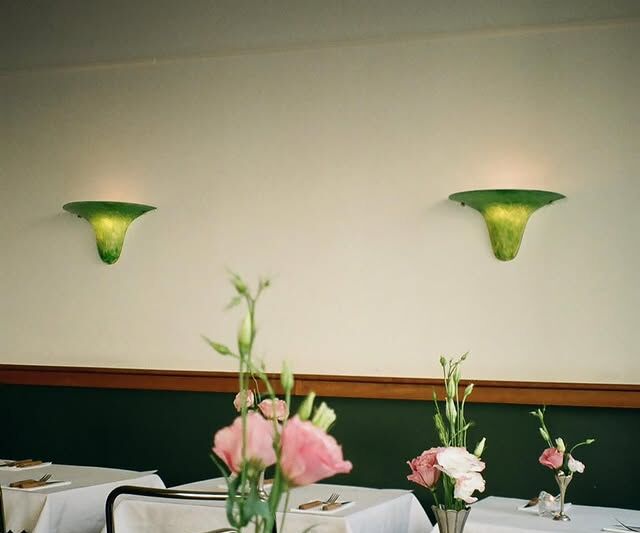
A bakery and lunch spot by day and a small bistro and natural wine bar by night, La Cantine is located on a gritty-ish corner of Bushwick, an on-the-up neighborhood in Brooklyn. For the interiors, owners Ioana Hercberg, a transplanted Parisian, and her partner, chef Raymond Lyons, worked with French-American designer Sophie Lou Jacobsen of Studio Sayso. The team transformed the interiors of La Cantine into a pastel Parisian-inspired space with a classic American deli vibe.
Join us for a tour:
Photos via Cantine.
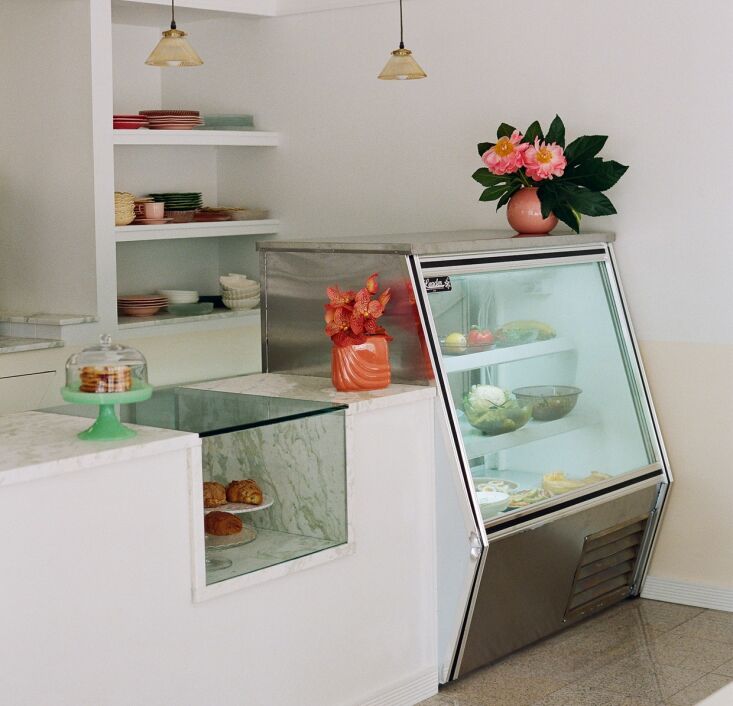 Above: The deli fridge is a tribute to NYC’s bodegas, with delicacies on display.
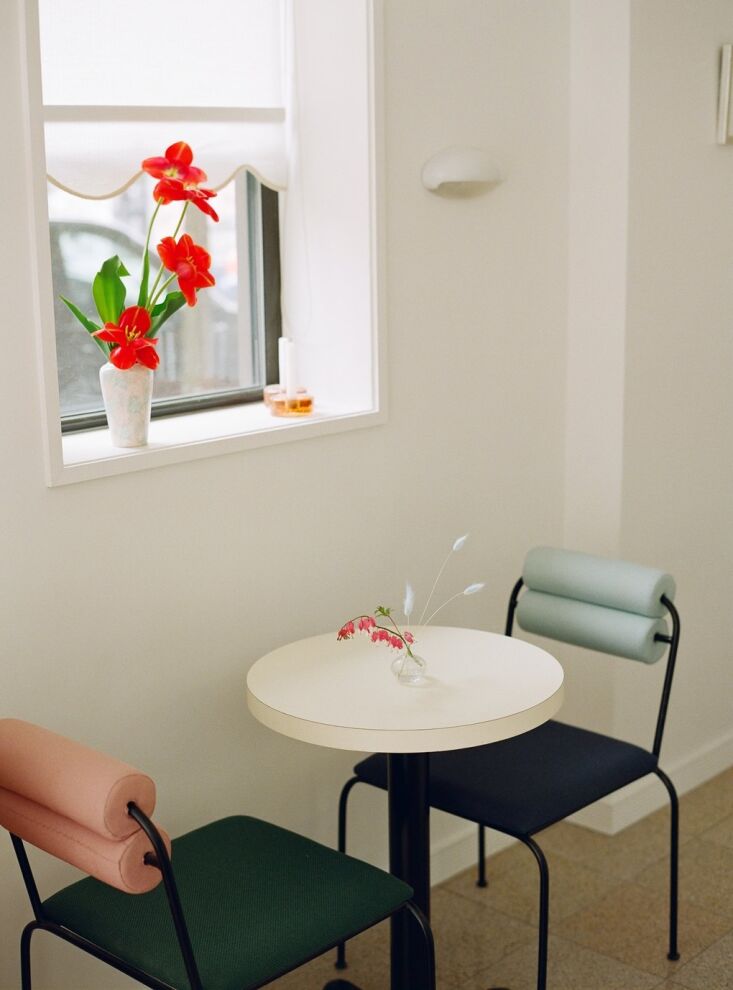 Above: A pair of Studio Sayso’s Chair 02 by Sophie Lou Jacobsen.
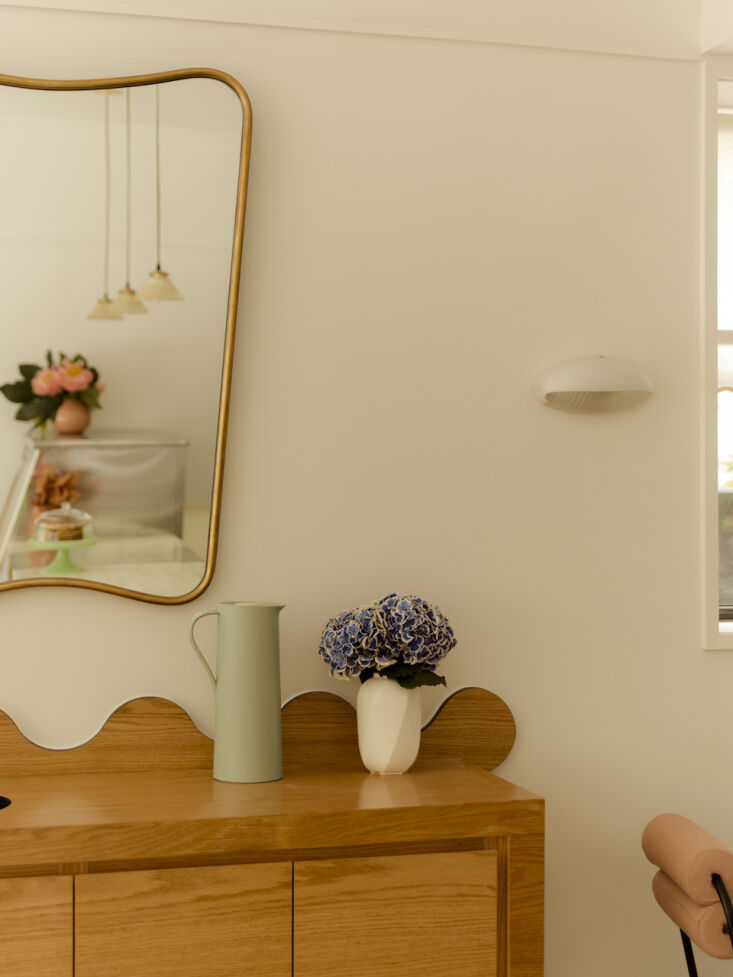 Above: A sideboard reflects Jacobsen’s love of “the squiggle.”
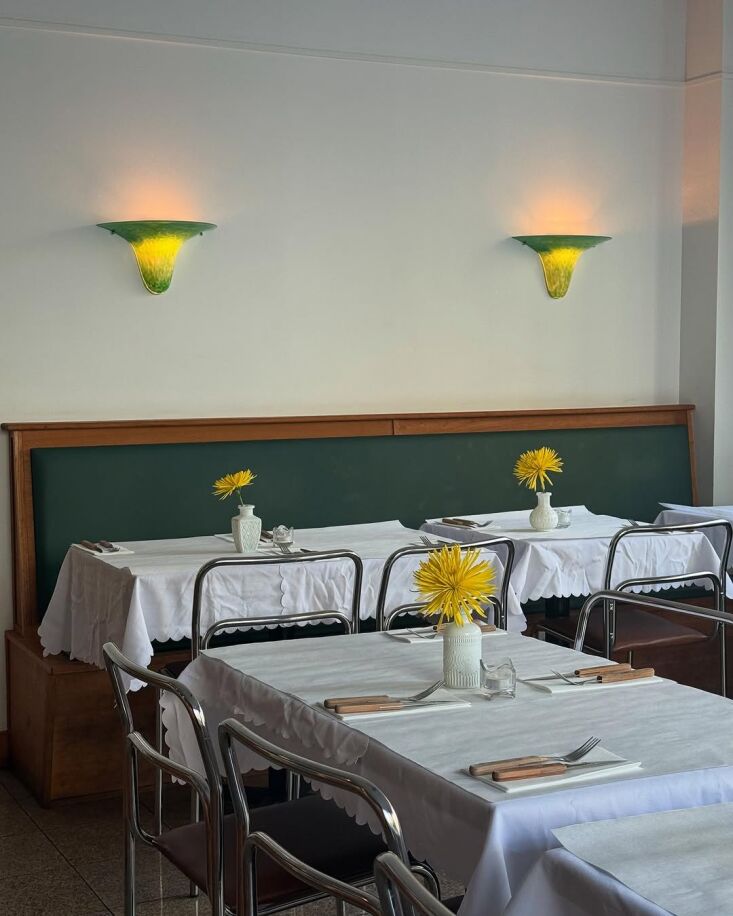 Above: Flowers are from Fleurotica.
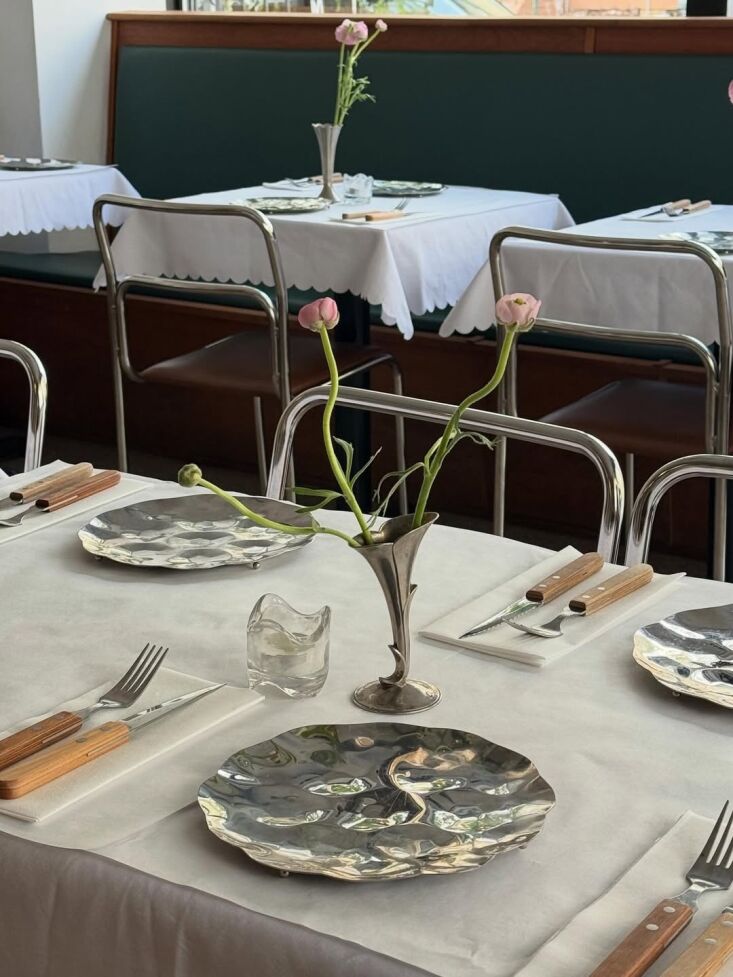 Above: Similar scalloped tablecloths are available from Collective Home.
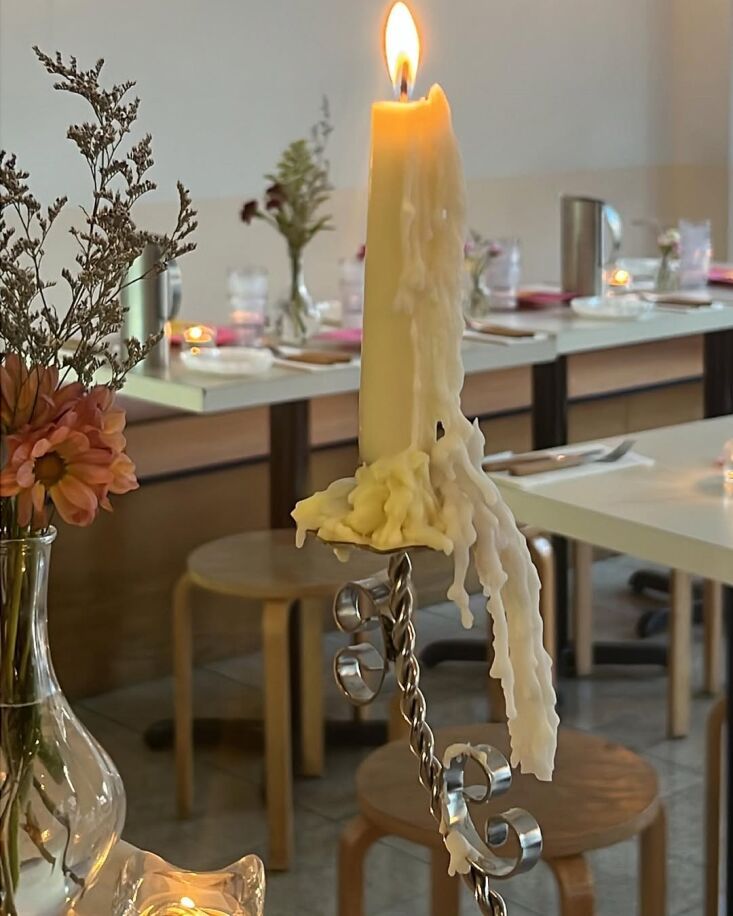 Above: Sophie Lou Jacobsen’s Twist Candlestick is made of nickel plated steel and is available from Arje Home.
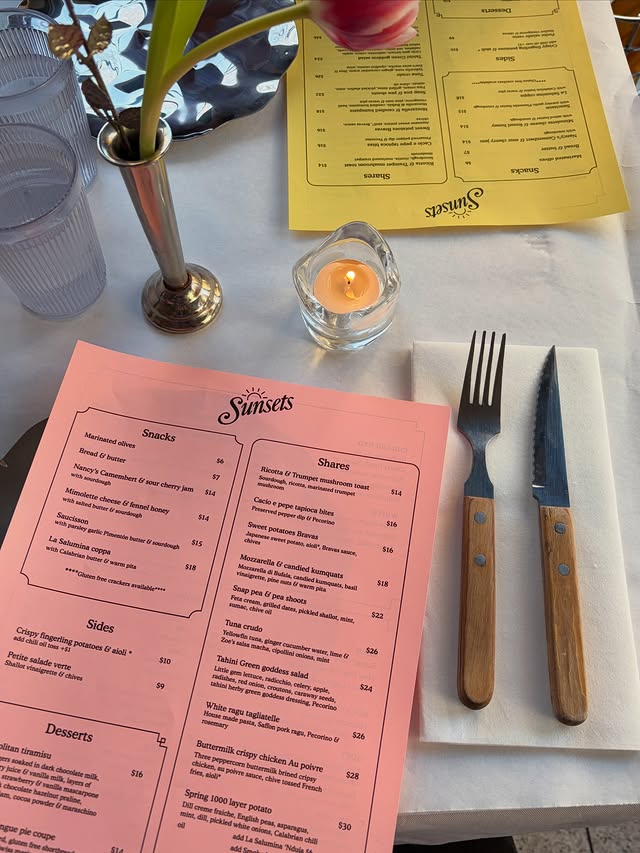 Above: The pastel palette is reflected in the menus.
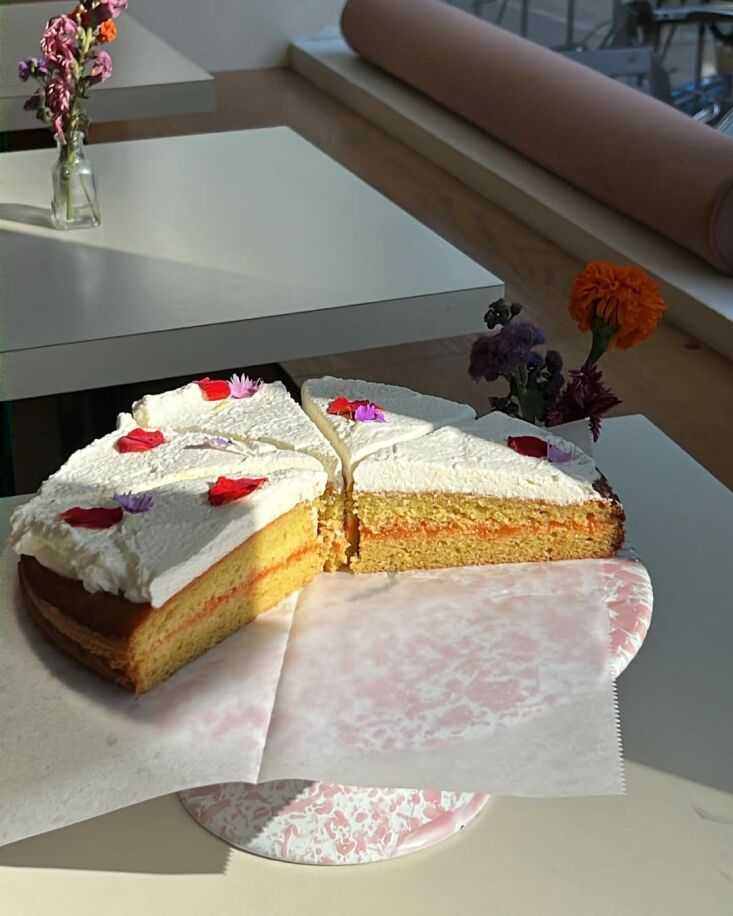 Above: La Cantine is known for its fanciful pastries.
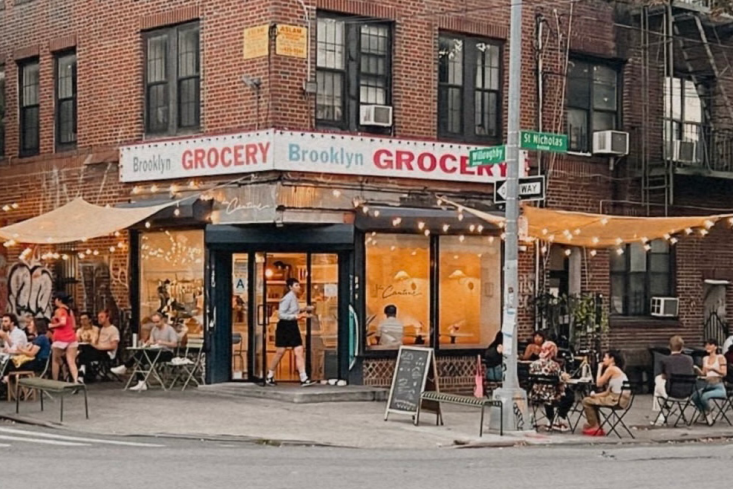 Above: La Cantine is located in a former grocery.
For more design-forward restaurants, see:
Borgo: 8 Ideas to Borrow from the NYC Trattoria, Layered with Detail
Holy Carrot, Spitalfields: Faye Toogood’s Sculptural Take on the Bistro
For daily dispatches and more favorite finds, head to Remodelista.com. For bonus content—like our weekly Quick Takes column—consider joining us as a paid subscriber.
Remodelista participates in affiliate marketing programs, which means we may get paid commissions on products purchased through our links to retailer sites.
