

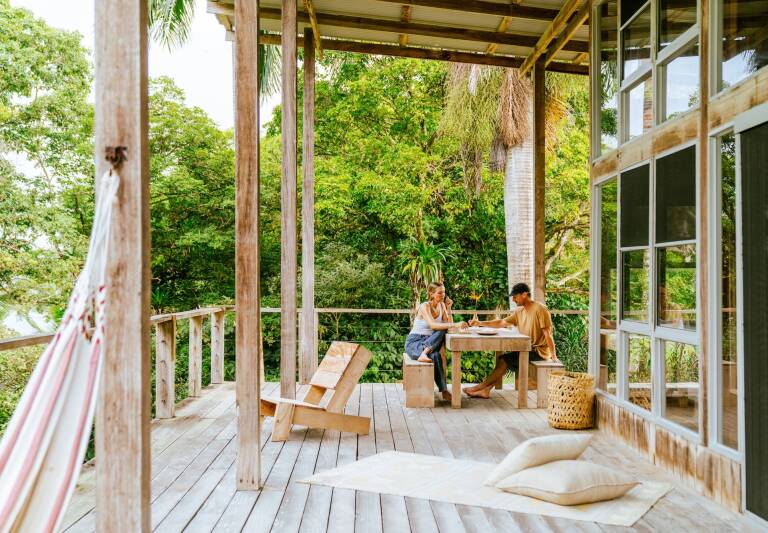
‘Little Cabin in the Rainforest’: Jesse Kamm and Luke Brower’s Off-the-Grid Retreat in Panama
by Fan Winston
The launch of L.A.-based designer Jesse Kamm‘s high-waisted sailor pants in the mid-aughts may have singlehandedly led to the demise of the skinny jean. Nearly every woman we knew then coveted a pair—including us. It wasn’t just that they offered a release from the tyranny of low-rise and stretch denim; they represented a sunny Southern Californian chicness and nonchalance that was incredibly alluring.
Today, Kamm’s indie line remains a favorite among those who appreciate casual minimalism and slow fashion. And she continues to be a tastemaker by adhering to her principles: simple, unfussy design, sustainable practices, and a human-scale business that allows for living. To that end, every summer since 2005, she decamps to Panama with her husband, Luke Brower, and their son to live off the grid, surf, and recharge for three months. “It is a chance for us to strip life down and reset each year,” she says.
In 2007, the couple “bought an old cattle farm on an island with a group of friends, friends of friends, and family, and broke it into group of smaller plots.” Their slice of jungle heaven now includes a magical treehouse-like cabin that they built themselves. “Designing and building this house has given us a deep feeling of pride. In a way we have built our lives, our business, and our yearly flow around this home. We got pregnant the summer we built the house. Every summer of our child’s life, and nearly every winter break have been spent here,” shares Kamm. “This house holds our family’s story within its walls.”
Their captivating retreat is one of the 40 featured abodes in Surf Shacks Vol. 3, creative director and surf junkie Matt Titone‘s latest ode to the appealingly non-traditional homes of surfers around the world. Below, Kamm and Brower’s space, as it’s shown in the book.
Photography by Jake Naughton, from Surf Shacks Vol. 3, courtesy of Gestalten, except where noted.
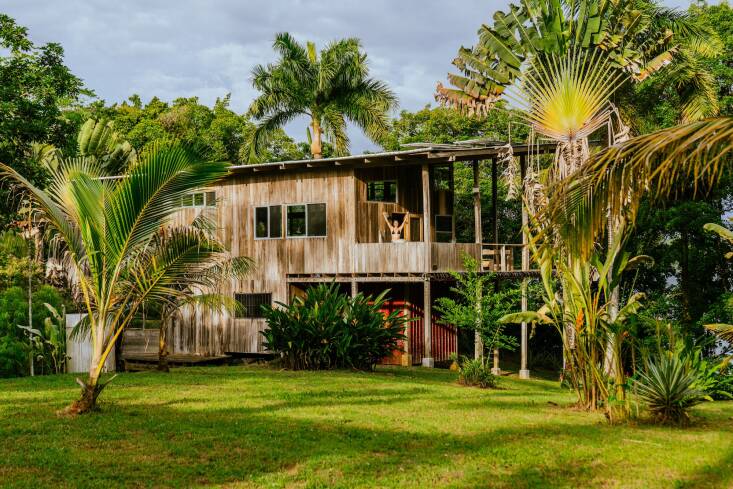 Above: Kamm and Brower built their low-impact home themselves on Carenero Island in Bocas del Toro, Panama. Its design was inspired by her own childhood home in rural Illinois, which her parents also built themselves.
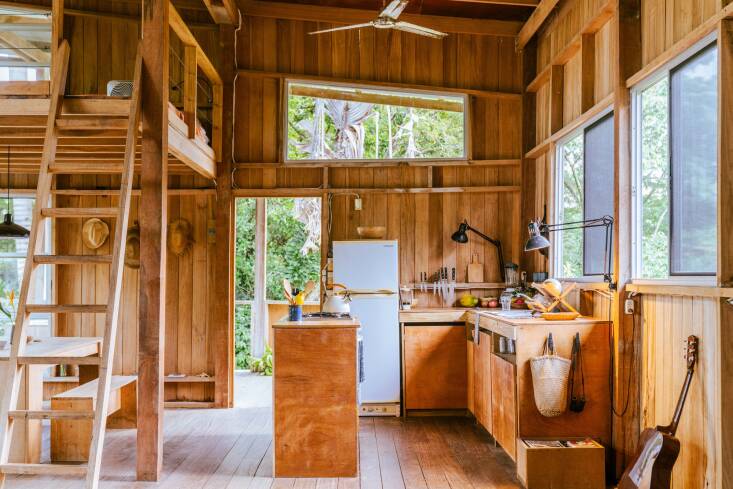 Above: “The entire home is off the grid,” says Kamm. “We have a small but mighty solar system. We collect rainwater in a 1,250-gallon tank and use that for all of our water needs. We have a composting toilet. And the stove runs on propane.” The ladder leads to the couple’s lofted sleep quarters, which “looks out into the canopy and out into the sea.”
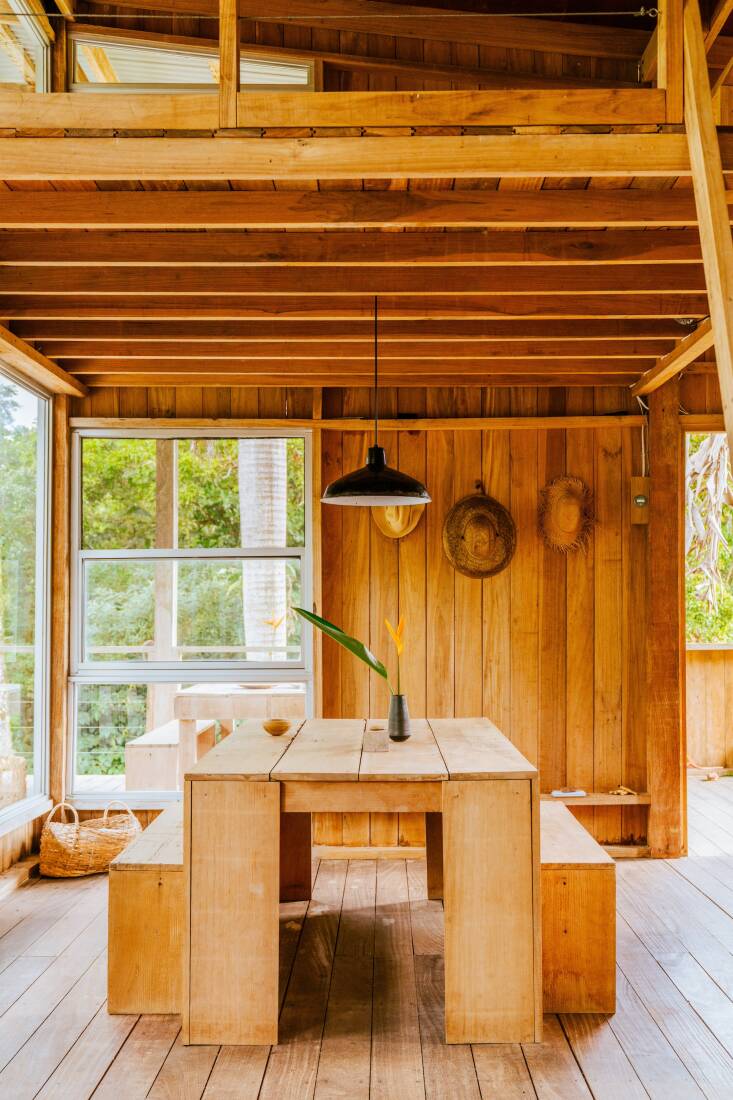 Above: Brower made all of the furniture himself, much of it inspired by Donald Judd. The home was designed to be airy and open, which sometimes means sharing the space with interlopers. “There was a green vine snake that once dropped from the rafters into the blender… That was surprising,” Kamm shares. “We get geckos, and a little jungle marsupial that will come for a bite of banana, here and there. There may be a scorpion on a towel on the laundry line once a year, so you always want to give your belongings a good shake.”
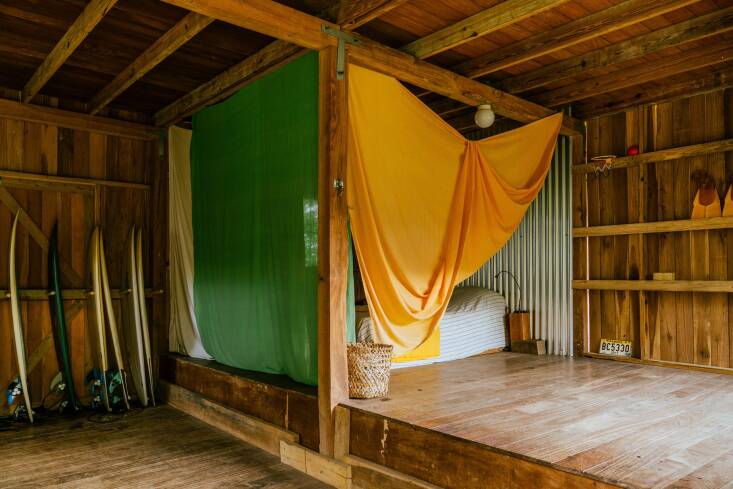 Above: Their son’s bed is on the main floor. “The curtains were a temporary solution to create walls, and we kind of just fell in love [with them]. They allow air to move, and keep it cooler. When you are as deep in the rainforest as we are, things can get damp, so we designed the house to be very open so that it can have as much air flow as possible.”
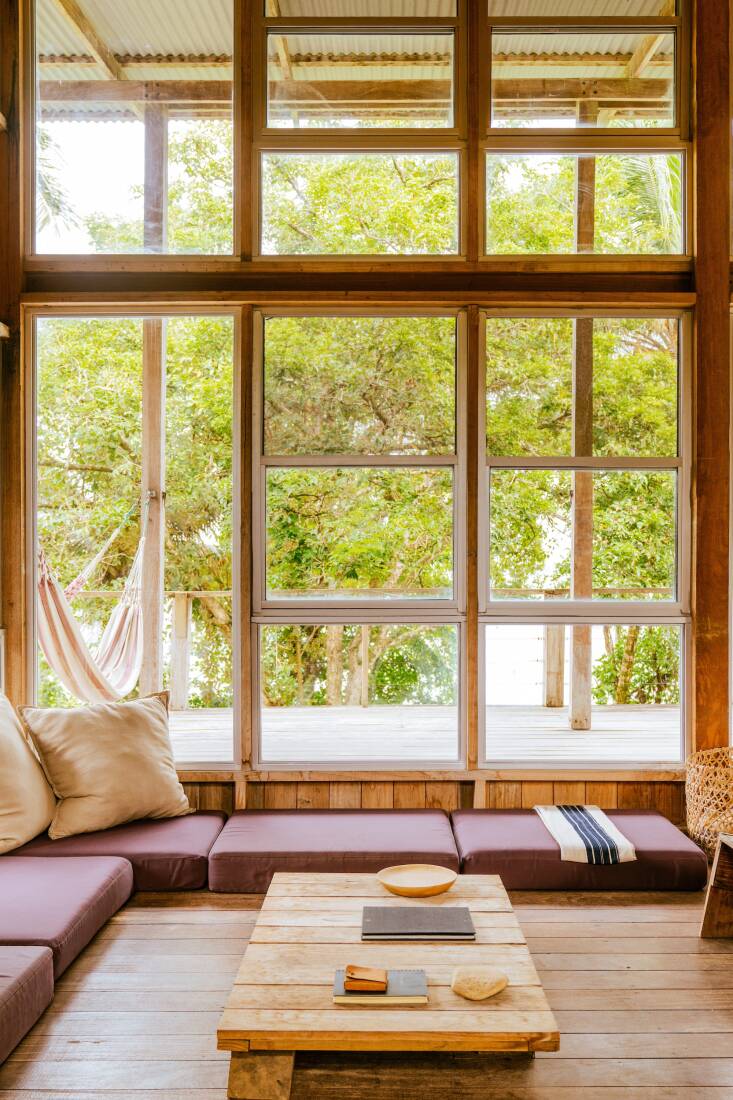 Above: “We used to have a proper sofa that Luke built out of ply-wood, that four of these cushions were a part of. After about 12 years, a wood bug got to it, and we had to pull it out of the living room. When the cushions were on the floor I got the idea to make a few more, and create this minimal floor sectional. I had the sectional cushions sewn from water-proof fabric from a sailing vendor. We can move it into other shapes when the kids are having a sleepover, or we are watching movies, or want to make a bed on the deck and watch the birds.”
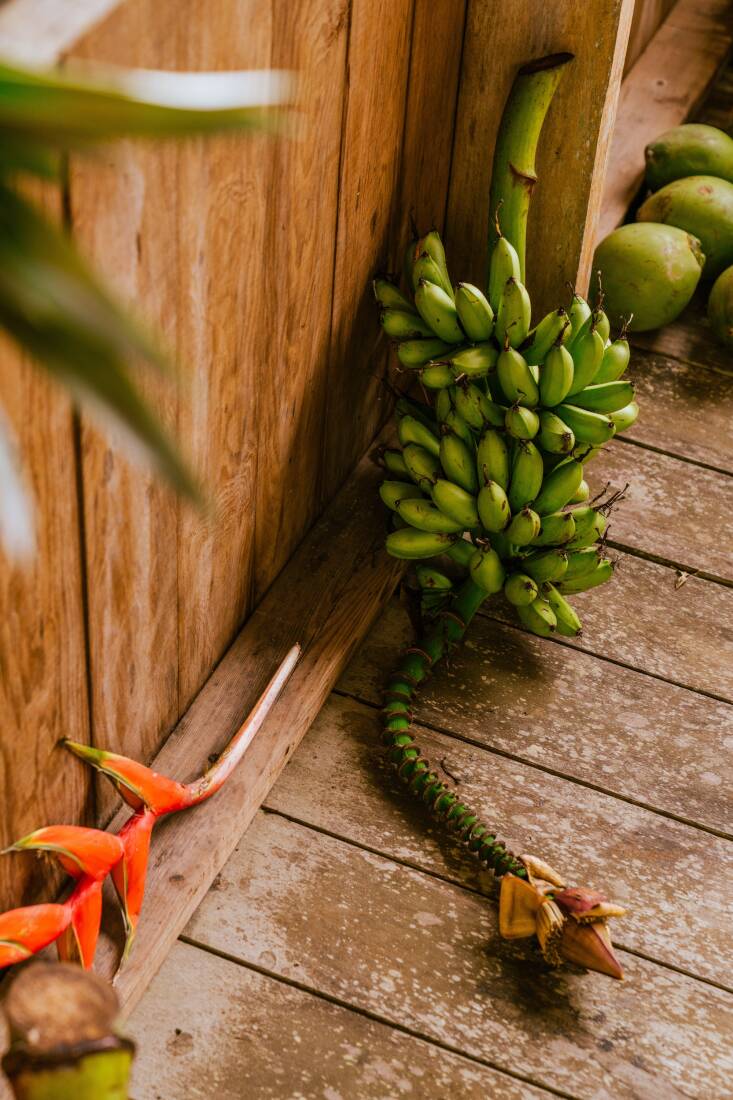
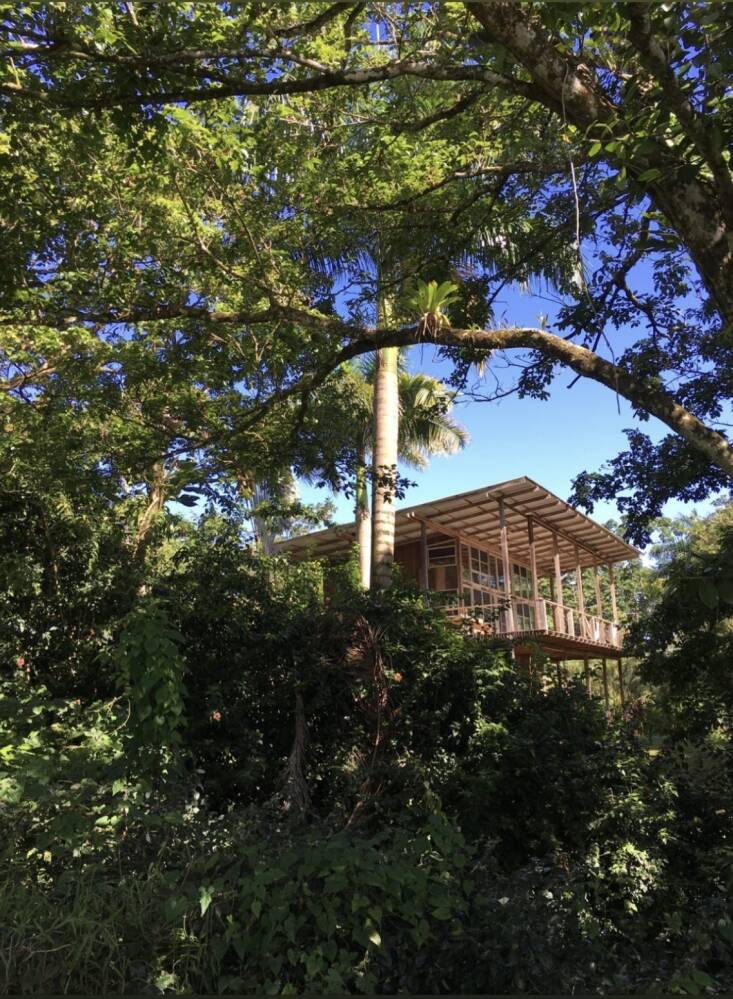
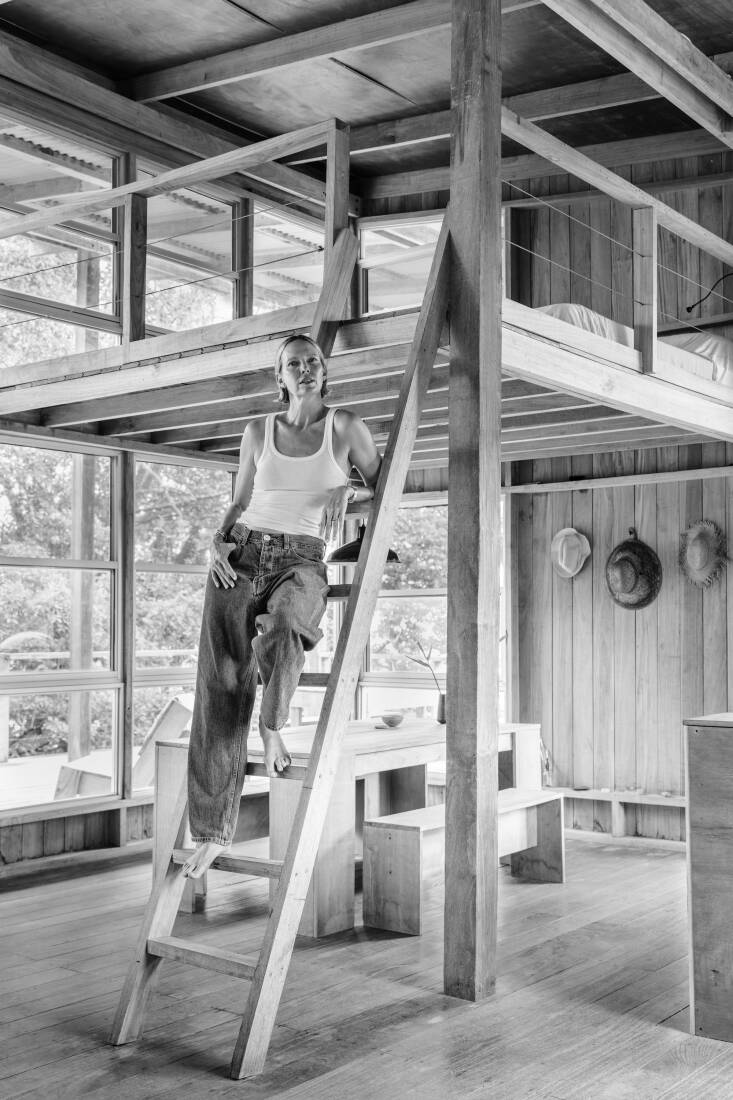 Above: On toggling between their off-the-grid escape in Panama and city life in Los Angeles: “Honestly, we have done it so much, that it is sort of just like flipping a switch. It used to be harder, but I think we are quite good at it now. It is like asking what is harder to adjust to, day or night. They are both equally easy and hard. Something and nothing. Both parts of our life have their strengths. They balance one another out quite nicely.”
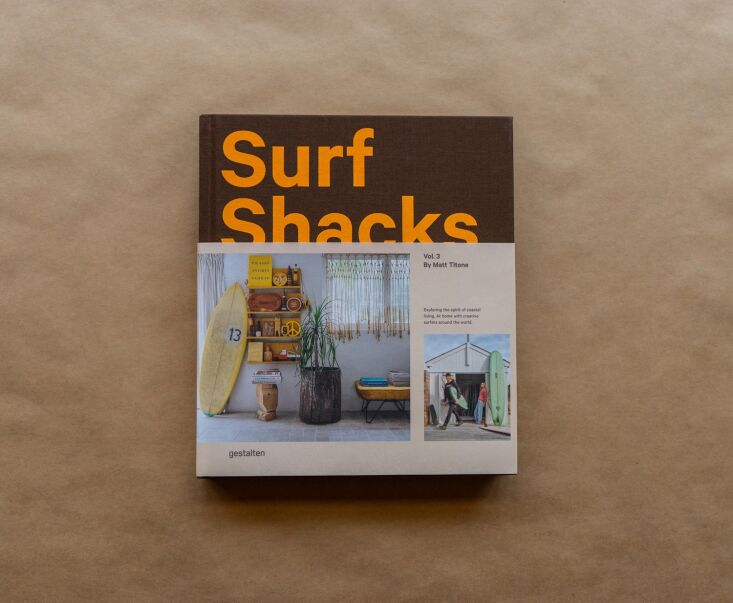 Above: Surf Shacks Vol. 3, published by Gestalten, is available for purchase online at Bookshop.org and Amazon.
See also:

Kitchen(ette) of the Week: 5 Space-Saving Ideas to Steal from a Brooklyn Cookspace, Ikea Hack Included
by Fan Winston
This kitchenette, which rests on the top floor of a Brooklyn brownstone, appears in our book Remodelista: The Organized Home, and every time I stumble upon the photograph, I’m reminded that this is how I want to live—surrounded by fewer, more considered possessions.
It’s not just a pretty picture, though. Despite its space limitations, this kitchenette is hard-working and highly functional. Here, 5 space-saving ideas to steal from it:
Photography by Matthew Williams, styling by Alexa Hotz, for Remodelista: The Organized Home.
 Above: Barely-there tab pulls, instead of knobs or handles, lend a seamless modern look in this compact kitchenette.
1. Utilize the dead space.
With the help of an inexpensive curtain rod, the empty space between the countertop and the bottom of the upper cabinets becomes a place to hang domestic tools. Don’t see the rod? It’s that thin metal wire that bisects the image. One of our favorite products from Ikea, the Diginet Curtain Wire (just $16) acts as a minimalist rail from which to hang household essentials, including coffee filters (attached with a clip), a scrubbing brush, and a basket holding kitchen tools (like a can opener and a bottle opener). The less cluttering up the counter, the better. (Go here to see how to use the Diginet in the laundry room.)
2. Consider refrigerator drawers.
Under-the-counter refrigerator drawers are more commonplace in Europe, where more frequent market-shopping means you can make do with smaller-sized refrigerators. They’re a great option for anyone, though, with a small kitchen. For our list of top picks, see 10 Easy Pieces: The Best Under-Counter Refrigerator Drawers.
3. Deploy the all-powerful tray.
If you must keep things on the kitchen counter, consider corralling them onto a tray. It’s a simple visual trick that makes everything look tidier.
 Above: This enamel tray is by Japanese brand Noda Horo. For similar versions, see In Praise of Trays: 10 Trays in Fiberglass and Enamel.
4. Source dish, glasses, and other items that can stack.
When you’re lacking shelf space, it’s imperative that to prioritize dinnerware and food containers that can be nested and stacked. And choose pieces that can do double- or triple-duty. Petite glasses work for juice, water, and wine; nested ceramic baking dishes are attractive enough to go from oven to table.
 Above: A tension rod keeps paper towels off the counter and at the ready.
5. Choose small whenever you can.
Note the compact drying rack; it’s Ikea’s Fintorp Dish Drainer, which has since been discontinued. So many stores sell housewares, like this dish rack, made specifically for small spaces; there’s no reason to have to buy a regular-sized storage product for your tiny kitchen. (See the drainer and other storage favorites in Editors’ Picks: 10 Storage Finds From Ikea That We Own and Love.) For a stylish, small drainer, try the Yamazaki Home Tower Wire Dish Rack; $88 at Williams-Sonoma.
For more inspired tiny kitchens, see:
- Trend Alert: 20 Well-Designed Kitchenettes
- Steal This Look: A Small, Chic Kitchenette for a Creative Studio in SF
- Expert Advice: The New Kitchenette: 11 Tips for an Efficient Small Kitchen
N.B.: This post has been updated with new links and prices; it was first published on The Organized Home in May 2020.
For daily dispatches and more favorite finds, head to Remodelista.com. For bonus content—like our weekly Quick Takes column—consider joining us as a paid subscriber.
Remodelista participates in affiliate marketing programs, which means we may get paid commissions on products purchased through our links to retailer sites.
