

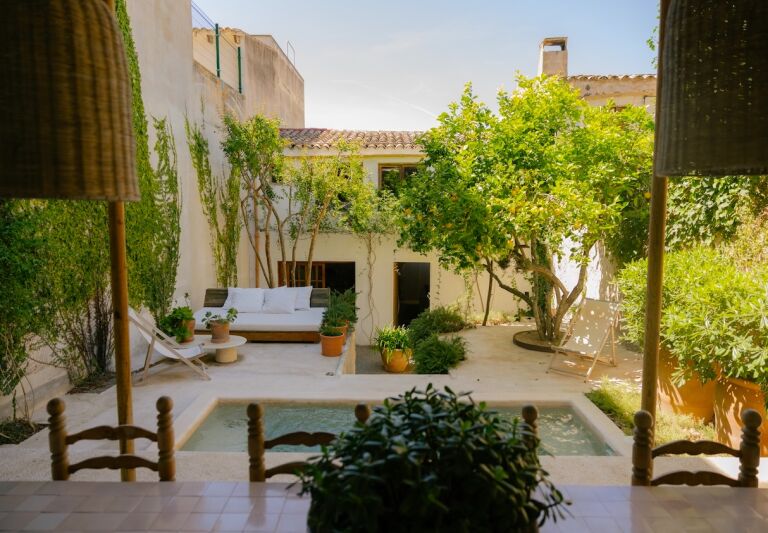
The Barn Out Back: September and Colin Moore’s Dream Guest Quarters in Mallorca
by Margot Guralnick
September and Colin Moore left Tampa, Florida, for the South of France in 1999 with their three children to escape throw-away culture and lead more considered lives. She’s an artist/designer, he’s a chiropractor with carpentry skills, and together they became practiced hands at resurrecting houses that had been left for dead. Seeing the work they did, “people came to us offering old properties for nothing, for like $15,000,” she says. Which is how one remodel led to another, many of which they sold so they could take on the next.
Their kids are now grown and the couple decided to give a quiet corner of Mallorca a try. We recently spotlighted the abandoned limestone structure in Felanitx that they’ve turned into their current dream house: see Minimalists In Mallorca. “The property was structurally more or less sound but in a very raw state: it was really just empty spaces, but what beautiful spaces,” September tells us. That included an interior courtyard with a stone barn at one end. Here, we’re taking a look at the Moore’s transformation of what had been century-old animal stalls with a loft overhead.
Photography by Clarrisa Cesi, unless noted, all courtesy of September Moore Projects (@septembermooreprojects).
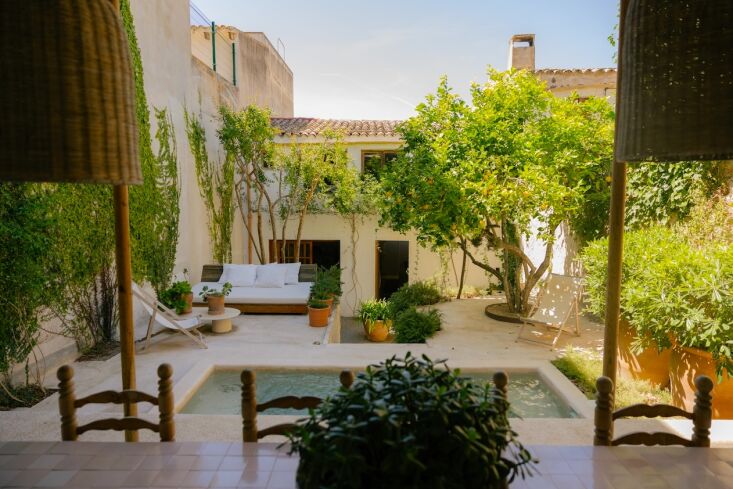 Above: A view of the barn from the restored courtyard terrace of the main house. The couple converted the structure into September’s studio and their joint workshop downstairs, with guest quarters above—it’s unheated, so only used in warm weather.
After clearing out and shoring up the interiors, the couple finished the exterior of both limestone structures with two coats of limewash. The terracotta roof tiles are original.
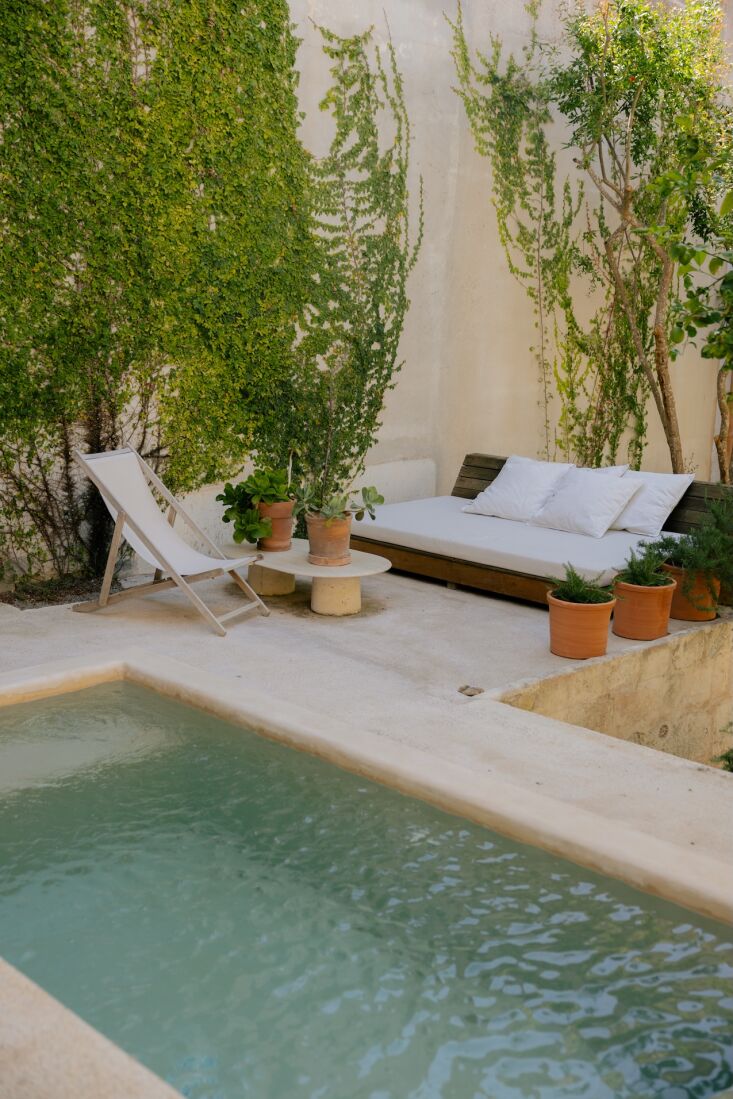 Above: A new plunge pool takes the place of a patch of weeds. Colin built it with some assistance—it was dug by hand and a mason did the finish work. It’s made of chukum, which September describes as “a natural stucco composed of tree resin and limestone.” Miami-based Chukum offers the material in the US.
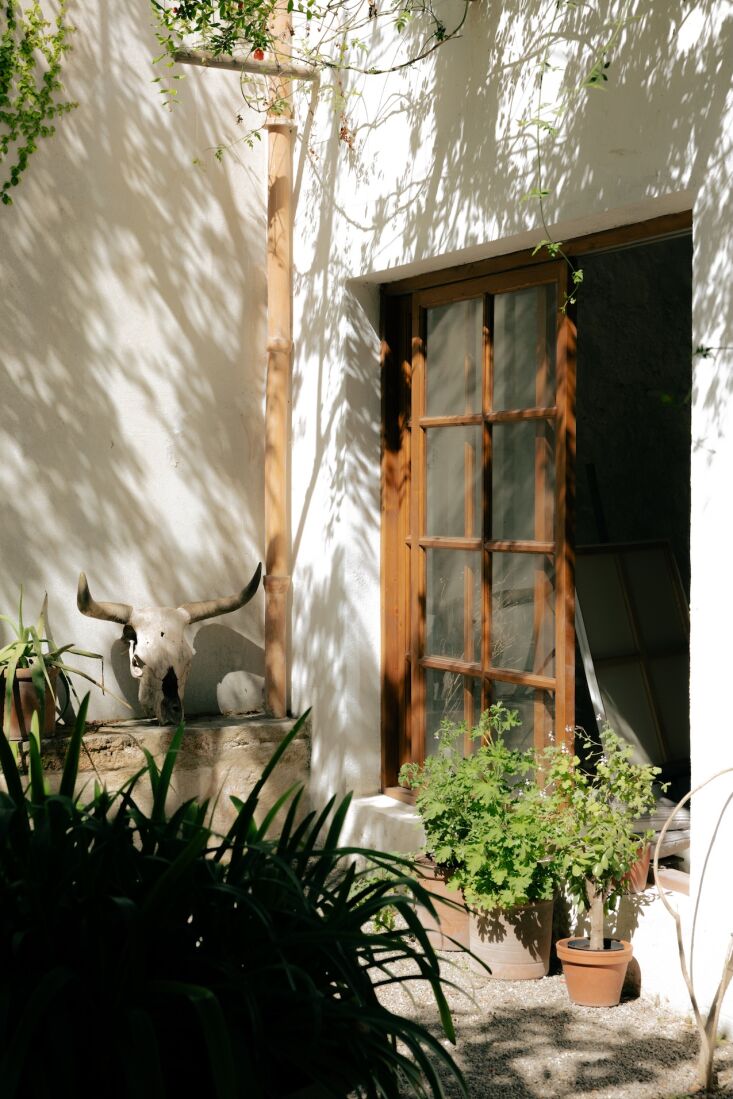 Above: A local carpenter built the barn’s new pine-framed windows.
 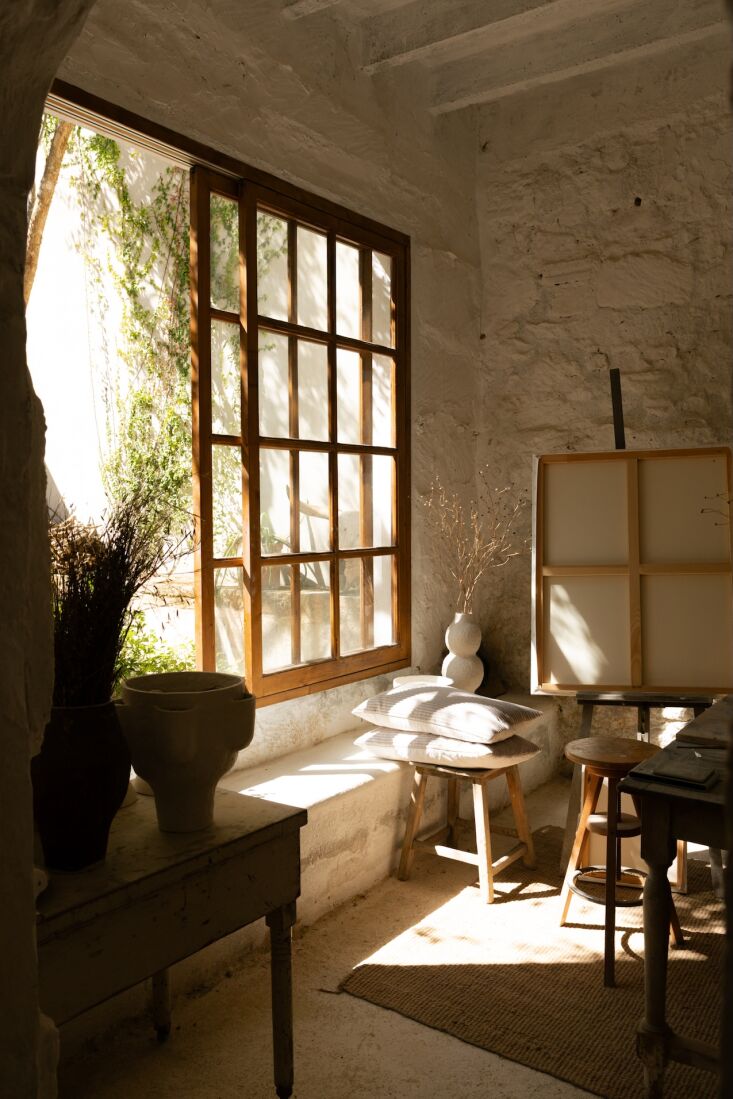 Above: September’s studio overlooks the courtyard and has a built-in window seat. The couple work with local, natural materials and when faced with a choice, they opt for the old-fashioned way.
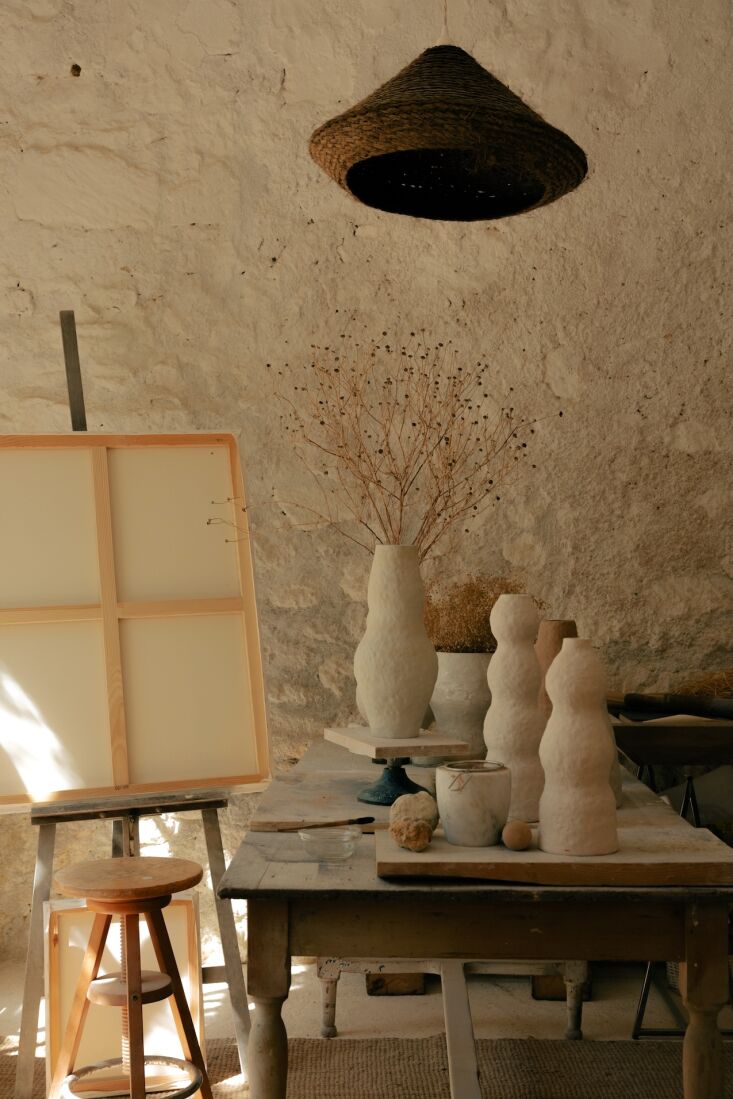 Above: A graduate of Parsons School of Design, September is a trained painter and sculptor and a self-taught designer. Since moving to Mallorca, she’s been making hand-built ceramics that she glazes in a friend’s kiln. Her desk is an antique artist’s table found on the island. She made the hanging light out of a basket she thinks was once used for olive pressing.
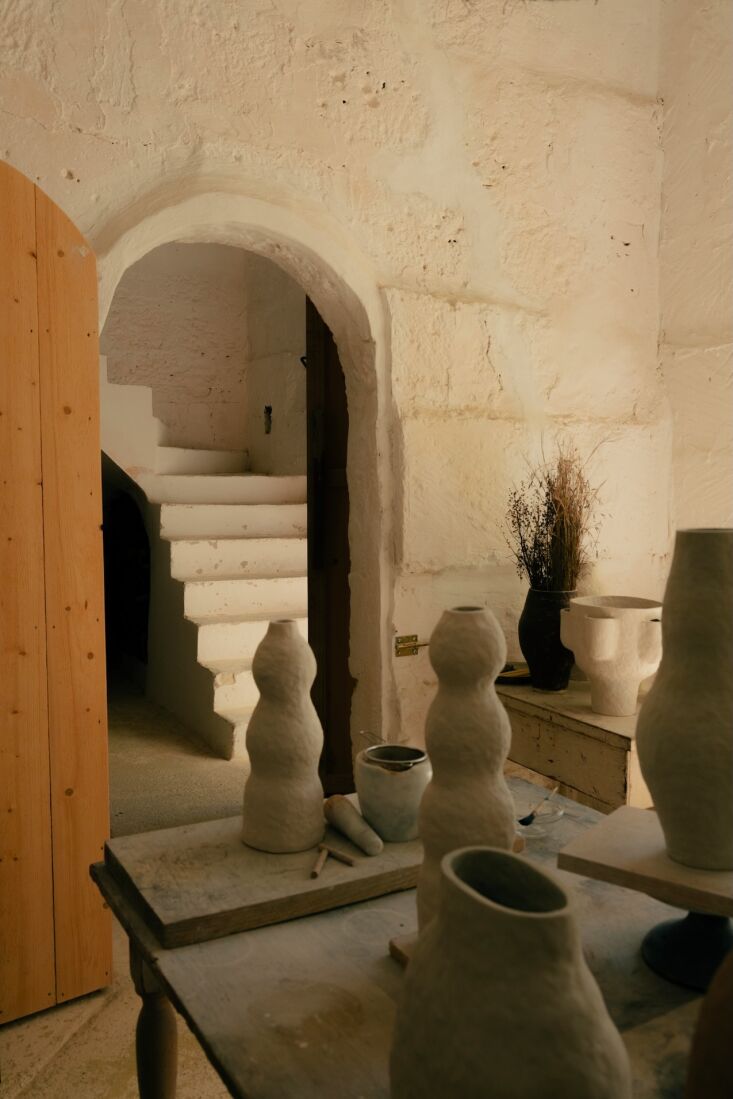 Above: The studio’s arched entry, newly carved out of the existing limestone, mirrors existing doorways in the house. Like the exterior, the interior limestone walls are finished with limewash from Mallorcan eco brand Unicmall. The new barn stair is limewashed concrete.
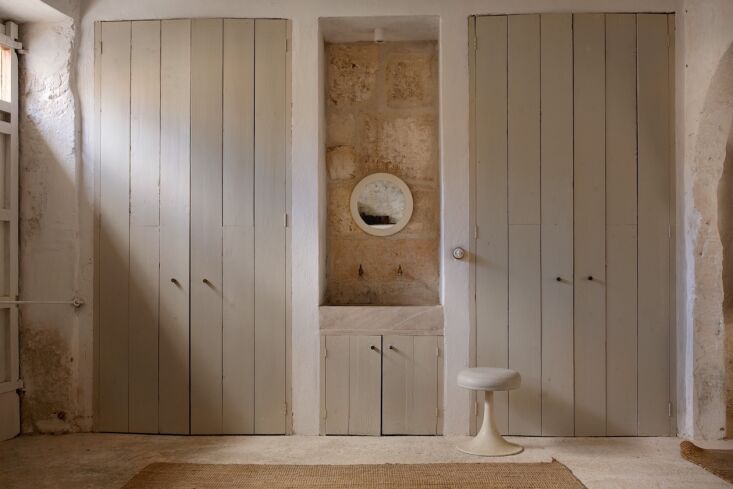 Above: In the adjacent workroom, paneled doors (built by Colin and a friend) conceal the washer/dryer on one side of the sink and the toilet on the other. Those are brass garden taps in the sink. Photograph by Anna Malmberg.
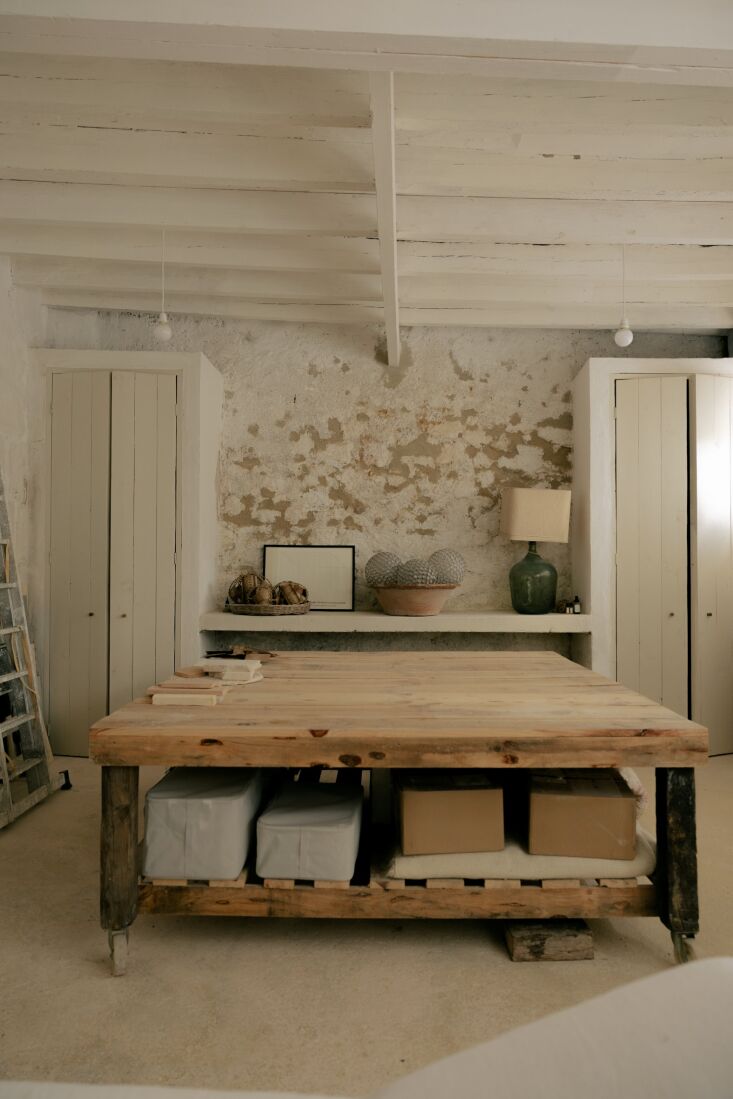 Above: Colin built the worktable out of pine scraps and added wheels from a flea market. His tools are stored underneath and in cupboards. Colin uses it for woodworking projects and September for making pottery when she runs out of studio space. The couple also on occasion host workshops here.
 Above: The upstairs guest quarters include a living area and kitchen.
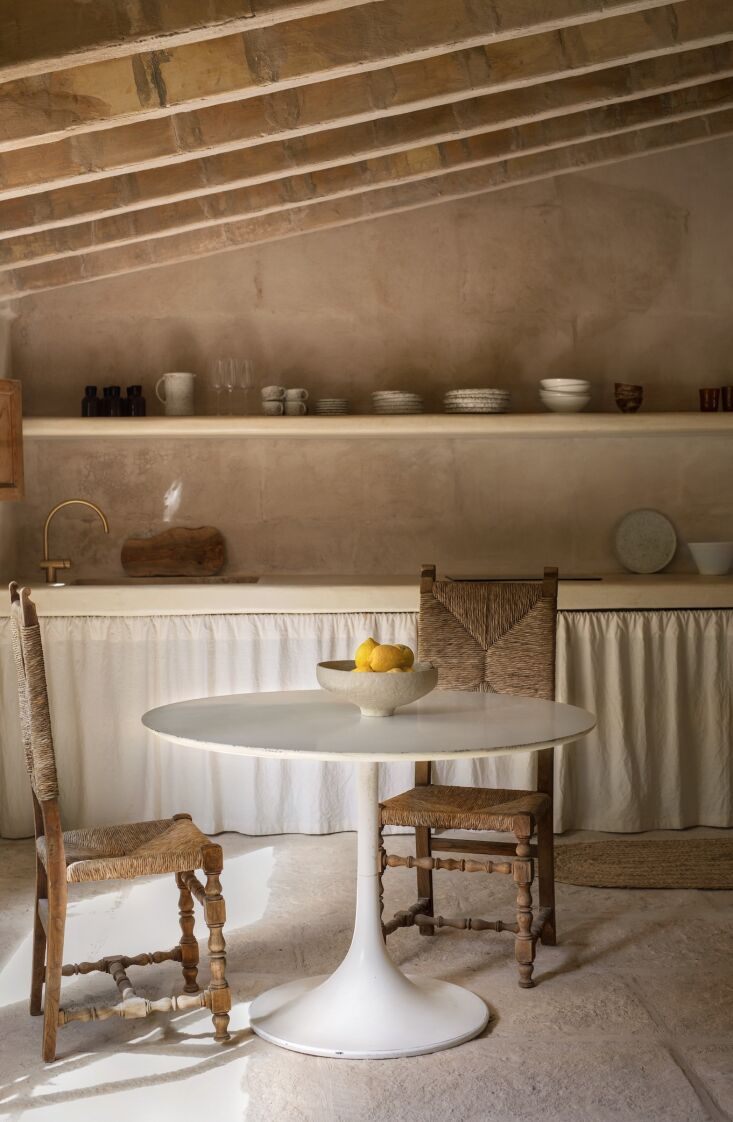 Above: The kitchen has a counter and open shelf of limewashed microcement. The table is a “vintage fake Saarinen.” The walls (newly finished with Mallorcan cement made with brown sand) and floor are the original limestone. Photograph by Anna Malmberg.
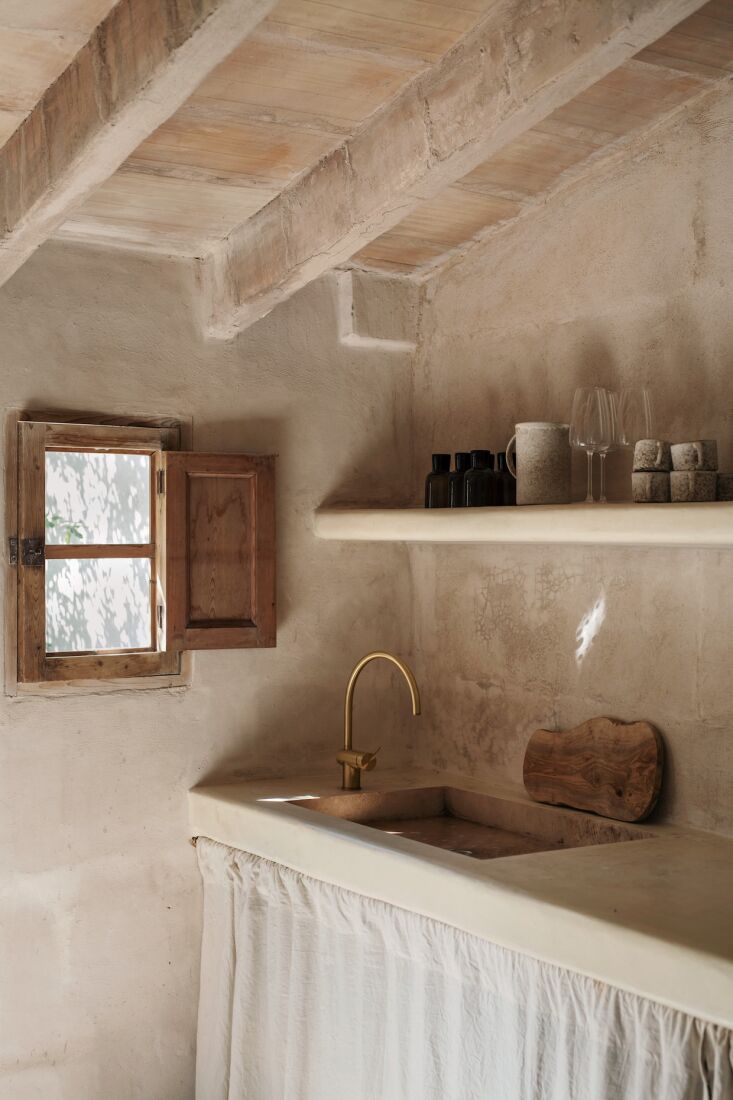 Above: An old stone sink with an Icónico mixer faucet is set into the counter. The white ceramics are from Can Garanya, one of September’s favorite local shops for Mallorcan-made housewares. She stitched the under-counter curtain herself “in a hurry from an old linen sheet.”
Of her muted palette, September’s friend designer Hilary Robertson writes, ““September’s trademark colors have always been those chalky, subtle shades reminiscent of Cézanne landscapes and Morandi still lifes.” Photograph by Anna Malmberg.
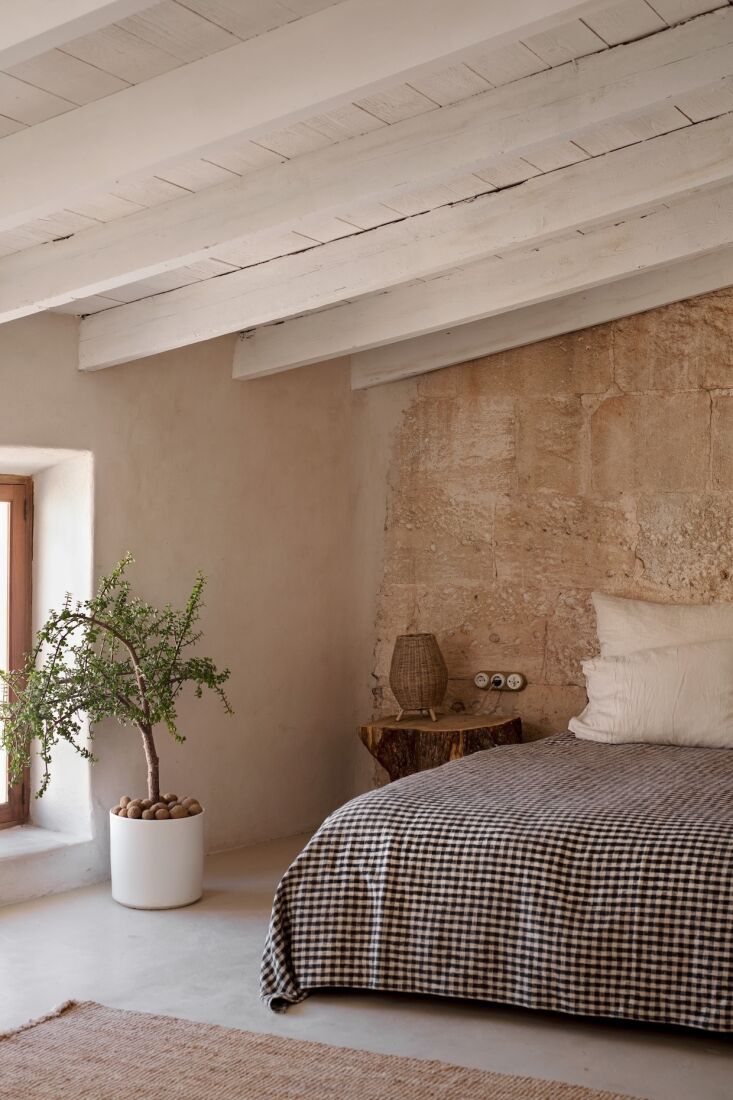 Above: The guest room’s pitted limestone wall was preserved as is. The cotton bedspread is from Can Garanya. Photograph by Anna Malmberg.
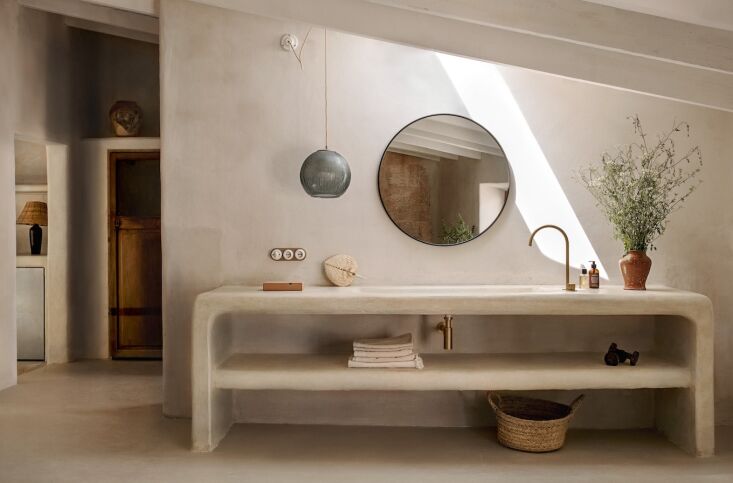 Above: The room has a generous sink counter of microcement and a built-in closet finished with limewashed plaster. Photograph by Anna Malmberg.
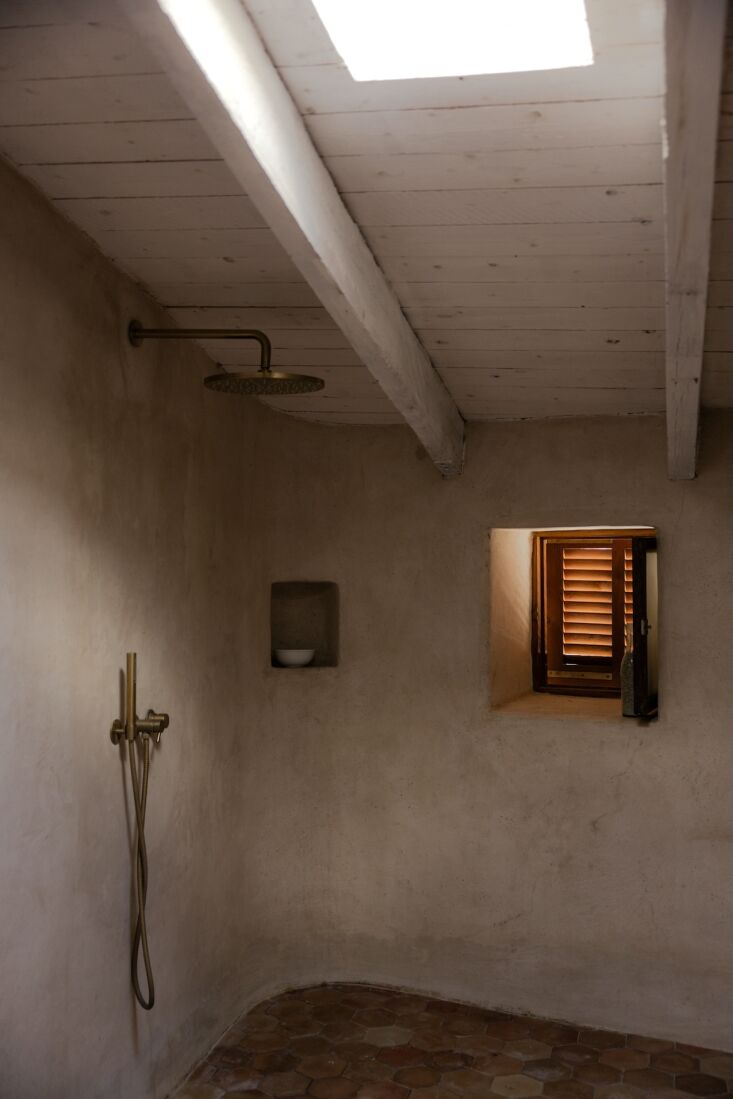 Above: The walk-in shower features Mallorcan cement and salvaged hexagonal terracotta tiles—taken out of the main house and reused here. The tapware is from Iconico.
 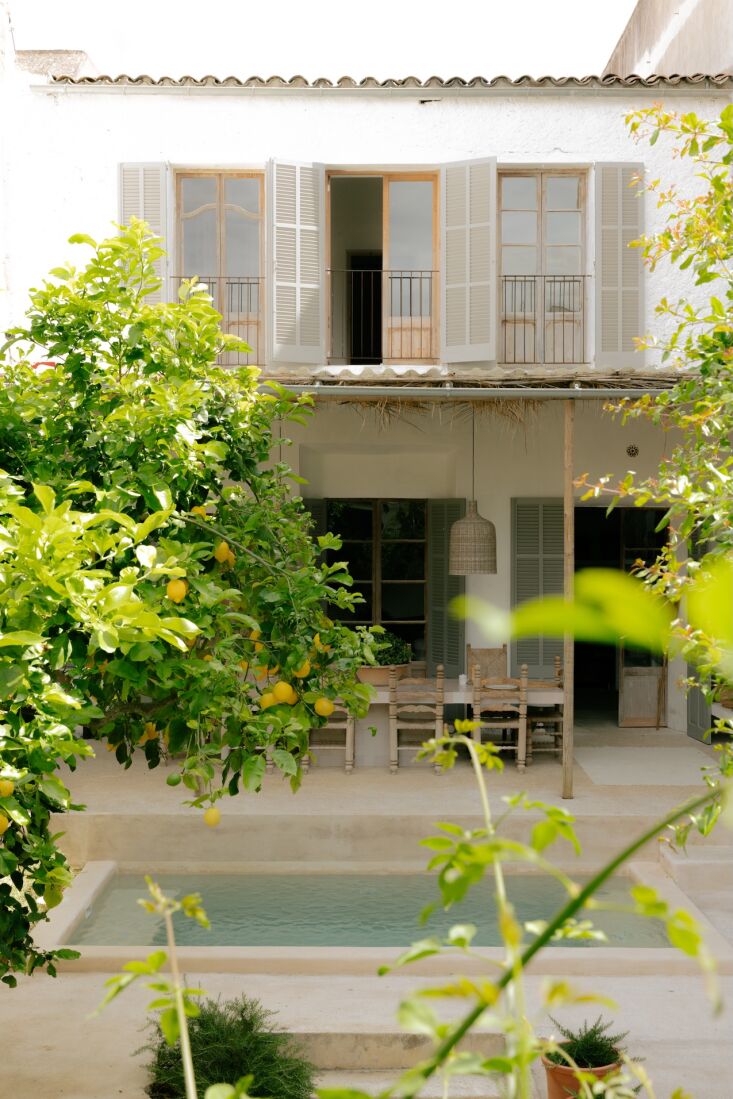 Above: The barn overlooks the main house and a giant lemon tree, one of the details that sold September on the abandoned property.
N.B.: The Moores maintain a toehold in southern France and from time to time rent their Mallorca compound for month-long stretches. Watch for announcements on Instagram @septembermooreprojects. And go to Required Reading to see the Moore’s house near Carcassonne.
Here are three more artful barn conversions:

Kitchen of the Week: An Expensive-Looking Remodel for Just $13,000
by Fan Winston
We often recommend Ikea’s kitchen cabinets as a solid, bang-for-the-buck option for those looking to remodel. And nowadays, there are so many offshoot companies offering cabinet front styles specifically tailored to fit Ikea’s base cabinets that, if being economical is a priority, there’s little reason not to at least start with an Ikea skeleton. (See Ikea Kitchen Upgrade: 11 Custom Cabinet Companies for the Ultimate Kitchen Hack.)
Which is what we assumed this expensive-looking kitchen from architects Luke and Joanne McClelland was: a skeleton base by Ikea, upgraded with doors from another company. Turns out the whole thing is a combination of Ikea components!
The two, both architects (he has his own firm, Luke McClelland Design), normally work on high-end projects, but for their own kitchen remodel in Edinburgh, Scotland, they had to work with a budget that was a tenth of what they’re used to. Their solution: “We tried to use affordable products to recreate the specific qualities that previous clients associated with luxury: simplicity, symmetry, integration.”
Here’s how they overhauled their kitchen for under $13,000, including appliances (but not including labor).
Photography by Zac and Zac, courtesy of Luke McClelland Design.
 Above: Joanne and Luke moved into the apartment a couple years ago, attracted to the grand proportions and period details. They knocked down a wall to create an open kitchen and dining area.
 Above: All cabinet bases and doors are from Ikea. The matte black fronts are from the Kungsbacka line, all made from recycled wood and recycled PET bottles. The lower cabinets are from the oak Ekestad series, currently unavailable in the US. Classic subway tiles (theirs are from here) look modern when installed vertically.
 Above: “All appliances are concealed within the lower cabinets,” says Luke. “The cabinets all appear as drawers but in some cases are actually two drawer cabinet fronts fixed together to form a hinged cupboard.” The faucet is by Lusso. (See 10 Easy Pieces: Matte Black Kitchen Faucets for more ideas.) The lights are Ikea’s Ranarp Pendant Lamps.
 Above: “The cabinets are encased in a stud bulkhead to look like they are recessed into the wall. The bulkhead conceals the extract for the cooker hood which, in turn, is recessed into the cabinets. The oak surrounds are just standard worktops cut down and used to frame the cabinets and to give the impression of a more expensive ‘hand-crafted’ kitchen,” explains Luke. The electric induction cooktop is by Bosch.
 Above: To the right is the doorway to the utility closet, where the washer, dryer, and freezer are housed.
 Above: The couple chose slim matte-black aluminum cabinet pulls from The Handle Studio for the drawers.
 Above: “We are very much influenced by Scandinavian design,” says Luke. “In particular I have always loved the work of Norm Architects in Copenhagen. I like natural materials and clean lines in a functional space like a kitchen.” The worktops are full stave oak; the couple treat it every 12 months or so with Osmo TopOil.
 Above: The framed art is lifted from London Deco, a book of illustrations by Thibaud Herem. “We moved to Edinburgh from London, and they provide a little reminder of the city,” says Luke. The walls are painted Farrow & Ball All White.
For more Ikea kitchens we love, see:
- Kitchen of the Week: A Design Couple’s Ikea-with-a-Twist Kitchen in Connecticut
- Kitchen of the Week: A ‘New Old’ Project in Noe Valley, Ikea Cabinets Included
- Kitchen of the Week: A Dog-Friendly Kitchen from Studio AC Design, Ikea Cabinets Included
N.B.: This story originally ran on July 30, 2020 and has been updated.
For daily dispatches and more favorite finds, head to Remodelista.com. For bonus content—like our weekly Quick Takes column—consider joining us as a paid subscriber.
Remodelista participates in affiliate marketing programs, which means we may get paid commissions on products purchased through our links to retailer sites.
